---
title: "Salsa, Limón, Cebolla, Cilantro: How to Customize Food Without Holding Up the Line"
description: "Con todo means whatever that stand decided it means. Learn the four questions every counter asks in order, the number-first ordering syntax, and why sin cilantro is rarer here."
type: "article"
category: "food"
url: "https://consalsa.app/blog/salsa-limon-cebolla-cilantro"
canonical: "https://consalsa.app/blog/salsa-limon-cebolla-cilantro"
published: "2026-06-11"
updated: "2026-08-20"
author: "Andrey the Nomad"
site: "ConSalsa.App"
license: "https://consalsa.app/about"
---

# Salsa, Limón, Cebolla, Cilantro: How to Customize Food Without Holding Up the Line
URL: https://consalsa.app/blog/salsa-limon-cebolla-cilantro
Date: 2026-06-11
Updated: 2026-08-20
Category: food
Keywords: con todo meaning tacos, mexican spanish food modifiers, salsa aparte meaning, how to order tacos in spanish, limon mexicano not lemon, sin cilantro spanish
Summary: Con todo means whatever that stand decided it means. Learn the four questions every counter asks in order, the number-first ordering syntax, and why sin cilantro is rarer here.

Quick answer:
- Con todo is not a fixed recipe. It means whatever that particular stand considers standard, so ask ¿qué trae el con todo? once.
- Order number first, then de, then the filling: tres de pastor. You do not say the word tacos.
- Every counter asks the same four questions in the same order. Knowing the sequence is most of the skill.
- Limón in Mexico is a lime, not a lemon. Yellow lemons are rare and are called limón amarillo.

What you'll learn:
- The four questions you will be asked, in order, and the one-word answers to each.
- Why con todo means different things at a taco stand, a torta stand and an elote cart.
- The modifier words: aparte, sin, tantito, harto, doradito, sin nada.
- What the research actually says about cilantro tasting like soap, and why fewer people here report it.

Don't sound gringo:
Ask ¿qué trae el con todo? the first time you visit a stand. One question, answered once, and you never have to think about toppings there again.

Body:

<mark lang="es-MX">Con todo</mark> is presented to learners as if it were a definition. It is not. It is a **local agreement**, and it changes depending on which cart you are standing at.

At a taco stand it means onion and cilantro. On an elote it means mayonnaise, cheese, chile powder and lime. On a hot dog outside a bar at 2am it means something else again, involving bacon. Same two words, three different dinners.

So the first thing to learn is not a modifier. It is a question.

## The one question that settles it

<div class="note-card is-tip">
  <span class="note-label">Pregúntalo una vez y ya</span>
  <p><b lang="es-MX">¿Qué trae el con todo?</b></p>
  <p>What does the with-everything come with? Ask it the first time you visit a stand. Nobody will find it strange, and you never have to wonder there again.</p>
</div>

<mark lang="es-MX">Traer</mark> is doing something nice here. Literally *to carry*, it is the standard verb for what a dish comes with. <mark lang="es-MX">¿Qué trae?</mark> is how you ask what is in anything, from a torta to a cocktail.

<ul class="examples">
  <li class="example">
    <div class="es" lang="es-MX">¿Qué trae la torta cubana?</div>
    <div class="en" lang="en">What comes in the torta cubana?</div>
  </li>
  <li class="example">
    <div class="es" lang="es-MX">¿Trae picante?</div>
    <div class="en" lang="en">Does it have anything spicy in it?</div>
  </li>
  <li class="example">
    <div class="es" lang="es-MX">¿Esa trae queso? Es que no como lácteos.</div>
    <div class="en" lang="en">Does that one have cheese? I don't eat dairy.</div>
  </li>
</ul>

## The four questions, in order

Almost every counter in Mexico runs the same short script. Once you know the order, you stop being ambushed by it.

<ol class="ladder">
  <li><div class="rung-card">
    <span class="rung-label">uno</span>
    <span class="rung-es" lang="es-MX">¿Qué le damos? / ¿Qué va a llevar?</span>
    <span class="rung-en" lang="en">What can we get you?</span>
    <span class="rung-note">Answer: number, de, filling. Tres de pastor.</span>
  </div></li>
  <li><div class="rung-card">
    <span class="rung-label">dos</span>
    <span class="rung-es" lang="es-MX">¿Con todo?</span>
    <span class="rung-en" lang="en">With everything?</span>
    <span class="rung-note">Answer: sí, con todo. Or con todo pero sin cebolla. Or sin nada.</span>
  </div></li>
  <li><div class="rung-card">
    <span class="rung-label">tres</span>
    <span class="rung-es" lang="es-MX">¿Para aquí o para llevar?</span>
    <span class="rung-en" lang="en">Here or to go?</span>
    <span class="rung-note">Answer: para aquí, or para llevar. Two words, no sentence.</span>
  </div></li>
  <li><div class="rung-card">
    <span class="rung-label">cuatro</span>
    <span class="rung-es" lang="es-MX">¿Algo de tomar? ¿Es todo?</span>
    <span class="rung-en" lang="en">Anything to drink? Is that everything?</span>
    <span class="rung-note">Answer: una horchata, and then es todo, gracias.</span>
  </div></li>
</ol>

That is the whole interaction. Four questions, four short answers, and none of them require a full sentence. The reason people freeze at Mexican counters is not vocabulary - it is that they are trying to build grammar while somebody waits.

<figure>
  <img src="/images/blog/salsa-limon-1.jpg" alt="Whole and halved limes on a glass plate resting on grey cloth." loading="lazy" />
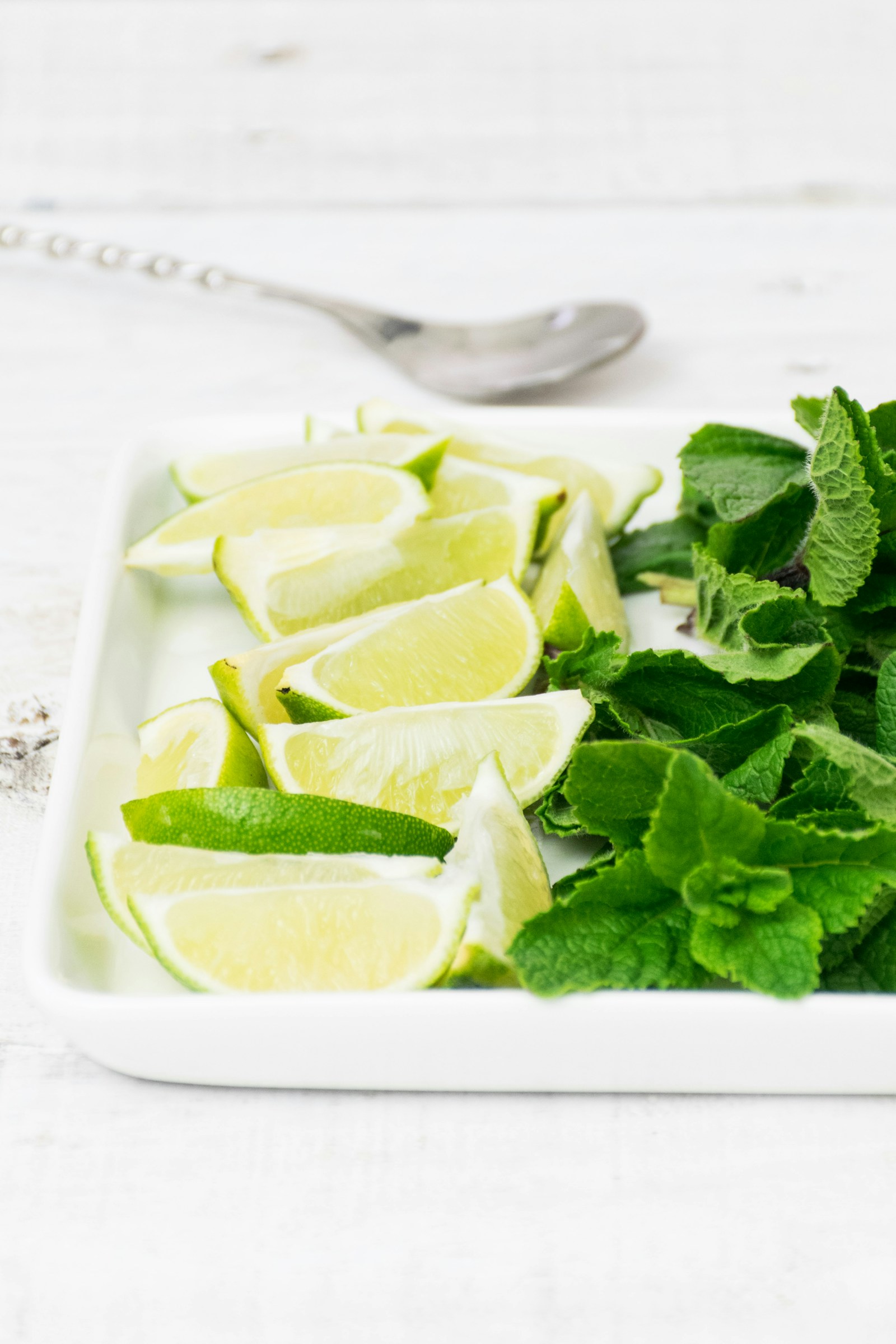
  <figcaption>These are limes, and in Mexico the word for them is <span lang="es-MX">limón</span>. The yellow ones barely exist here. Photo by <a href="https://unsplash.com/photos/S-V0luP4TbU" target="_blank" rel="noopener noreferrer">Tracy Morgan on Unsplash</a>.</figcaption>
</figure>

<div id="midpost-newsletter-slot"></div>

## Number first, and never say "tacos"

The ordering syntax is compact and it is not what a textbook teaches you.

| Lo que dices | Lo que significa |
|---|---|
| Tres de pastor | Three al pastor tacos |
| Dos de suadero y uno de longaniza | Two suadero and one longaniza |
| Una de bistec, con todo | One steak taco, with everything |
| Dos quesadillas de flor | Two squash-blossom quesadillas |
| Un taco de canasta de frijol | One basket taco with beans |

The word <mark lang="es-MX">tacos</mark> disappears entirely. You are at a taco stand; everyone knows what you are counting. The <mark lang="es-MX">de</mark> carries the whole load, and dropping it is the single clearest tell that someone is new.

Worth knowing what you are ordering, too. <mark lang="es-MX">Al pastor</mark> - the vertical spit, the pineapple, the whole ritual - came out of Lebanese migration to Mexico in the early twentieth century, where the shawarma technique met pork, achiote and dried chiles and quietly became the most Mexican thing on the street.[^unam-libanesa] Puebla still has <mark lang="es-MX">tacos árabes</mark>, which are the closer cousin of the original.

## The modifier words

There are five, and between them they cover almost everything you will ever want to say.

| Palabra | Qué hace |
|---|---|
| con | Adds. Con todo, con queso, con harta salsa |
| sin | Removes. Sin cebolla, sin crema, sin nada |
| aparte | Puts it on the side. Salsa aparte, limón aparte |
| tantito / poquito | Dials it down. Tantita salsa |
| harto / bastante | Dials it up. Con harta cebolla |

<mark lang="es-MX">Harto</mark> is the one most people never learn, and it is the exact opposite of <mark lang="es-MX">tantito</mark>. <mark lang="es-MX">Con harta salsa</mark> means with loads of it. It sounds informal because it is, and it is completely at home at a street counter.

And one bonus: <mark lang="es-MX">doradito</mark>. Crisped. <mark lang="es-MX">Bien doradito, porfa</mark> works on tacos, quesadillas, tortas and anything that meets a griddle. It is a small request that consistently improves your food.

<div class="do-dont">
  <div class="dd-col dd-do"><p class="dd-title">Rápido y claro</p><ul>
    <li><b lang="es-MX">Tres de pastor, con todo, salsa aparte.</b> - one breath, done</li>
    <li><b lang="es-MX">Sin cebolla, porfa.</b> - short and complete</li>
    <li><b lang="es-MX">Bien doradito.</b> - two words, better taco</li>
    <li><b lang="es-MX">Tantito limón nada más.</b> - precise without being fussy</li>
  </ul></div>
  <div class="dd-col dd-dont"><p class="dd-title">Frena la fila</p><ul>
    <li><b lang="es-MX">Perdón, disculpe, es que yo quería preguntar si sería posible...</b></li>
    <li><b lang="es-MX">¿Me puede quitar todo lo verde excepto el aguacate?</b></li>
    <li>Explaining a dietary philosophy mid-order</li>
    <li>Deciding what you want after they have already asked</li>
  </ul></div>
</div>

## Limón is a lime. It has always been a lime

If you ask for <mark lang="es-MX">limón</mark> expecting something yellow, you will be handed something small, green and much sharper.

Mexico grows two varieties, and they split the country's production between them: <mark lang="es-MX">limón mexicano</mark> at roughly 70 percent and <mark lang="es-MX">limón persa</mark> - the seedless one, grown largely for export - at about 30 percent.[^agri-limon] Neither of them is the yellow lemon that English calls a lemon. If you genuinely need that, ask for <mark lang="es-MX">limón amarillo</mark>, and prepare to be disappointed in most places.

This matters more than it sounds, because lime is not a garnish here. It goes on tacos, soup, fruit, crisps, beer, michelada rims, and anything that seems to be having a slow day.

<figure>
  <img src="/images/blog/salsa-limon-2.jpg" alt="Lime wedges and fresh green herb leaves arranged on a white tray with a spoon." loading="lazy" />
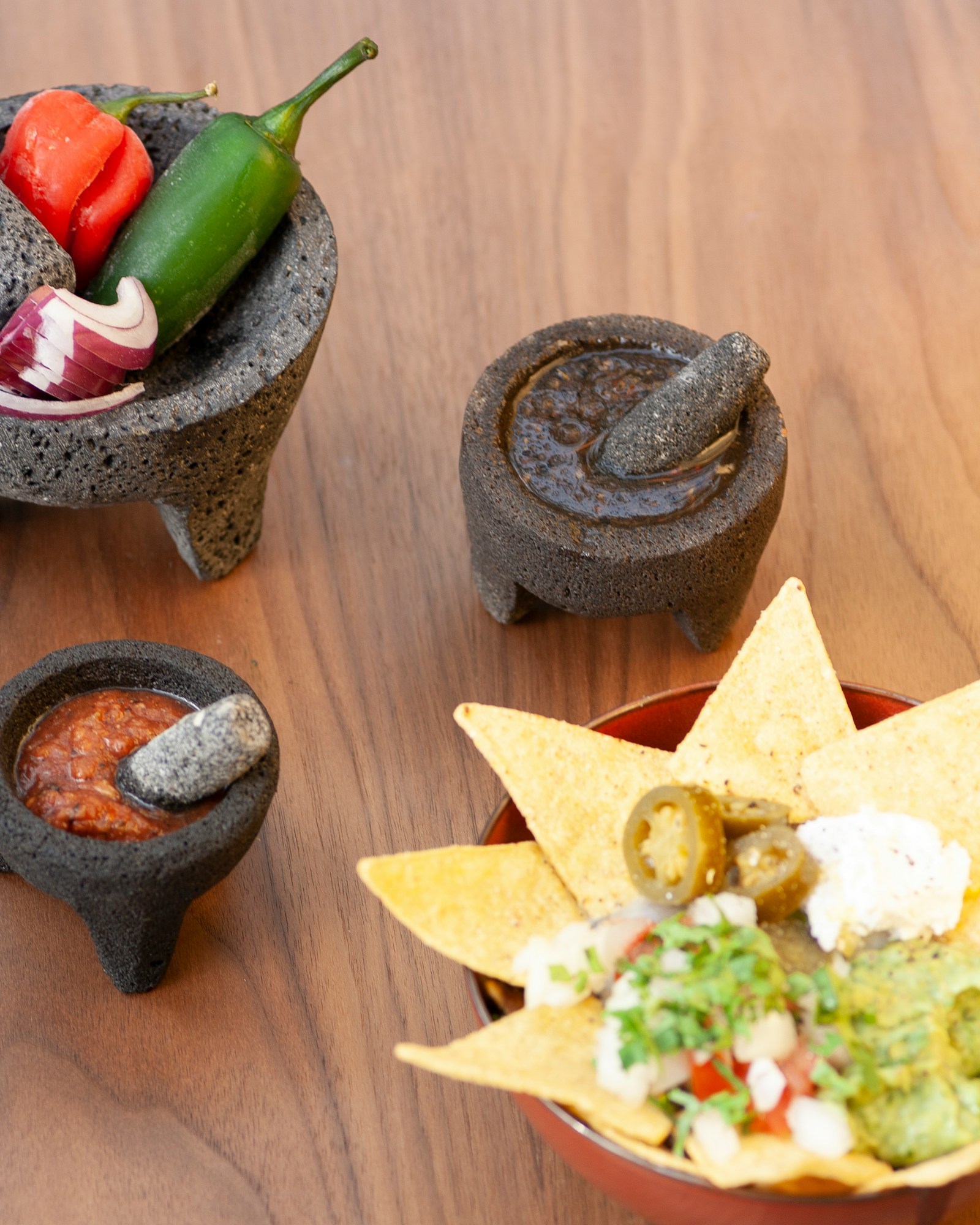
  <figcaption>Lime and a handful of herbs: the two things that end up on almost everything, and the two people ask to remove. Photo by <a href="https://unsplash.com/photos/Go7enxevZMg" target="_blank" rel="noopener noreferrer">Jenny Pace on Unsplash</a>.</figcaption>
</figure>

## About cilantro, and the soap thing

<mark lang="es-MX">Sin cilantro</mark> is a completely acceptable request. It is just a rarer one here than it is where you came from, and there is real research behind that.

A 2012 genome-wide study of nearly 26,500 people found a variant, rs72921001, sitting in a cluster of eight olfactory receptor genes on chromosome 11 - one of which, OR6A2, binds precisely the aldehydes that give cilantro its smell. People carrying one version were more likely to report that cilantro tastes like soap.[^eriksson-cilantro]

Two honest caveats, because the internet usually skips them. First, the effect is small: that variant explains only about half a percent of the variation in whether someone reports the soapy taste. Genetics nudges this; it does not decide it. Second, and more relevant if you live here, the same study found that Latino, East Asian, South Asian and African-American participants were all **significantly less likely** than European participants to report the soapy taste at all - a pattern a companion study had already found across ethnocultural groups.[^mauer-prevalence]

Which is a scientific way of explaining something you have probably already noticed: in Mexico, <mark lang="es-MX">sin cilantro</mark> gets a small nod, and occasionally a look.

<div class="chat-thread">
  <div class="chat-head"><span class="chat-avatar"></span><span>miércoles, 9:40 pm</span><span class="chat-meta">nota lo corto que es todo</span></div>
  <ul class="chat-msgs">
    <li class="in"><span class="es" lang="es-MX">¿Qué le damos, joven?</span><span class="en">What can we get you?</span></li>
    <li class="out"><span class="es" lang="es-MX">Cuatro de pastor, con todo pero sin cebolla</span><span class="en">Four pastor, with everything but no onion</span></li>
    <li class="in"><span class="es" lang="es-MX">¿Con piña? ¿Para aquí o para llevar?</span><span class="en">With pineapple? Here or to go?</span></li>
    <li class="out"><span class="es" lang="es-MX">Con piña, para aquí. Y una horchata, porfa</span><span class="en">With pineapple, here. And a horchata, please</span></li>
  </ul>
  <p class="chat-read">Nobody used a full sentence. <strong>That is not laziness, it is the register - short is what polite sounds like at a counter.</strong></p>
</div>

<figure>
  <img src="/images/blog/salsa-limon-3.jpg" alt="Stone molcajetes of salsa beside tortilla chips, guacamole and fresh chiles on a wooden table." loading="lazy" />
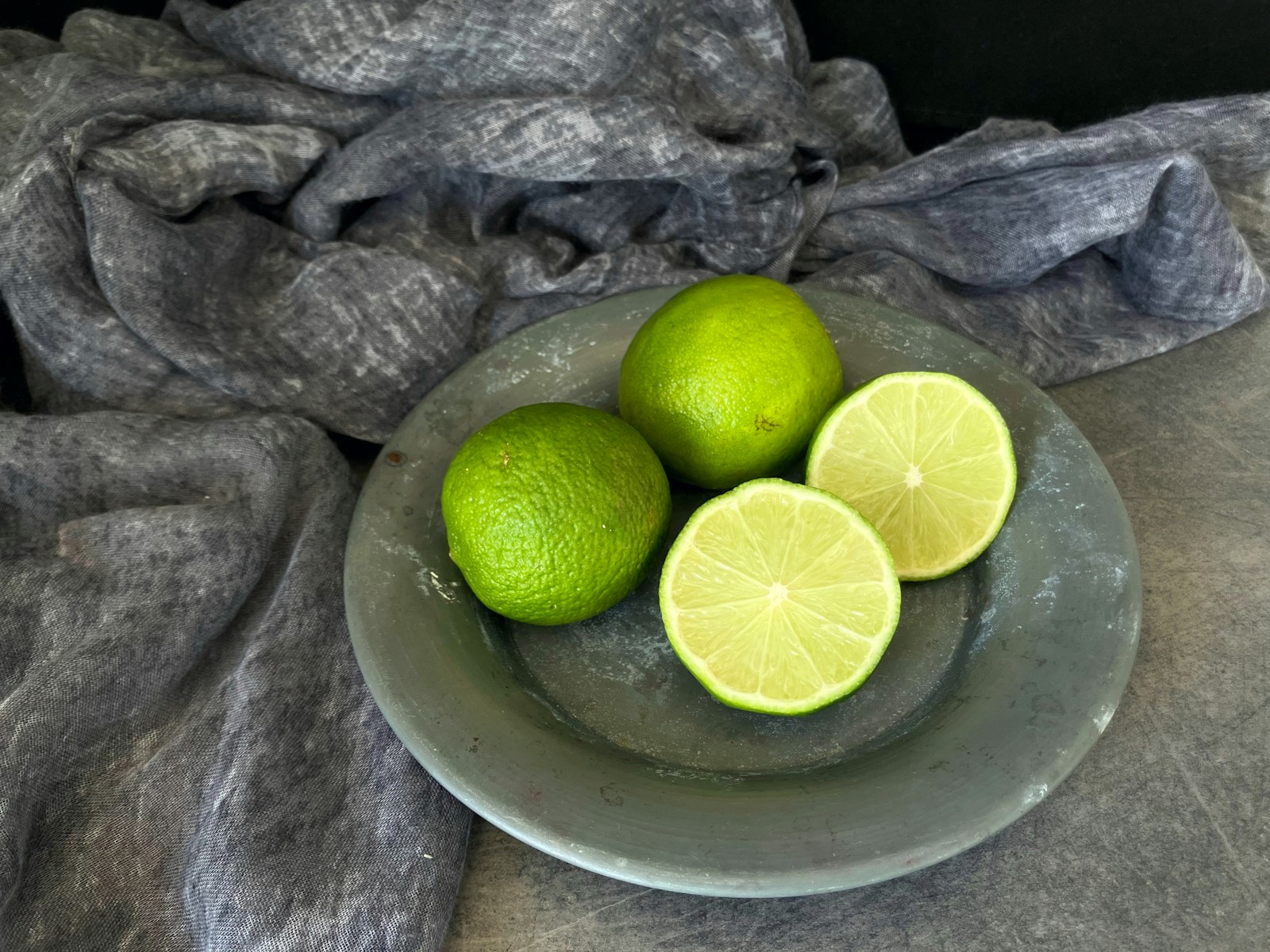
  <figcaption>Salsas live in their own bowls and get added fast. Say your modifiers before that starts, not during. Photo by <a href="https://unsplash.com/photos/QPzxmsHmDU4" target="_blank" rel="noopener noreferrer">Adri Valls on Unsplash</a>.</figcaption>
</figure>

## Say it in one breath

Eat Mexico's phrase guide makes the same practical point from the other direction: the toppings are standard, so the words for adjusting them can be tiny.[^eatmexico-phrases]

<ul class="examples">
  <li class="example">
    <div class="es" lang="es-MX">Me da tres de pastor, con todo, salsa aparte, y una horchata.</div>
    <div class="en" lang="en">Three al pastor, with everything, sauce on the side, and a horchata.</div>
  </li>
</ul>

Fourteen words. It orders the food, sets the toppings, controls the heat and gets you a drink, and it does not slow the line by a single second.

That is the whole skill. Not fluency - **compression**.

[^eriksson-cilantro]: [Eriksson et al., A genetic variant near olfactory receptor genes influences cilantro preference](https://doi.org/10.1186/2044-7248-1-22) — Flavour, 2012
[^mauer-prevalence]: [Mauer and El-Sohemy, Prevalence of cilantro disliking among different ethnocultural groups](https://doi.org/10.1186/2044-7248-1-8) — Flavour, 2012
[^agri-limon]: [Agricultura, Limón mexicano, único en el mundo](https://www.gob.mx/agricultura/articulos/limon-mexicano-unico-en-el-mundo) — Secretaría de Agricultura y Desarrollo Rural
[^unam-libanesa]: [Revista de la Universidad de México, La migración libanesa y su legado en la gastronomía mexicana](https://blog.revistadelauniversidad.mx/el-sabor-del-encuentro-la-migracion-libanesa-y-su-legado-en-la-gastronomia-mexicana/) — Revista de la Universidad de México
[^eatmexico-phrases]: [Eat Mexico, Spanish phrases for Mexico City's culinary scene](https://eatmexico.com/useful-spanish-phrases-to-use-while-exploring-mexico-citys-culinary-scene/) — Eat Mexico

FAQ:
Q: What does con todo mean?
A: With everything - but everything is defined by that stand. At a taco stand it usually means onion and cilantro. On an elote it means mayonnaise, cheese, chile and lime. Ask once.

Q: How do I order three al pastor tacos?
A: Say tres de pastor. The word tacos is understood and nobody says it.

Q: What does salsa aparte mean?
A: Sauce on the side, in its own little container. Useful if you want to control the heat yourself.

Q: What does tantito mean?
A: A little bit. Tantito limón, tantita salsa, tantita cebolla.

Q: What is the opposite of tantito?
A: Harto or bastante. Con harta salsa means with plenty of salsa.

Q: Is limón a lemon?
A: No. In Mexico limón is a lime. Two varieties dominate: limón mexicano and limón persa. A yellow lemon is limón amarillo and it is uncommon.

Q: How do I say no onion?
A: Sin cebolla. And sin nada means with nothing on it at all.

Q: Is it rude to ask for no cilantro?
A: Not at all, it is just less common here. Research suggests the soapy-taste reaction is reported less often in Latino populations than in European ones.

Q: What does doradito mean?
A: Crisped up. Bien doradito is a normal request for tacos, quesadillas and tortas.

Q: When do I say the modifiers?
A: Right after the item, in one breath: tres de pastor, con todo, salsa aparte.

Sources:
- Eriksson et al., A genetic variant near olfactory receptor genes influences cilantro preference, Flavour: https://doi.org/10.1186/2044-7248-1-22
- Mauer and El-Sohemy, Prevalence of cilantro disliking among different ethnocultural groups, Flavour: https://doi.org/10.1186/2044-7248-1-8
- Agricultura, Limón mexicano, único en el mundo: https://www.gob.mx/agricultura/articulos/limon-mexicano-unico-en-el-mundo
- Revista de la Universidad de México, La migración libanesa y su legado en la gastronomía mexicana: https://blog.revistadelauniversidad.mx/el-sabor-del-encuentro-la-migracion-libanesa-y-su-legado-en-la-gastronomia-mexicana/
- Eat Mexico, Spanish phrases for Mexico City's culinary scene: https://eatmexico.com/useful-spanish-phrases-to-use-while-exploring-mexico-citys-culinary-scene/

Related words: sale, mande, chido, no-manches