---
title: "Se Arma or No Se Arma? How Mexicans Decide If a Plan Is Real"
description: "Se arma has no subject - grammatically nobody is organizing anything. Learn why Mexican group plans use it, and the exact move that makes one real."
type: "article"
category: "phrases"
url: "https://consalsa.app/blog/se-arma-no-se-arma"
canonical: "https://consalsa.app/blog/se-arma-no-se-arma"
published: "2026-06-13"
updated: "2026-08-20"
author: "Andrey the Nomad"
site: "ConSalsa.App"
license: "https://consalsa.app/about"
---
# Se Arma or No Se Arma? How Mexicans Decide If a Plan Is Real
URL: https://consalsa.app/blog/se-arma-no-se-arma
Date: 2026-06-13
Updated: 2026-08-20
Category: phrases
Keywords: se arma meaning, no se arma meaning, mexican spanish making plans, jalo va vemos meaning, se armo meaning, mexican group chat plans
Summary: Se arma has no subject - grammatically nobody is organizing anything. Learn why Mexican group plans use it, and the exact move that makes one real.
Quick answer:
- Se arma means it might come together. Grammatically nobody is the subject - the plan assembles itself, and no one is on the hook.
- That is exactly why Mexican group chats prefer it: enthusiasm with zero individual responsibility attached.
- Se armó flips it to past tense and means it happened, it is on - or, in a different context, that a fight broke out.
- To make a plan real you have to change the grammar: swap the subjectless verb for one with a person in it. Yo reservo. Quedamos a las ocho.
What you'll learn:
- Why se arma is the default verb for group plans in Mexico, and what it hides.
- The grammatical move that turns twelve excited messages into an actual evening.
- How se arma, se armó, jalo, va, caile, and vemos differ in commitment.
- Why se armó sometimes means a fight, and how to tell which one you're hearing.
Don't sound gringo:
Enthusiasm is not logistics. Twelve people saying se arma means nobody has booked anything - be the one who writes yo reservo and watch the plan become real in one message.
Body:
Here's the thing nobody tells you about Mexican group plans: **the phrase everyone uses has no one in it.**
Se arma isn't "we're doing it" or "I'll organize it." Grammatically, it's closer to *it assembles itself*. The plan is the thing doing the work, and no human being appears anywhere in the sentence.
That's not sloppiness. It's the entire reason the phrase is so popular.
## The grammar that lets everyone off the hook
Spanish has a family of constructions where se plus a third-person verb describes something happening without naming who's responsible. The RAE's grammar spells out what these do: the agent is understood to exist but is never expressed - se habla de política implies *somebody* is talking about politics, while carefully declining to say who.[^rae-impersonales][^rae-pasiva-refleja]
Apply that to a Friday night and you get something socially perfect:
| What you send | Who is committed |
|---|---|
| Se arma | nobody |
| Se armó | nobody, but it happened anyway |
| Vemos | nobody |
| Jalo | you, a little |
| Quedamos a las ocho | everyone |
| Yo reservo | you, completely |
Everything above the line lets you express real enthusiasm at zero cost. Everything below it puts a person in the sentence - and that, not vocabulary, is the actual difference between a group chat and an evening.
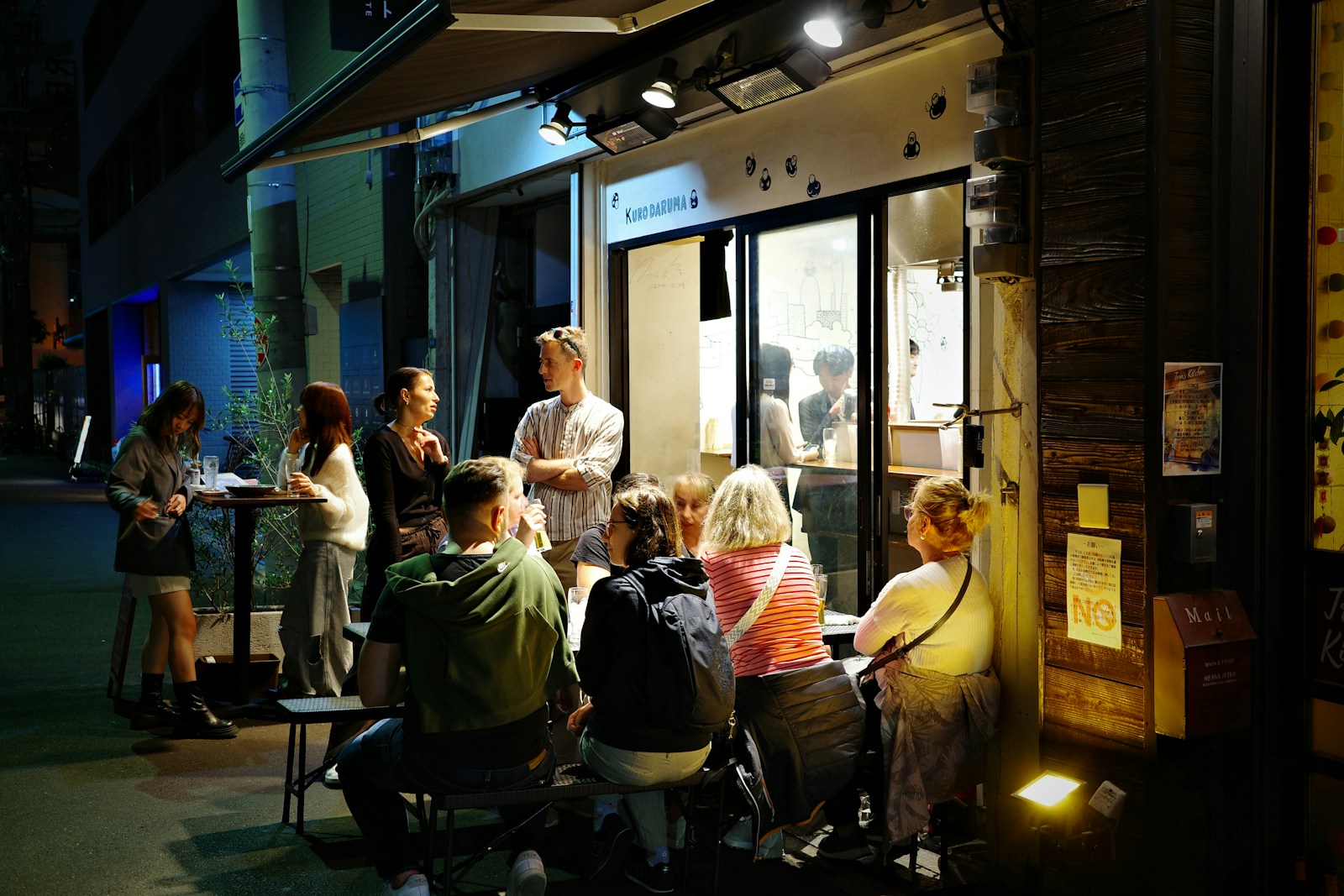
Forty messages of agreement and not one reservation. The language is working exactly as designed. Photo by Priscilla Du Preez on Unsplash.
## What it looks like in the chat
nothing is happeningeveryone is enthusiastic
¿Se arma el sábado?Is Saturday on?
Va va vaYes yes yes
Jalo 🔥I'm in
Uy sí, tenemos que irOof yeah, we have to go
Se arma se armaIt's on it's on
Five messages, five people, one plan that does not exist. Not a single sentence contains a subject who could do anything.
one message latersomeone put themselves in it
Yo reservo para seis a las nueve, ¿quiénes caen?I'll book for six at nine, who's coming?
YoMe
Yo también, ahí llegoMe too, I'll be there
Ya se armó 🎉Now it's on
One person switched from se arma to yo reservo and the whole thing resolved in three replies. The unlock is grammatical, not social.
Notice the last message. Ya se armó - past tense, and now it's true. The impersonal form is perfectly happy to describe a real plan; it just won't create one.
## Being the person who writes the unlock message
Foreigners often hesitate here, worried that stepping up looks pushy or presumptuous. It's the opposite. In a chat where the grammar has been carefully avoiding responsibility for forty messages, the person who takes some is doing everyone a favor.
Moves the plan
Yo reservo para seis a las nueve. — a person, a number, a time
¿Quedamos a las ocho en Chilpancingo? — quedamos is the pivot word
¿Quién organiza? Yo le entro a lo que sea. — names the gap and volunteers
Yo caigo a las nueve, ahí los alcanzo. — commits you even if nobody else moves
Adds to the fog
Se arma se arma 🔥 — the forty-first identical message
¿Entonces sí o no? — demands a decision nobody is authorised to make
Ustedes díganme. — hands the problem back to a group
A poll with six options — now there are two problems
Somebody, at some point, sent a message with the word "yo" in it. That's how this happened. Photo by Giorgio Trovato on Unsplash.
## Jalo, and the strange range of jalar
Jalo is the other word doing heavy lifting in these chats, and it's worth knowing how wide it runs. Jalar in Mexico covers pulling, going along, pitching in, and functioning - the Academia Mexicana de la Lengua's dictionary of mexicanismos records the idiomatic reach, including jalar parejo, meaning to do your share alongside everyone else.[^aml-jalar]
So it's one verb for several very different messages:
Jalo, ¿a qué hora?
I'm in, what time?
Jálate, no seas malo.
Come on, come along, don't be like that.
No jala el internet.
The internet isn't working.
Todos jalamos parejo.
We all pull our weight.
## The other se armó
Same construction, wildly different evening. Se armó la bronca and se armó el pancho mean a commotion broke out - a fight, a scene, a public meltdown. The logic is identical: something assembled itself and no one is named as the cause.
Where pancho comes from is genuinely disputed. One popular account ties it to Pancho Villa's men and their reputation for trouble; another traces it to a Mexico City gang called Los Panchitos in the 1980s.[^infobae-pancho][^radioformula-pancho] Both circulate widely and neither is settled, so treat the origin story as folklore and the meaning as solid.
Telling them apart
The noun decides it. Se armó el reventón is a party. Se armó la bronca is a fight. A bare se armó takes its meaning from whatever is happening around you - which, at 2am outside a bar, is usually visible.
Mexican media plays with the same shape constantly. Se armó el guateque - the party got going - is a stock phrase precisely because the construction makes a night sound like it materialised on its own.[^heraldo-guateque]
"Se armó" describes a night that appears to have organized itself. Someone always did, though. Photo by Edge Tung on Unsplash.
None of this means Mexican plans are flaky. It means the default grammar is built to keep enthusiasm cheap and exits easy, which is a reasonable thing for a language to do. You just have to know that somebody eventually has to break the spell - and that once you understand why the phrase is subjectless, being that somebody takes exactly one message.
[^rae-impersonales]: [Impersonales con se o impersonales reflejas, Nueva gramática de la lengua española](https://www.rae.es/gram%C3%A1tica/sintaxis/impersonales-con-se-o-impersonales-reflejas) — Real Academia Española / ASALE
[^rae-pasiva-refleja]: [Pasivas reflejas e impersonales con se, Nueva gramática básica de la lengua española](https://www.rae.es/gram%C3%A1tica-b%C3%A1sica/oraciones-activas-pasivas-impersonales-y-medias/la-pasiva-refleja/pasivas-reflejas-e-impersonales-con-se) — Real Academia Española / ASALE
[^aml-jalar]: [jalar, Diccionario breve de mexicanismos de Guido Gómez de Silva](https://academia.org.mx/consultas/obras-de-consulta-en-linea/diccionario-breve-de-mexicanismos-de-guido-gomez-de-silva/item/jalar) — Academia Mexicana de la Lengua
[^infobae-pancho]: [Por qué en México decimos "armar un pancho"](https://www.infobae.com/america/mexico/2022/09/14/por-que-en-mexico-decimos-armar-un-pancho/) — Infobae México
[^radioformula-pancho]: [¿Por qué en México decimos "armar un pancho"?](https://www.radioformula.com.mx/curiosidades/2023/3/18/por-que-en-mexico-decimos-armarunpancho-754232.html) — Radio Fórmula
[^heraldo-guateque]: [Se armó el guateque: cuál es el verdadero significado de esa frase mexicana](https://heraldodemexico.com.mx/tendencias/2020/12/4/se-armo-en-guateque-cual-es-verdadero-significado-de-esa-frase-mexicana-231910.html) — El Heraldo de México
FAQ:
Q: What does se arma mean?
A: It might come together. The verb armar means to assemble, and the pronominal form makes the plan the thing doing the assembling, so nobody in the chat has actually volunteered for anything.
Q: What does se armó mean?
A: It came together, it happened, it's on. The past tense is the confirmation - when someone writes se armó, the plan has stopped being hypothetical.
Q: What does no se armó mean?
A: It didn't come together. It is the low-drama way to say a plan quietly died, and it assigns blame to nobody, which is the whole point.
Q: Why does se armó sometimes mean a fight?
A: Same construction, different noun. Se armó la bronca or se armó el pancho means a commotion broke out - something assembled itself out of nowhere. Context and the noun tell you which one you're getting.
Q: What does jalo mean?
A: I'm in, I'm down. Jalar in Mexico covers pulling, going along, and pitching in, so jalo is closer to count me in than to a firm commitment.
Q: What does va mean when making plans?
A: Okay, agreed, sounds good. It confirms the last thing said, so it's only as strong as whatever it's confirming - va after a specific time is a real yes, va after a vague idea is just friendliness.
Q: How do I actually confirm a plan in Mexican Spanish?
A: Put a person in the sentence. Yo reservo, quedamos a las ocho, te veo en el metro - all of these have someone responsible in them, which se arma never does.
Q: Why do Mexican group plans fall apart so often?
A: Because the language everyone is using is designed not to assign responsibility, and that's a feature rather than a bug. It keeps enthusiasm cheap and lets people drop out without a confrontation.
Q: Is it rude to ask who's organizing?
A: Not at all. ¿Quién organiza? or ¿quién reserva? is normal and usually a relief to everyone, because someone was going to have to ask eventually.
Q: What's the difference between se arma and quedamos?
A: Se arma has no subject and commits no one. Quedamos is first person plural - we agree, we arrange - and it's the point where a group chat turns into a plan.
Sources:
- Real Academia Española, Pasivas reflejas e impersonales con se (Nueva gramática básica): https://www.rae.es/gram%C3%A1tica-b%C3%A1sica/oraciones-activas-pasivas-impersonales-y-medias/la-pasiva-refleja/pasivas-reflejas-e-impersonales-con-se
- Real Academia Española, Impersonales con se o impersonales reflejas (Nueva gramática): https://www.rae.es/gram%C3%A1tica/sintaxis/impersonales-con-se-o-impersonales-reflejas
- Academia Mexicana de la Lengua, jalar (Diccionario breve de mexicanismos): https://academia.org.mx/consultas/obras-de-consulta-en-linea/diccionario-breve-de-mexicanismos-de-guido-gomez-de-silva/item/jalar
- El Heraldo de México, Se armó el guateque: significado de la frase mexicana: https://heraldodemexico.com.mx/tendencias/2020/12/4/se-armo-en-guateque-cual-es-verdadero-significado-de-esa-frase-mexicana-231910.html
- Infobae, Por qué en México decimos armar un pancho: https://www.infobae.com/america/mexico/2022/09/14/por-que-en-mexico-decimos-armar-un-pancho/
- Radio Fórmula, ¿Por qué en México decimos armar un pancho?: https://www.radioformula.com.mx/curiosidades/2023/3/18/por-que-en-mexico-decimos-armarunpancho-754232.html
Related words: sale, ahorita, que-onda, ni-modo