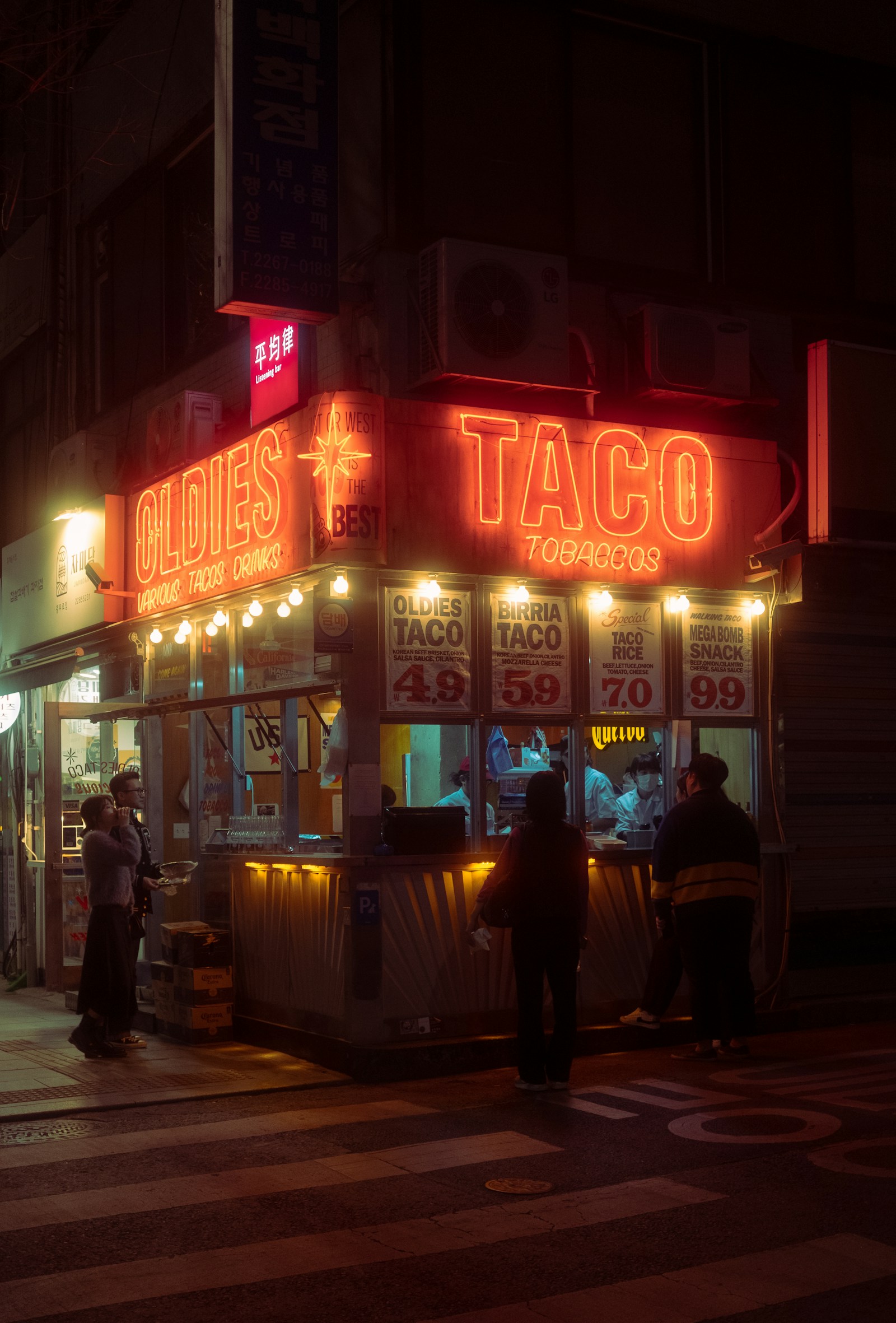
---
title: "Se Me Antojó: The Mexican Spanish of Cravings, Snacks, and Food Plans"
description: "In se me antojaron tacos, the tacos are the subject and you are the object. Nobody asked for anything - which is exactly why it is the softest invitation in Mexican Spanish."
type: "article"
category: "food"
url: "https://consalsa.app/blog/se-me-antojo"
canonical: "https://consalsa.app/blog/se-me-antojo"
published: "2026-06-12"
updated: "2026-08-20"
author: "Andrey the Nomad"
site: "ConSalsa.App"
license: "https://consalsa.app/about"
---

# Se Me Antojó: The Mexican Spanish of Cravings, Snacks, and Food Plans
URL: https://consalsa.app/blog/se-me-antojo
Date: 2026-06-12
Updated: 2026-08-20
Category: food
Keywords: se me antojo meaning, antojarse grammar gustar, ya me lo antojaste, antojitos meaning category, botanear meaning mexico, soft invitation mexican spanish
Summary: In se me antojaron tacos, the tacos are the subject and you are the object. Nobody asked for anything - which is exactly why it is the softest invitation in Mexican Spanish.

Quick answer:
- Se me antojó means a craving arrived. Grammatically the food is the subject and you are the object - the tacos did it, not you.
- That is why it works as an invitation: se me antojaron unos tacos, ¿jalas? asks nobody for anything, so nobody has to refuse.
- The softest version hands it over: ¿no se te antoja un café? - it asks whether a craving exists in them.
- An antojito is not a small craving. It is a whole food category, named after the desire itself.

What you'll learn:
- Why antojarse works like gustar, and what that does to the politeness of the sentence.
- The four levels of wanting: quiero, tengo ganas de, se me antoja, ¿no se te antoja?
- How to reply, including ya me lo antojaste - you just made me want it.
- What antojitos actually means, and why the name is the whole point.

Don't sound gringo:
Instead of asking someone to get food with you, say ¿no se te antoja algo? You are not proposing a plan, you are checking the weather. If they say yes, the plan makes itself.

Body:

Look closely at <mark lang="es-MX">se me antojaron unos tacos</mark> and something odd happens.

The tacos are the subject. They are doing the verb. You are the little <mark lang="es-MX">me</mark> in the middle, the person it happened to.

Nobody in that sentence wants anything. The tacos simply became desirable, in your direction, and you are reporting the event.

## It is built exactly like gustar

<mark lang="es-MX">Antojarse</mark> belongs to a family of Spanish verbs where the person feeling the thing is not the subject but a dative - an indirect object - while the thing felt is the grammatical subject. <mark lang="es-MX">Gustar</mark>, <mark lang="es-MX">encantar</mark>, <mark lang="es-MX">molestar</mark>, <mark lang="es-MX">interesar</mark> all work this way, and linguists group them together as psychological verbs with a dative experiencer.[^scielo-dativo]

Watch the agreement and you can see it plainly:

| La frase | Quién manda en el verbo |
|---|---|
| Me gusta el taco | el taco (singular) |
| Me gustan los tacos | los tacos (plural) |
| Se me antojó un café | un café (singular) |
| Se me antojaron unos tacos | unos tacos (plural) |
| Se nos antojó pizza | pizza (singular) |

If you have ever said <mark lang="es-MX">se me antojaron</mark> and wondered why it was plural when *you* are one person - that is why. You were never the one conjugating.

There is one more wrinkle worth knowing. <mark lang="es-MX">Gustar</mark> describes a state, something ongoing. <mark lang="es-MX">Antojarse</mark> describes an **event** - a change, a moment of arrival - which is why the preterite <mark lang="es-MX">se me antojó</mark> sounds so natural where <mark lang="es-MX">me gustó</mark> would need a reason.[^alfal-psicologicos] The craving didn't exist, and then it did.

<figure>
  <img src="/images/blog/se-me-antojo-1.jpg" alt="A person sitting alone at a dimly lit food stall late at night." loading="lazy" />
  <figcaption>Almost nobody decides to eat here. The craving arrives and the decision follows it. Photo by <a href="https://unsplash.com/photos/a8v0R_ITxWY" target="_blank" rel="noopener noreferrer">Angel Maldonado on Unsplash</a>.</figcaption>
</figure>

<div id="midpost-newsletter-slot"></div>

## Why this is the politest invitation in the language

Here is the payoff, and it is social rather than grammatical.

If you say <mark lang="es-MX">quiero ir por tacos, ¿vienes?</mark>, you have made a request. Your friend now has to accept or decline **you**. Someone has to lose a little face.

If you say <mark lang="es-MX">se me antojaron unos tacos</mark>, you have made an announcement about the weather. A craving occurred. There is no request on the table, so there is nothing to refuse. And if they are in, they can join the craving instead of accepting an invitation.

<ol class="ladder">
  <li><div class="rung-card">
    <span class="rung-label">directo</span>
    <span class="rung-es" lang="es-MX">Quiero tacos, vamos</span>
    <span class="rung-en" lang="en">I want tacos, let's go</span>
    <span class="rung-note">Perfectly fine with close friends. It does put someone on the spot.</span>
  </div></li>
  <li><div class="rung-card">
    <span class="rung-label">personal</span>
    <span class="rung-es" lang="es-MX">Tengo ganas de unos tacos</span>
    <span class="rung-en" lang="en">I feel like tacos</span>
    <span class="rung-note">Still your desire, and you own it. Warmer than quiero.</span>
  </div></li>
  <li><div class="rung-card">
    <span class="rung-label">suave</span>
    <span class="rung-es" lang="es-MX">Se me antojaron unos tacos, ¿jalas?</span>
    <span class="rung-en" lang="en">I've got a craving for tacos, you in?</span>
    <span class="rung-note">The craving happened to you. The question at the end asks for almost nothing.</span>
  </div></li>
  <li><div class="rung-card">
    <span class="rung-label">suavísimo</span>
    <span class="rung-es" lang="es-MX">¿No se te antoja un café?</span>
    <span class="rung-en" lang="en">Don't you fancy a coffee?</span>
    <span class="rung-note">You hand the craving to them. You are not asking, you are checking.</span>
  </div></li>
</ol>

That last rung is the move. <mark lang="es-MX">¿No se te antoja...?</mark> asks whether a desire exists inside the other person. A no is not a rejection of you, because you never appeared in the sentence. This is the same instinct behind the whole Mexican habit of leaving people an exit before they need one.

<div class="note-card is-tip">
  <span class="note-label">La frase que deberías robarte</span>
  <p><b lang="es-MX">¿No se te antoja algo?</b></p>
  <p>Works for coffee, dinner, a beer, a walk to the corner. It is vague on purpose, and the vagueness is the kindness.</p>
</div>

## Ya me lo antojaste

The best reply in this whole area is a small accusation.

<ul class="examples">
  <li class="example">
    <div class="es" lang="es-MX">Ya me lo antojaste.</div>
    <div class="en" lang="en">Now you've made me want it.</div>
  </li>
  <li class="example">
    <div class="es" lang="es-MX">No me lo antojes, ando a dieta.</div>
    <div class="en" lang="en">Don't make me want it, I'm on a diet.</div>
  </li>
  <li class="example">
    <div class="es" lang="es-MX">Nada más de oírte ya se me antojó.</div>
    <div class="en" lang="en">Just from hearing you I've got the craving.</div>
  </li>
</ul>

Notice the grammar flipped. In <mark lang="es-MX">ya me lo antojaste</mark>, the other person is suddenly the subject - **they** did the antojar, to you, on purpose. It is playful blame, and it is one of the warmest things you can say to somebody who just mentioned quesadillas at the wrong moment.

<div class="chat-thread">
  <div class="chat-head"><span class="chat-avatar"></span><span>jueves, 7:12 pm</span><span class="chat-meta">nadie invitó a nadie</span></div>
  <ul class="chat-msgs">
    <li class="out"><span class="es" lang="es-MX">Se me antojaron unos tacos de canasta, no sé por qué</span><span class="en">I've got a craving for tacos de canasta, no idea why</span></li>
    <li class="in"><span class="es" lang="es-MX">Ay no, ya me lo antojaste 😩</span><span class="en">Oh no, now you've made me want them 😩</span></li>
    <li class="out"><span class="es" lang="es-MX">jajaja ¿jalas? Está el de la esquina</span><span class="en">haha you in? The corner one's open</span></li>
    <li class="in"><span class="es" lang="es-MX">Va, en 20 caigo</span><span class="en">Alright, I'll drop by in 20</span></li>
  </ul>
  <p class="chat-read">A plan was made and confirmed without a single invitation being issued. <strong>The craving did all the diplomatic work.</strong></p>
</div>

## Antojito is not a small craving

The diminutive is misleading. <mark lang="es-MX">Antojitos</mark> are not little cravings - they are a **category of food**, and it is one of the biggest categories in the country.
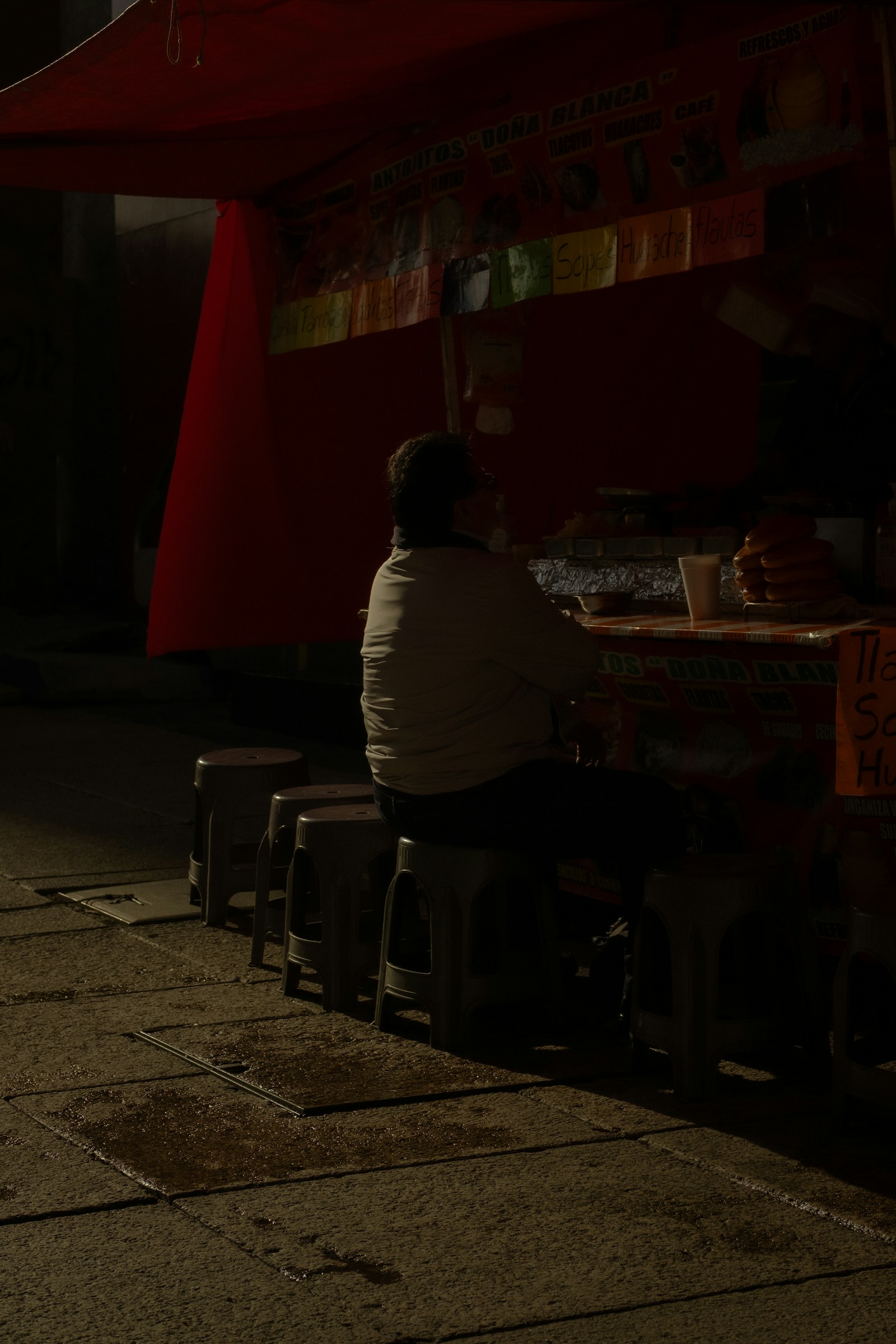
Mexico's own agrifood service defines them almost entirely by desire rather than by ingredient: foods available at any time of year, eaten morning, noon or night, requiring no cutlery, eaten *because you want them* rather than because it is mealtime.[^siap-antojitos] The same piece cites the anthropologist Eusebio Dávalos Hurtado, who recorded **more than seven hundred ways of eating maize** in Mexico - most of them antojitos.

| El antojito | Qué es |
|---|---|
| tlacoyo | Oval masa patty stuffed with beans, fava or cheese |
| sope | Thick masa base with a pinched rim |
| huarache | Long sandal-shaped masa base, hence the name |
| gordita | Split pocket of masa, filled |
| quesadilla | And in CDMX it does not automatically contain cheese |
| tamal | Steamed masa in corn husk or banana leaf |
| esquites | Corn kernels in a cup, with lime, chile, mayo |
| memela | Flat, oval, thin, from Puebla and Oaxaca |

That corn base is not a coincidence. When UNESCO inscribed traditional Mexican cuisine on the Representative List of the Intangible Cultural Heritage of Humanity in 2010, the nomination was built on exactly this foundation - corn, beans and chile, together with nixtamalization, the milpa and the chinampa.[^unesco-cocina] The antojito is that whole system, served in your hand for twenty pesos.

<figure>
  <img src="/images/blog/se-me-antojo-2.jpg" alt="A neon-lit taco spot on a street corner at night." loading="lazy" />
  <figcaption>Antojitos are defined by when you want them, not by what is in them. Photo by <a href="https://unsplash.com/photos/PdqJAndcn80" target="_blank" rel="noopener noreferrer">DANIEL STAPLE on Unsplash</a>.</figcaption>
</figure>

## Botanear, and the low-stakes plan

<mark lang="es-MX">Botanear</mark> is to snack socially, usually alongside a drink, usually for hours. <mark lang="es-MX">La botana</mark> is the snack itself - and in a lot of cantinas it arrives free with the beer, in escalating rounds, until you realize you have accidentally had dinner.

It is also a very useful word for lowering the stakes of a plan:

<div class="do-dont">
  <div class="dd-col dd-do"><p class="dd-title">Fácil de aceptar</p><ul>
    <li><b lang="es-MX">Nada más de botanear algo.</b> - promises nothing big</li>
    <li><b lang="es-MX">Si te late, caemos por unos tacos.</b> - caer is to drop by, casually</li>
    <li><b lang="es-MX">¿Vamos por algo?</b> - ir por is the standard go-get verb</li>
    <li><b lang="es-MX">Algo rápido, no cena cena.</b> - the doubled word means the full formal version</li>
  </ul></div>
  <div class="dd-col dd-dont"><p class="dd-title">Suena a compromiso</p><ul>
    <li><b lang="es-MX">Reservé mesa para las nueve.</b> - now they have to show up</li>
    <li><b lang="es-MX">Te espero, ¿eh?</b> - kind, but it is a hook</li>
    <li><b lang="es-MX">Necesito verte hoy.</b> - urgent, and not about tacos</li>
    <li><b lang="es-MX">¿Sí vas a ir?</b> - forces a yes or a no</li>
  </ul></div>
</div>

<mark lang="es-MX">Cena cena</mark> is worth stealing on its own. Doubling a word in Mexican Spanish means the real, full, proper version of it - <mark lang="es-MX">café café</mark> is actual coffee, not instant; <mark lang="es-MX">amigo amigo</mark> is a real friend, not an acquaintance. So <mark lang="es-MX">no cena cena</mark> means: food, but do not put on a shirt.

<figure>
  <img src="/images/blog/se-me-antojo-3.jpg" alt="A vendor riding a motorised elote cart stacked with bottles and drinks." loading="lazy" />
  <figcaption>Elotes on wheels, at any hour, wherever the craving happens - the antojito in its natural state. Photo by <a href="https://unsplash.com/photos/D0JBTzIm9PQ" target="_blank" rel="noopener noreferrer">Jonathan Marchant on Unsplash</a>.</figcaption>
</figure>

## What to actually do with this

Eat Mexico's phrase guide is right that cravings in this city become street decisions rather than vocabulary exercises.[^eatmexico-antojo] So here is the short version.

When you want something, do not announce a decision. Report an event:

<ul class="examples">
  <li class="example">
    <div class="es" lang="es-MX">Se me antojó algo, ¿jalas?</div>
    <div class="en" lang="en">I've got a craving for something, you in?</div>
  </li>
</ul>

And when you want to include somebody without putting them on the spot, hand them the craving instead:

<ul class="examples">
  <li class="example">
    <div class="es" lang="es-MX">¿No se te antoja un café?</div>
    <div class="en" lang="en">Don't you fancy a coffee?</div>
  </li>
</ul>

Two sentences. Neither of them contains a request. Both of them, reliably, produce dinner.

[^scielo-dativo]: [El sujeto lógico dativo con los verbos de la clase gustar](https://ve.scielo.org/scielo.php?script=sci_arttext&pid=S0459-12832005000100002) — Letras, SciELO Venezuela
[^alfal-psicologicos]: [Los verbos psicológicos con experimentante dativo en español](https://mundoalfal.org/sites/default/files/revista/01_cuaderno_012.pdf) — Cuadernos de la ALFAL
[^siap-antojitos]: [SIAP, Antojitos mexicanos, en su nombre llevan la fama](https://www.gob.mx/siap/articulos/antojitos-mexicanos-en-su-nombre-llevan-la-fama) — Servicio de Información Agroalimentaria y Pesquera
[^unesco-cocina]: [UNESCO, Traditional Mexican cuisine, inscribed 2010](https://ich.unesco.org/en/RL/traditional-mexican-cuisine-ancestral-ongoing-community-culture-the-michoacan-paradigm-00400) — UNESCO Intangible Cultural Heritage
[^eatmexico-antojo]: [Eat Mexico, Spanish phrases for Mexico City's culinary scene](https://eatmexico.com/useful-spanish-phrases-to-use-while-exploring-mexico-citys-culinary-scene/) — Eat Mexico

FAQ:
Q: What does se me antojó mean?
A: A craving hit me. Literally, it made itself desirable to me - the food is doing the verb, not you.

Q: Why is it se me antojaron and not se me antojó for tacos?
A: Because the tacos are the grammatical subject. Plural food, plural verb - exactly like me gustan los tacos.

Q: What is the difference between se me antoja and se me antojó?
A: Se me antoja is the ongoing feeling. Se me antojó is the moment it arrived, which is why the past tense is so common.

Q: How is this different from tengo ganas de?
A: Tengo ganas de is your desire, owned by you. Se me antoja is something that happened to you. The second is softer.

Q: What does ya me lo antojaste mean?
A: You just gave me the craving. It is what you say when someone mentions food and now you want it too.

Q: How do I turn a craving into an invitation?
A: Add a short question: se me antojaron unos tacos, ¿jalas? or ¿vamos?

Q: What is the softest way to suggest food?
A: ¿No se te antoja algo? It puts the craving in their court and asks for nothing.

Q: What are antojitos?
A: The category of casual Mexican foods, mostly corn-based, eaten with your hands at any hour. The word comes from antojo, craving.

Q: What does botanear mean?
A: To snack socially, usually while drinking. La botana is the snack itself.

Q: Is se me antojó only about food?
A: Mostly, but not only. Se me antojó un café, se me antojó ir al cine - anything that suddenly sounds good.

Sources:
- UNESCO, Traditional Mexican cuisine, inscribed 2010: https://ich.unesco.org/en/RL/traditional-mexican-cuisine-ancestral-ongoing-community-culture-the-michoacan-paradigm-00400
- SIAP, Antojitos mexicanos, en su nombre llevan la fama: https://www.gob.mx/siap/articulos/antojitos-mexicanos-en-su-nombre-llevan-la-fama
- El sujeto lógico dativo con los verbos de la clase gustar, Letras (SciELO): https://ve.scielo.org/scielo.php?script=sci_arttext&pid=S0459-12832005000100002
- Los verbos psicológicos con experimentante dativo en español, Cuadernos de la ALFAL: https://mundoalfal.org/sites/default/files/revista/01_cuaderno_012.pdf
- Eat Mexico, Spanish phrases for Mexico City's culinary scene: https://eatmexico.com/useful-spanish-phrases-to-use-while-exploring-mexico-citys-culinary-scene/

Related words: chela, crudo, chido, sale