---
title: "Sin Foto No Contesto: Face Pics, Privacy, and Better Spanish"
description: "What sin foto no contesto means on Mexican dating apps, how to ask for a face pic without sounding demanding, and how to hold your own photo boundary."
type: "article"
category: "grindr_gay"
url: "https://consalsa.app/blog/sin-foto-no-contesto"
canonical: "https://consalsa.app/blog/sin-foto-no-contesto"
published: "2026-06-18"
updated: "2026-08-19"
author: "Andrey the Nomad"
site: "ConSalsa.App"
license: "https://consalsa.app/about"
---

# Sin Foto No Contesto: Face Pics, Privacy, and Better Spanish
URL: https://consalsa.app/blog/sin-foto-no-contesto
Date: 2026-06-18
Updated: 2026-08-19
Category: grindr_gay
Keywords: sin foto no contesto meaning, face pics grindr mexico, grindr spanish mexico, discreto grindr photos, mexican dating app spanish, how to ask for a photo in spanish
Summary: What sin foto no contesto means on Mexican dating apps, how to ask for a face pic without sounding demanding, and how to hold your own photo boundary.

Quick answer:
- Sin foto no contesto means no photo, no reply. It is a filter written in a bio, not an insult.
- The normal way to ask is ¿tienes foto de cara? — four words, no explanation attached.
- You can decline and still be in the conversation: prefiero mandar foto cuando haya más confianza.
- Offering the reassurance before it is asked for — no hago capturas — moves more photos than pressure ever does.

What you'll learn:
- What the bio line actually filters for, and why so many profiles carry it.
- How to ask for a face pic in Mexican Spanish without sounding like a demand.
- How to hold a photo boundary without apologizing four times.
- The screenshot etiquette everyone assumes and nobody writes down.

Don't sound gringo:
Don't explain why you want the photo. ¿Tienes foto de cara? is complete. Adding a paragraph about how you just want to know who you're talking to reads as pressure, not politeness.

Body:

<mark lang="es-MX">Sin foto no contesto</mark> means exactly what it says: no photo, no reply.

It reads harsh in a bio. It is not aimed at you. It is a filter someone wrote after the two hundredth blank profile, in a text box roughly the size of a receipt.

## What the line is really filtering

Apps in Mexico City are full of empty profiles, and they are empty for wildly different reasons. That is the whole problem — the blank square looks the same whether the person is careful, closeted, married, bored, or a bot.

<div class="profile-mock">
  <div class="pm-top">
    <span class="pm-shot">sin<br>foto</span>
    <div>
      <span class="pm-name">?</span>
      <span class="pm-meta">Roma Norte · 800 m</span>
    </div>
  </div>
  <p class="pm-bio" lang="es-MX"><b>Discreto</b>. No foto por ahora, <b>luego con confianza</b>. Buena onda, sin dramas.</p>
  <ul class="pm-notes">
    <li><b>discreto</b> Privacy signal. Often means not out at work or to family.</li>
    <li><b>no foto por ahora</b> A pace, not a refusal. The photo may well arrive.</li>
    <li><b>con confianza</b> The condition is trust, and trust is something you can actually offer.</li>
    <li><b>sin dramas</b> Usually written by someone who has had one.</li>
  </ul>
</div>

<mark lang="es-MX">Discreto</mark> anchors around prudence, moderation, and not drawing attention — keeping other people's business to yourself is baked into the dictionary definition.[^dem-discreto] In a Mexican app context that becomes a privacy signal, and privacy has real stakes for a lot of people here.

So the person writing <mark lang="es-MX">sin foto no contesto</mark> and the person with no photo are usually both being reasonable. They just cannot see it from where they are standing.

<figure>
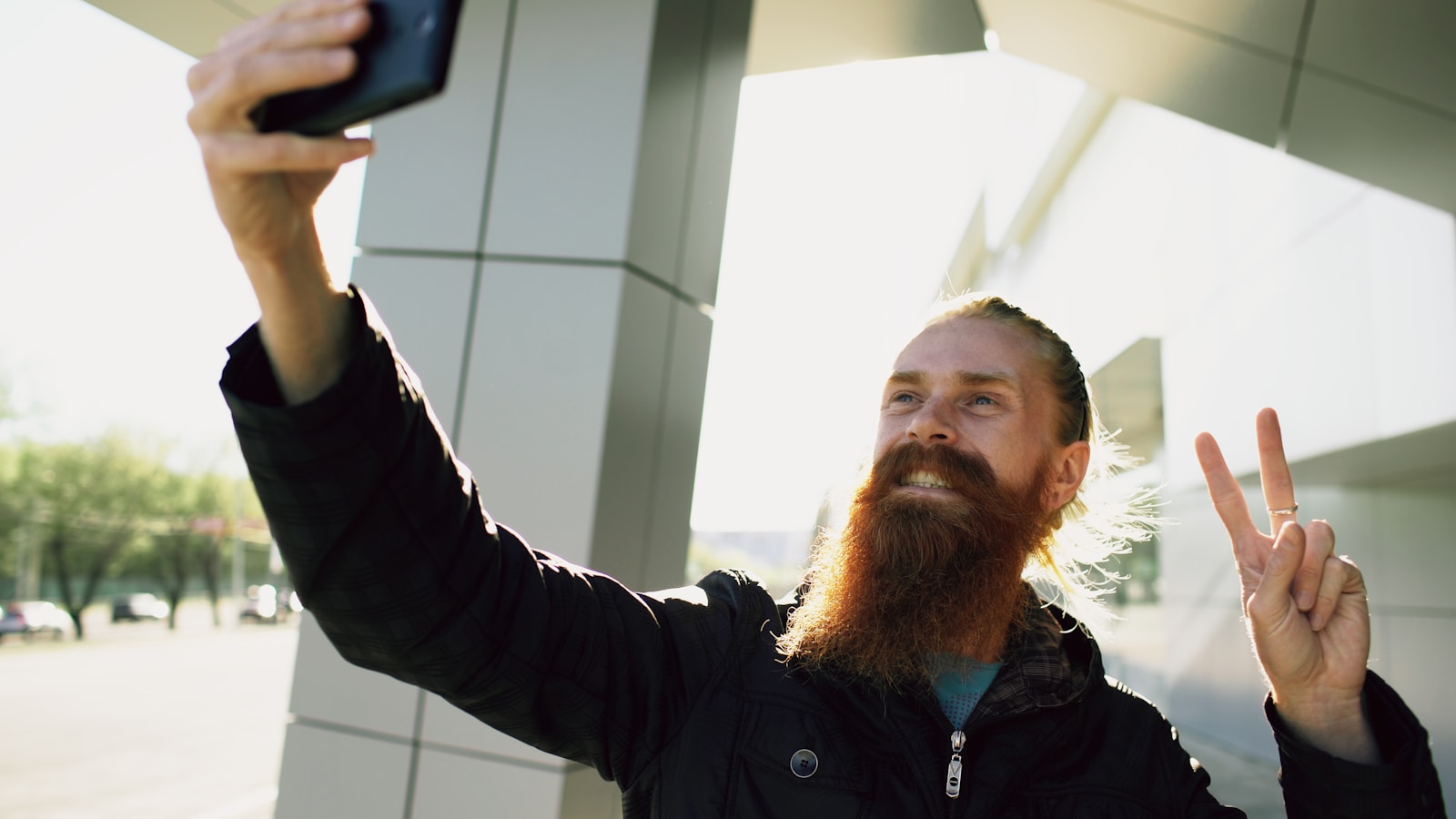
  <img src="/images/blog/sin-foto-no-contesto-1.jpg" alt="A bearded man holding a phone up to take a selfie outdoors, making a peace sign." loading="lazy" />
  <figcaption>The photo everyone is actually asking for is this boring: your face, in daylight, recognisably you. Photo by <a href="https://unsplash.com/photos/man-with-beard-takes-a-selfie-making-peace-sign-pcGQnd3mcOI" target="_blank" rel="noopener noreferrer">Vitaly Gariev on Unsplash</a>.</figcaption>
</figure>

## Asking, in four words

<mark lang="es-MX">Foto</mark> is the ordinary everyday word for a photograph,[^rae-foto] and <mark lang="es-MX">cara</mark> is face.[^rae-cara] Put them together and you have the standard ask:

<ul class="examples">
  <li class="example">
    <div class="es" lang="es-MX">¿Tienes foto de cara?</div>
    <div class="en" lang="en">Do you have a face pic?</div>
  </li>
  <li class="example">
    <div class="es" lang="es-MX">¿Me mandas una de cara cuando puedas?</div>
    <div class="en" lang="en">Send me a face one whenever you can?</div>
  </li>
</ul>

**Do not attach a reason.** This is the single most common mistake English speakers make here, and it comes from good intentions.

The instinct is to soften the ask by explaining it — I just like to know who I'm talking to, no pressure, totally fine if not, it's just that last time... Every clause you add makes it heavier. The four-word version is neutral because it is short; a paragraph reads as someone building a case, and a case expects a verdict.

<div class="do-dont">
  <div class="dd-col dd-do">
    <p class="dd-title">Lands fine</p>
    <ul>
      <li><b lang="es-MX">¿Tienes foto de cara?</b></li>
      <li><b lang="es-MX">¿Me mandas una de cara?</b></li>
      <li><b lang="es-MX">Va, sin prisa.</b> — after they say later</li>
      <li><b lang="es-MX">Todo bien, respeto eso.</b> — after a no</li>
    </ul>
  </div>
  <div class="dd-col dd-dont">
    <p class="dd-title">Lands as pressure</p>
    <ul>
      <li><b lang="es-MX">¿Qué escondes?</b> — an accusation in a question's clothes</li>
      <li><b lang="es-MX">Yo ya te mandé la mía.</b> — makes a photo a debt</li>
      <li><b lang="es-MX">Ándale, una nada más.</b> — insisting after a no</li>
      <li><b>A paragraph of reasons</b> — reads as a case, not a question</li>
    </ul>
  </div>
</div>

<div id="midpost-newsletter-slot"></div>

## Saying no without four apologies

Your privacy is not less valid than theirs. You can decline for now, or forever, and stay in the conversation either way.

<ol class="ladder">
  <li>
    <div class="rung-card">
      <span class="rung-label">not yet</span>
      <span class="rung-es" lang="es-MX">Prefiero mandar foto cuando haya más confianza.</span>
      <span class="rung-en" lang="en">I'd rather send a photo once there's more trust.</span>
      <span class="rung-note">Names a condition instead of a refusal. Most people accept this immediately, because it is what they would say.</span>
    </div>
  </li>
  <li>
    <div class="rung-card">
      <span class="rung-label">face only</span>
      <span class="rung-es" lang="es-MX">De cara sí, privadas no.</span>
      <span class="rung-en" lang="en">Face pics yes, private ones no.</span>
      <span class="rung-note">Useful when the ask quietly escalated. Draws the line exactly where you want it and nowhere else.</span>
    </div>
  </li>
  <li>
    <div class="rung-card">
      <span class="rung-label">standing rule</span>
      <span class="rung-es" lang="es-MX">No comparto fotos privadas.</span>
      <span class="rung-en" lang="en">I don't share private photos.</span>
      <span class="rung-note">Present tense, no timeframe. It is a policy, not a mood, and a policy has nothing to argue with.</span>
    </div>
  </li>
  <li>
    <div class="rung-card">
      <span class="rung-label">done</span>
      <span class="rung-es" lang="es-MX">Ya te dije que no. Que estés bien.</span>
      <span class="rung-en" lang="en">I already said no. Take care.</span>
      <span class="rung-note">For the third ask. There is no fourth conversation worth having.</span>
    </div>
  </li>
</ol>

## The sentence that actually gets photos sent

Here is the counterintuitive bit, and it took me embarrassingly long to work out.

The thing that moves a photo is not charm and definitely not persistence. It is removing the risk. Say the quiet part before anyone has to ask:

<ul class="examples">
  <li class="example">
    <div class="es" lang="es-MX">No hago capturas ni las paso a nadie.</div>
    <div class="en" lang="en">I don't screenshot and I don't pass them around.</div>
  </li>
</ul>

<div class="note-card is-tip">
  <span class="note-label">Why it works</span>
  <p>Nobody is worried about you seeing the photo. They are worried about where it goes next — a group chat, a coworker, a family member. Naming that fear out loud, unprompted, is the only reassurance that costs you nothing and means something.</p>
</div>

<figure>
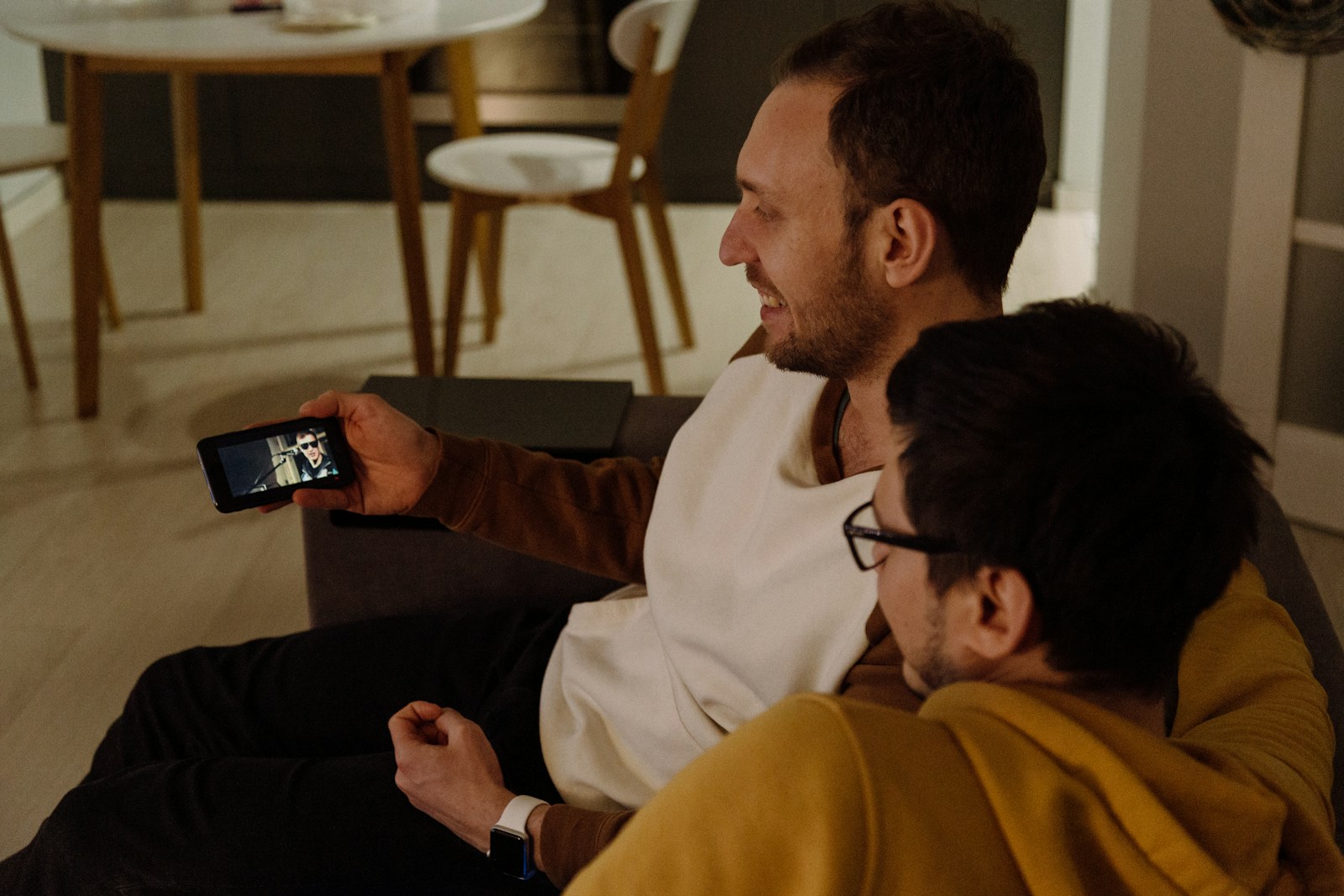
  <img src="/images/blog/sin-foto-no-contesto-2.jpg" alt="Two men sitting close together on a sofa, both looking at the same phone screen." loading="lazy" />
  <figcaption>A photo is a trust move, and trust moves are easier to make when someone has already told you the rules they play by. Photo by <a href="https://unsplash.com/photos/two-sitting-men-watching-from-smartphone-aWHpV-ocThE" target="_blank" rel="noopener noreferrer">Alex Suprun on Unsplash</a>.</figcaption>
</figure>

## The etiquette nobody writes down

Don't screenshot. Don't forward. Don't repost. Don't out people.

That is not squeamishness, and in this context it is not a small thing: a forwarded photo can end somebody's job, their family relationships, or their housing. Grindr's community guidelines treat sharing someone's images without consent as reportable behavior rather than a grey area,[^grindr-guidelines] and their own guidance on profile pictures is built around being genuine rather than being anonymous.[^grindr-profile]

If someone tells you no, the whole reply is:

<ul class="examples">
  <li class="example">
    <div class="es" lang="es-MX">Todo bien, respeto eso.</div>
    <div class="en" lang="en">All good, I respect that.</div>
  </li>
</ul>

Nobody has ever fallen in love because of that sentence. But it makes you the kind of person a careful stranger can keep talking to, which on these apps is worth considerably more than a clever opener.

For the wider vocabulary around outing, privacy and queer identity in Spanish, GLAAD's Spanish-language reference is a better guide than guesswork.[^glaad-guia]

[^rae-foto]: [Diccionario de la lengua española, foto](https://dle.rae.es/foto) — Real Academia Española.
[^rae-cara]: [Diccionario de la lengua española, cara](https://dle.rae.es/cara) — Real Academia Española.
[^dem-discreto]: [Diccionario del español de México, discreto](https://dem.colmex.mx/ver/discreto) — El Colegio de México.
[^grindr-guidelines]: [Grindr Community Guidelines](https://www.grindr.com/community-guidelines) — Grindr.
[^grindr-profile]: [Grindr, dating app profile pictures](https://www.grindr.com/blog/dating-app-profile-pictures) — Grindr.
[^glaad-guia]: [GLAAD, guía de términos y definiciones para los medios](https://glaad.org/publications/guia-de-glaad/) — GLAAD.

FAQ:
Q: What does sin foto no contesto mean?
A: No photo, no reply. It is a filter someone has put in their bio, usually after too many blank profiles, not a comment on anyone in particular.

Q: How do I ask for a face pic in Spanish?
A: Say ¿tienes foto de cara? or ¿me mandas una de cara? Both are normal and neither needs a reason attached.

Q: What does foto de cara mean?
A: A face pic. It is the standard ask on Mexican dating apps, and it is asking specifically for a face rather than a body shot.

Q: How do I say I don't want to send a photo yet?
A: Say prefiero mandar foto cuando haya más confianza. It declines for now without closing the conversation.

Q: How do I refuse private photos completely?
A: Say no comparto fotos privadas. Phrase it as a standing rule, not a decision about that person, and there is nothing to negotiate.

Q: Is sin foto no contesto rude?
A: Blunt, not rude. Bios are tiny and the phrase does in four words what a paragraph would do badly. Most people writing it have simply run out of patience with empty profiles.

Q: Why do so many profiles in Mexico have no photo?
A: Some people are not out at work or to family, some have public-facing jobs, and some have been screenshotted before. Discretion and caution are the common reasons, not deception.

Q: What should I say if someone says no to sending a photo?
A: Todo bien, respeto eso. Then continue the conversation normally. Reacting badly is the fastest way to confirm they were right to be careful.

Q: Is it okay to screenshot someone's photo?
A: No. Saving, forwarding, or reposting someone's photos without permission is a serious breach in this context and can out somebody. Grindr's guidelines treat non-consensual sharing as reportable.

Sources:
- Diccionario de la lengua española, foto: https://dle.rae.es/foto
- Diccionario de la lengua española, cara: https://dle.rae.es/cara
- Diccionario del español de México, discreto: https://dem.colmex.mx/ver/discreto
- Grindr Community Guidelines: https://www.grindr.com/community-guidelines
- Grindr, dating app profile pictures: https://www.grindr.com/blog/dating-app-profile-pictures
- GLAAD, guía de términos y definiciones para los medios: https://glaad.org/publications/guia-de-glaad/

Related words: sale, nel, que-onda, tranquilo