---
title: "Pica, Está Picoso, No Pica Tanto: Mexican Spanish for Spice Levels"
description: "Spanish splits the burn from the flavour and gives you a verb for losing - me enchilé. Plus the question that gets an honest answer, and why water is the wrong move."
type: "article"
category: "food"
url: "https://consalsa.app/blog/spice-levels-mexican-spanish"
canonical: "https://consalsa.app/blog/spice-levels-mexican-spanish"
published: "2026-06-11"
updated: "2026-08-20"
author: "Andrey the Nomad"
site: "ConSalsa.App"
license: "https://consalsa.app/about"
---

# Pica, Está Picoso, No Pica Tanto: Mexican Spanish for Spice Levels
URL: https://consalsa.app/blog/spice-levels-mexican-spanish
Date: 2026-06-11
Updated: 2026-08-20
Category: food
Keywords: pica meaning mexican spanish, picoso meaning mexico, me enchile meaning, enchiloso vs picoso, cual pica menos, how to stop chili burn
Summary: Spanish splits the burn from the flavour and gives you a verb for losing - me enchilé. Plus the question that gets an honest answer, and why water is the wrong move.

Quick answer:
- Pica is a verb - it stings. Picoso and enchiloso are adjectives - it is spicy. Spanish keeps the sensation and the property apart, English does not.
- Me enchilé is a whole verb for the state of having been beaten by the chile. There is no English equivalent.
- Ask ¿cuál pica menos? instead of ¿pica? A comparison forces a real answer; a yes-or-no question gets you someone's autobiography.
- Do not reach for water. Capsaicin does not dissolve in it, and research shows milk proteins bind it while water mostly moves it around.

What you'll learn:
- The difference between pica, picoso, enchiloso and está bravo.
- Why me enchilé is the most useful spice word nobody teaches you.
- The comparison question that gets vendors to answer honestly.
- What actually helps when you have overdone it, and what makes it worse.

Don't sound gringo:
No pica is not a fact about the salsa. It is a fact about the person saying it. Ask ¿cuál pica menos? instead - comparison is much harder to be casually wrong about.

Body:

English has one word for this, and it is doing too much. "Spicy" describes the salsa, describes your face, and describes the situation you are now in, all with the same four letters.

Spanish splits it up, and the split is genuinely useful.

## Pica is a verb, picoso is an adjective

<mark lang="es-MX">Pica</mark> literally means *it stings*. It is a verb, and its subject is the food doing something to you. <mark lang="es-MX">Picoso</mark> and <mark lang="es-MX">enchiloso</mark> are adjectives describing what the food **is**.

That sounds like grammar trivia until you notice what it does in a real conversation:

| Se dice | Y realmente significa |
|---|---|
| ¿Pica? | Will this do something to me? |
| Sí pica | Yes, it acts on you |
| Está picoso | It is a spicy thing |
| Está enchiloso | Same, more casual, very Mexican |
| Está bravo / bravita | It is fierce. Take this seriously |
| No pica, pero sí sabe | No burn, real flavour. The good outcome |
| Pica sabroso | It burns pleasantly - a compliment |

<mark lang="es-MX">Pica sabroso</mark> is worth pausing on. It has no English equivalent and it names something real: heat that improves the food rather than erasing it. When a taquero says it about their salsa, they are being precise, not poetic.

<figure>
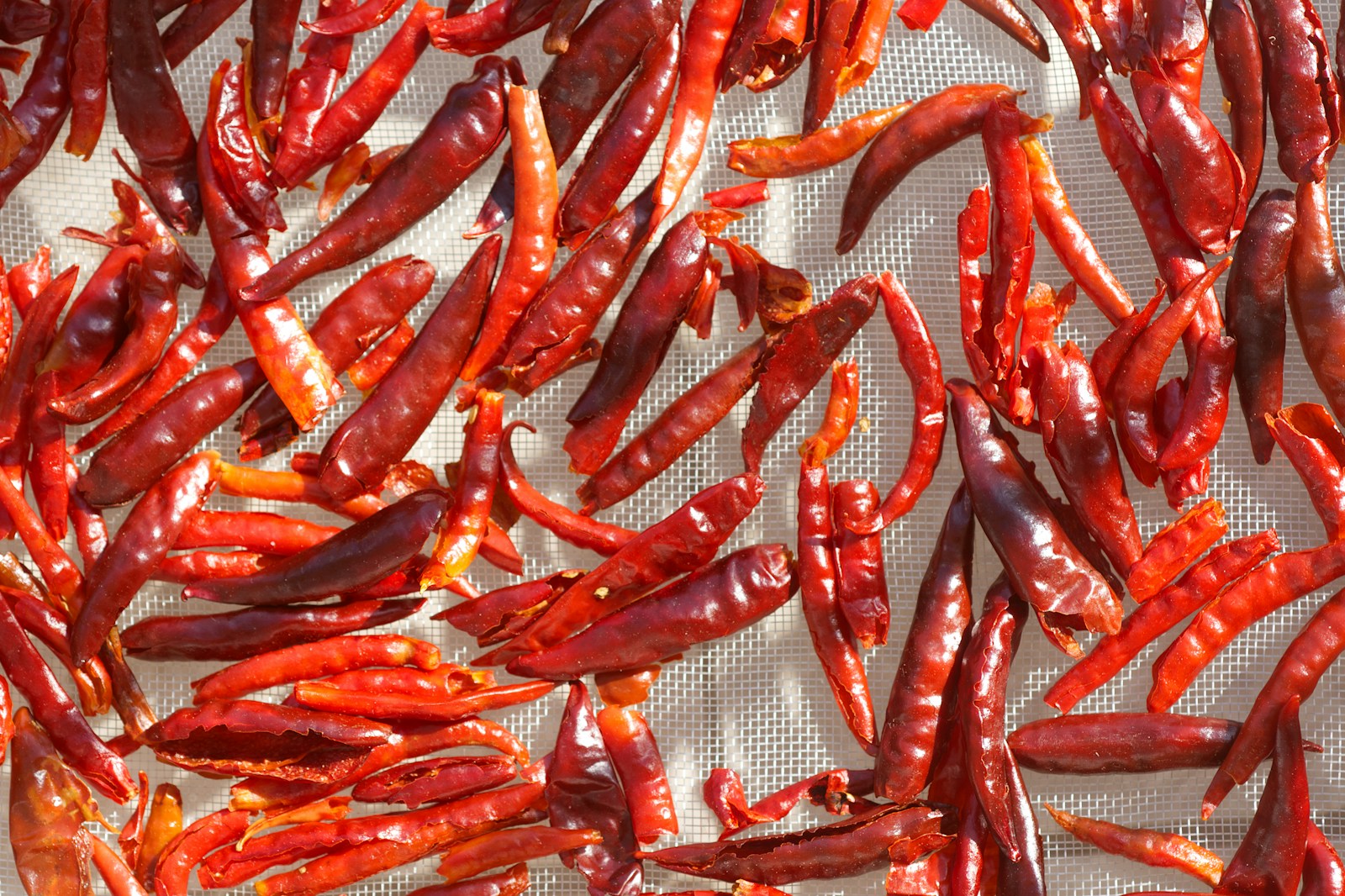
  <img src="/images/blog/spice-levels-1.jpg" alt="Red chili peppers laid out drying in the sun." loading="lazy" />
  <figcaption>Mexico recognizes at least 64 domesticated chile varieties and around 200 native ones. No single scale could cover that. Photo by <a href="https://unsplash.com/photos/to6eI5Bn6H8" target="_blank" rel="noopener noreferrer">stephan hinni on Unsplash</a>.</figcaption>
</figure>

<div id="midpost-newsletter-slot"></div>

## The verb for having lost: enchilarse

Here is the word that should be in every phrasebook and is in almost none.

<div class="note-card is-tip">
  <span class="note-label">La palabra que te falta</span>
  <p><b lang="es-MX">Me enchilé.</b></p>
  <p>Not "it was too spicy." Not "I ate something spicy." A single reflexive verb meaning <em>the chile got me, and I am currently dealing with it</em>.</p>
</div>

<mark lang="es-MX">Enchilarse</mark> works exactly like <mark lang="es-MX">quemarse</mark> (to burn yourself) or <mark lang="es-MX">marearse</mark> (to get dizzy). Something happened to you, you are now in that state, and Spanish gives it its own verb.

<ul class="examples">
  <li class="example">
    <div class="es" lang="es-MX">Me enchilé horrible, ya no puedo.</div>
    <div class="en" lang="en">The chile absolutely got me, I can't go on.</div>
  </li>
  <li class="example">
    <div class="es" lang="es-MX">Se enchiló con la verde, no con la roja.</div>
    <div class="en" lang="en">The green one got him, not the red one.</div>
  </li>
  <li class="example">
    <div class="es" lang="es-MX">Si te enchilas, dime y te traigo horchata.</div>
    <div class="en" lang="en">If the chile gets you, say so and I'll bring you horchata.</div>
  </li>
</ul>

The reason this matters socially: <mark lang="es-MX">me enchilé</mark> is a *normal thing to say*. It is not an admission of weakness. Mexicans say it about Mexican food constantly, because the chile is genuinely capable of winning and everyone knows it.

## Ask a comparison, not a yes-or-no

The classic warning is that <mark lang="es-MX">no pica</mark> cannot be trusted. That is true, but the usual advice - "ask if it's spicy" - is the problem, not the fix.

<mark lang="es-MX">¿Pica?</mark> is a yes-or-no question about a subjective sensation. The person answering is telling you the truth about **their** mouth, and their mouth has been training since childhood.

So change the question shape:

<div class="do-dont">
  <div class="dd-col dd-do"><p class="dd-title">Preguntas que sí funcionan</p><ul>
    <li><b lang="es-MX">¿Cuál pica menos?</b> - forces a ranking of what is actually on the table</li>
    <li><b lang="es-MX">¿Cuál me recomienda si no aguanto mucho?</b> - honest, and people are kind about it</li>
    <li><b lang="es-MX">¿Esa es la brava?</b> - most tables have one, and everyone knows which</li>
    <li><b lang="es-MX">¿De qué chile es?</b> - habanero, árbol and serrano are real information</li>
  </ul></div>
  <div class="dd-col dd-dont"><p class="dd-title">Preguntas que no</p><ul>
    <li><b lang="es-MX">¿Pica?</b> - the answer is almost always no</li>
    <li><b lang="es-MX">¿Está muy picante?</b> - same problem, longer</li>
    <li><b lang="es-MX">¿Es segura?</b> - nobody knows what you mean</li>
    <li>Nothing, then a heroic spoonful - the classic</li>
  </ul></div>
</div>

Asking <mark lang="es-MX">¿de qué chile es?</mark> is the upgrade move. The government's own count puts Mexico at 64 domesticated chile varieties and roughly 200 native ones,[^semarnat-chiles] and the country is the plant's center of genetic diversity.[^agri-cuna] Habanero and árbol behave completely differently from serrano or morita. Once you know a couple of names, you can predict the salsa instead of gambling on it.

<figure>
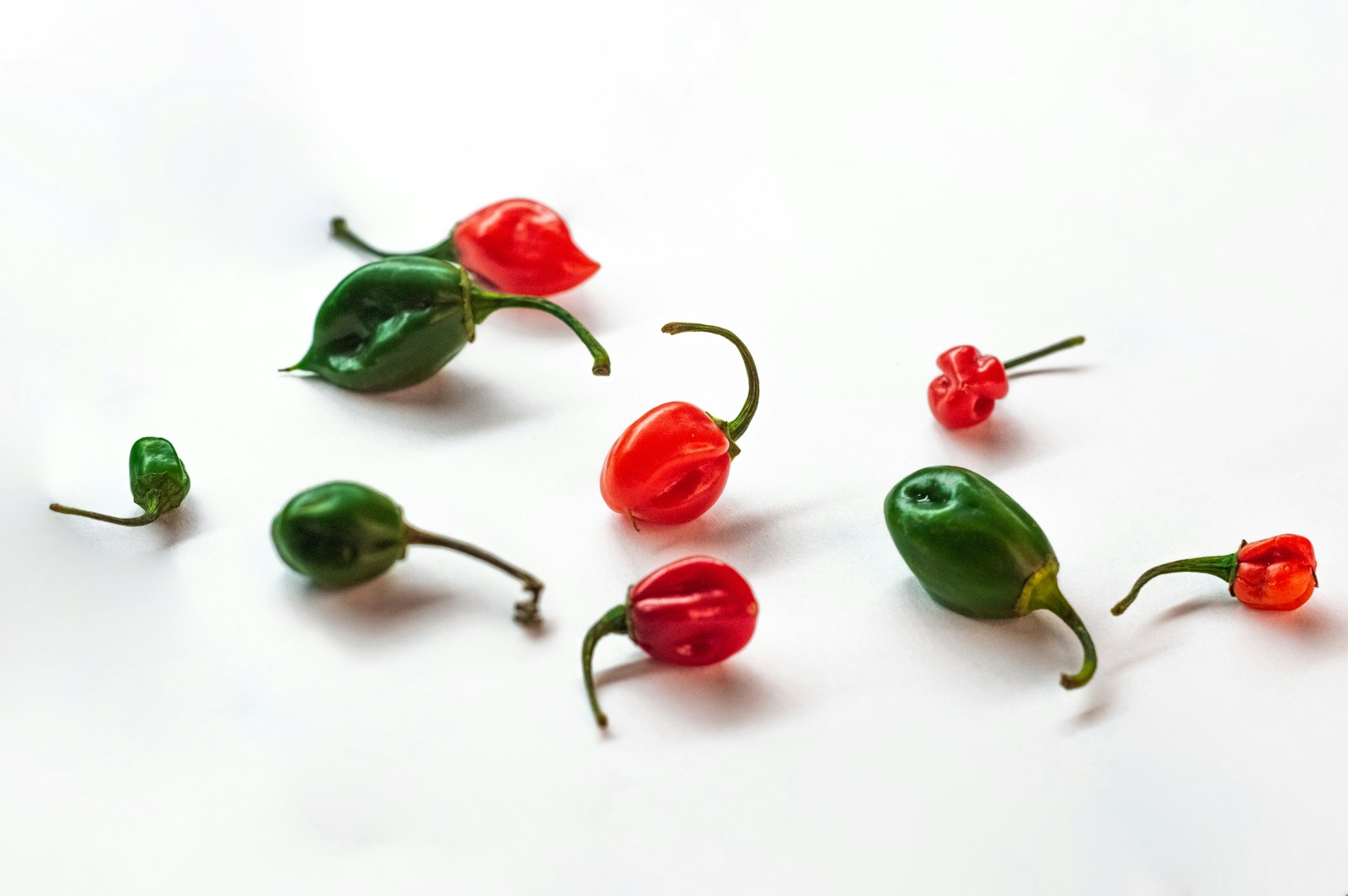
  <img src="/images/blog/spice-levels-2.jpg" alt="Red and green peppers arranged on a white surface." loading="lazy" />
  <figcaption>Color is not the signal. A green habanero salsa will outrun almost any red one on the table. Photo by <a href="https://unsplash.com/photos/fR1KMH4IMeU" target="_blank" rel="noopener noreferrer">Danaus Mx on Unsplash</a>.</figcaption>
</figure>

## The color myth

Somebody will tell you green is milder than red. Please ignore them.

Salsa color comes from the ingredients - tomatillo and cilantro make it green, ripe chile and jitomate make it red. Heat comes from **which chile**, and habaneros are famously not red. The green salsa on a taquería table is very often the one to respect.

<div class="chat-thread">
  <div class="chat-head"><span class="chat-avatar"></span><span>en el puesto, viernes en la noche</span><span class="chat-meta">mira la tercera línea</span></div>
  <ul class="chat-msgs">
    <li class="out"><span class="es" lang="es-MX">¿Cuál pica menos?</span><span class="en">Which one is least spicy?</span></li>
    <li class="in"><span class="es" lang="es-MX">La roja. La verde es de habanero, esa sí está brava</span><span class="en">The red one. The green is habanero, that one's fierce</span></li>
    <li class="out"><span class="es" lang="es-MX">Va, tantita roja entonces</span><span class="en">Alright, a little red then</span></li>
    <li class="in"><span class="es" lang="es-MX">Sale. Y si te enchilas, ahí hay horchata</span><span class="en">Coming up. And if it gets you, there's horchata over there</span></li>
  </ul>
  <p class="chat-read">Four lines, and one of them overturned the thing you thought you knew. <strong>The comparison question did all the work.</strong></p>
</div>

## What to do when you lose

The reflex almost everyone has - reach for water - is the wrong one, and there is decent research on why.

Capsaicin, the compound that makes chile burn, does not dissolve in water. So a glass of cold water gives you a second of relief and then redistributes the capsaicin around your mouth. What works better is protein and fat. In a 2023 study in the *Journal of Food Science*, a rinse of casein - the main protein in cow's milk - reduced perceived oral burn by around 27 percent at the one-minute mark compared with plain water.[^farah-casein] Follow-up work found the effect is not only about fat: proteins in both dairy and plant milks contribute.[^plantmilk-burn]

Which is a laboratory way of saying that the thing every Mexican table already does is correct.

<ol class="ladder">
  <li><div class="rung-card">
    <span class="rung-label">lo mejor</span>
    <span class="rung-es" lang="es-MX">Horchata, leche, un lácteo</span>
    <span class="rung-en" lang="en">Horchata, milk, anything dairy</span>
    <span class="rung-note">There is a reason horchata sits next to the salsa at every taquería in the country.</span>
  </div></li>
  <li><div class="rung-card">
    <span class="rung-label">funciona</span>
    <span class="rung-es" lang="es-MX">Un pedazo de tortilla, pan, arroz</span>
    <span class="rung-en" lang="en">A piece of tortilla, bread, rice</span>
    <span class="rung-note">Starch physically absorbs and carries it away. Free, and always on the table.</span>
  </div></li>
  <li><div class="rung-card">
    <span class="rung-label">ayuda algo</span>
    <span class="rung-es" lang="es-MX">Sal y limón</span>
    <span class="rung-en" lang="en">Salt and lime</span>
    <span class="rung-note">The classic Mexican move. Distraction as much as chemistry, but people swear by it.</span>
  </div></li>
  <li><div class="rung-card">
    <span class="rung-label">no sirve</span>
    <span class="rung-es" lang="es-MX">Agua, cerveza, hielo</span>
    <span class="rung-en" lang="en">Water, beer, ice</span>
    <span class="rung-note">Mostly water, so mostly redistribution. Feels good for a second, then worse.</span>
  </div></li>
</ol>

<figure>
  <img src="/images/blog/spice-levels-3.jpg" alt="A white bowl of red tomato-based sauce topped with avocado and chopped chile." loading="lazy" />
  <figcaption>Ask which chile it is made from. That one question tells you more than any yes-or-no ever will. Photo by <a href="https://unsplash.com/photos/mMOYjM2Jcl0" target="_blank" rel="noopener noreferrer">Alimentos Fotogénicos on Unsplash</a>.</figcaption>
</figure>

## The point of all this

The goal is not to avoid chile. Eat Mexico makes the practical case well: people answer spice questions from inside their own tolerance, so try a little first and calibrate from there.[^eatmexico-spice]

But calibration needs vocabulary. <mark lang="es-MX">¿Cuál pica menos?</mark> to choose. <mark lang="es-MX">Tantita, nada más para probar</mark> to test. <mark lang="es-MX">Me enchilé</mark> when it goes wrong, which is a sentence that makes people laugh and hand you a drink rather than think less of you.

And <mark lang="es-MX">no pica, pero sí sabe</mark> for the moment you find the salsa you were looking for the whole time.

[^farah-casein]: [Farah, Hayes and Coupland, The effect of dairy proteins on the oral burn of capsaicin](https://doi.org/10.1111/1750-3841.16400) — Journal of Food Science, 2023
[^plantmilk-burn]: [More than fat: proteins in dairy and plant milks contribute to the reduction of oral burn from capsaicin](https://doi.org/10.1016/j.foodqual.2023.105041) — Food Quality and Preference, 2023
[^semarnat-chiles]: [SEMARNAT, Las 64 variedades de chile en México](https://www.gob.mx/semarnat/articulos/las-64-variedades-de-chile-en-mexico) — Secretaría de Medio Ambiente y Recursos Naturales
[^agri-cuna]: [Agricultura, México, cuna del chile: riqueza genética que da sabor al mundo](https://www.gob.mx/agricultura/es/articulos/mexico-cuna-del-chile-riqueza-genetica-que-da-sabor-al-mundo) — Secretaría de Agricultura y Desarrollo Rural
[^eatmexico-spice]: [Eat Mexico, Spanish phrases for Mexico City's culinary scene](https://eatmexico.com/useful-spanish-phrases-to-use-while-exploring-mexico-citys-culinary-scene/) — Eat Mexico

FAQ:
Q: What does pica mean?
A: Literally it stings or pricks. In food it is the verb for heat: ¿pica? means does it burn?

Q: What is the difference between pica and picoso?
A: Pica is a verb describing what the food does to you. Picoso is an adjective describing the food. Both are common.

Q: What does enchiloso mean?
A: Spicy, in the specific sense of chile heat. It is very Mexican and slightly more casual than picoso.

Q: What does me enchilé mean?
A: It means the chile got me - I overdid it and I am now suffering. Enchilarse is a reflexive verb with no clean English translation.

Q: What does está bravo mean about salsa?
A: That it is fierce. Bravo is used for animals and weather too, and it is a genuine warning.

Q: What is the best question to ask about heat?
A: ¿Cuál pica menos? A comparison between the salsas on the table gets a far more honest answer than a yes-or-no question.

Q: Does salsa color tell you the heat?
A: No. Green is not milder than red as a rule. The chile variety decides, not the color.

Q: Should I drink water if it is too spicy?
A: No. Capsaicin is not water-soluble, so water mostly spreads it. Milk, horchata, or something with fat and protein works better.

Q: How do I ask for less salsa?
A: Say tantita salsa or poquita salsa. You can also say salsa aparte to get it on the side.

Q: How many kinds of chile are there in Mexico?
A: Officially at least 64 domesticated varieties and around 200 native ones, which is why heat is impossible to generalise about.

Sources:
- Farah, Hayes and Coupland, The effect of dairy proteins on the oral burn of capsaicin, Journal of Food Science: https://doi.org/10.1111/1750-3841.16400
- More than fat: proteins in dairy and plant milks reduce oral burn from capsaicin, Food Quality and Preference: https://doi.org/10.1016/j.foodqual.2023.105041
- SEMARNAT, Las 64 variedades de chile en México: https://www.gob.mx/semarnat/articulos/las-64-variedades-de-chile-en-mexico
- Agricultura, México, cuna del chile: riqueza genética que da sabor al mundo: https://www.gob.mx/agricultura/es/articulos/mexico-cuna-del-chile-riqueza-genetica-que-da-sabor-al-mundo
- Eat Mexico, Spanish phrases for Mexico City's culinary scene: https://eatmexico.com/useful-spanish-phrases-to-use-while-exploring-mexico-citys-culinary-scene/

Related words: aguas, no-manches, chido, sale