---
title: "Se Compran Colchones: What Mexico's Street Calls Actually Mean"
description: "Decode the street calls of a Mexican neighborhood: se compran colchones, the camote cart whistle, el gas, tamales oaxaqueños, and what to shout back."
type: "article"
category: "markets"
url: "https://consalsa.app/blog/street-vendor-calls-mexico"
canonical: "https://consalsa.app/blog/street-vendor-calls-mexico"
published: "2026-08-22"
updated: "2026-08-22"
author: "Andrey the Nomad"
site: "ConSalsa.App"
license: "https://consalsa.app/about"
---
# Se Compran Colchones: What Mexico's Street Calls Actually Mean
URL: https://consalsa.app/blog/street-vendor-calls-mexico
Date: 2026-08-22
Updated: 2026-08-22
Category: markets
Keywords: se compran colchones, mexican street vendor calls, street sounds mexico city, camote cart whistle, fierro viejo meaning, tamales oaxaqueños call, organillero mexico city
Summary: Decode the street calls of a Mexican neighborhood: se compran colchones, the camote cart whistle, el gas, tamales oaxaqueños, and what to shout back.
Quick answer:
- The famous loudspeaker recording is a scrap buyer: se compran colchones means we buy mattresses, plus drums, fridges, stoves, washers, and any old metal.
- The train-whistle shriek at night is the camote cart, a wood-fired oven selling baked sweet potato and plantain.
- El gaaas is the LP gas truck swapping your empty tank, and the bicycle recording after dark is tamales oaxaqueños.
- To stop any of them, step outside and call ¡joven! or ¡señor!, or whistle. Nobody expects a full sentence.
What you'll learn:
- What each recorded or shouted call is actually selling, or buying.
- Roughly what time of day you hear each one in a CDMX neighborhood.
- The short phrase to shout so the cart, truck, or bike stops for you.
- Who is behind the most famous loudspeaker recording in the country.
Don't sound gringo:
Don't sprint after the truck waving pesos. Step outside, catch the driver's eye, and say ¡joven! or just whistle. In CDMX a whistle is a real word, and it carries a lot further than your Spanish does.
Body:
My first week in Mexico City I lay in bed at 8 in the morning listening to a woman's voice, warped and enormous, listing objects at me from a moving vehicle. I could not catch a single word. I assumed it was political.
It was a guy in a pickup truck who wanted my old microwave.
Almost every recorded call you hear on a Mexican street is one of seven things: a scrap buyer, a camote cart, a gas truck, a tamal vendor, a water truck, a knife sharpener, or a barrel organ. The most famous of them, the loudspeaker chanting se compran colchones, is not selling you anything. It is buying your dead refrigerator.
Nobody explains this to you. You live inside it for a few weeks, quietly building a private theory about each sound, and most of your theories are wrong.
So here is the decoder.
## The seven sounds, in one table
| What you hear | Who it is | What they want | Roughly when |
|---|---|---|---|
| Loudspeaker listing appliances | Scrap buyer (fierro viejo) | To buy your junk | Mid-morning to late afternoon |
| Long steam whistle, like a train | Camote cart | To sell you baked sweet potato | After dark, 7 pm onward |
| Man shouting "el gaaas" | LP gas truck | To swap your gas tank | Daytime, most days |
| Recording about tamales, from a bike | Tamal vendor | To sell you tamales oaxaqueños | Night, 8 pm to 11 pm |
| Truck horn plus "el agua" | Water delivery | To swap your garrafón | Daytime |
| Pan flute, short descending tune | Knife sharpener | To sharpen your knives | Daytime, weekdays |
| Barrel organ, slightly out of tune | Organillero | Tips | Daytime, Centro and Alameda |
Learn the table and the city stops being ambient noise. It becomes a schedule.
The camote whistle is the one worth putting shoes on for.
## Se compran colchones: the most famous recording in Mexico
Here is the full text, which you will eventually be able to recite in your sleep whether you want to or not:
Se compran colchones, tambores, refrigeradores, estufas, lavadoras, microondas, o algo de fierro viejo que vendan.
We buy mattresses, drums, fridges, stoves, washing machines, microwaves, or any old metal you're selling.
**The key word is se compran, not se venden.** They buy. You sell. Almost every foreigner gets this backwards for the first month and quietly wonders why a truck is trying to sell mattresses to an entire street at 8 am.
Fierro is the everyday Mexican word for iron, the one people actually use instead of hierro.[^rae-fierro] So fierro viejo is old metal, scrap, the category that covers your ruined blender and the bed frame in the stairwell. Tambores here does not mean drums you play - it means the big metal drums used as containers.
The truck is usually a battered pickup with a loudspeaker bolted to the roof. It circles the same streets for years.
And the voice is a child's. It belongs to María del Mar Terrón Martínez, who recorded the list around 2005, when she was eight or nine, for her father Marco Antonio, a scrap buyer who wanted a cassette instead of a voice he had to wreck all day.[^mexicodesconocido] It took them most of a night to get a clean take.[^unotv] Someone copied the tape, then someone copied that, and it spread across the whole country. There are remixes. There are ringtones. There is a version people play at weddings.
If you want to sell them something, you do not need a speech:
¡Joven! Traigo un refri viejo.
Hey! I've got an old fridge.
¿Cuánto me da por esto?
How much will you give me for this?
Do not expect real money. Expect it gone, which is often worth more.
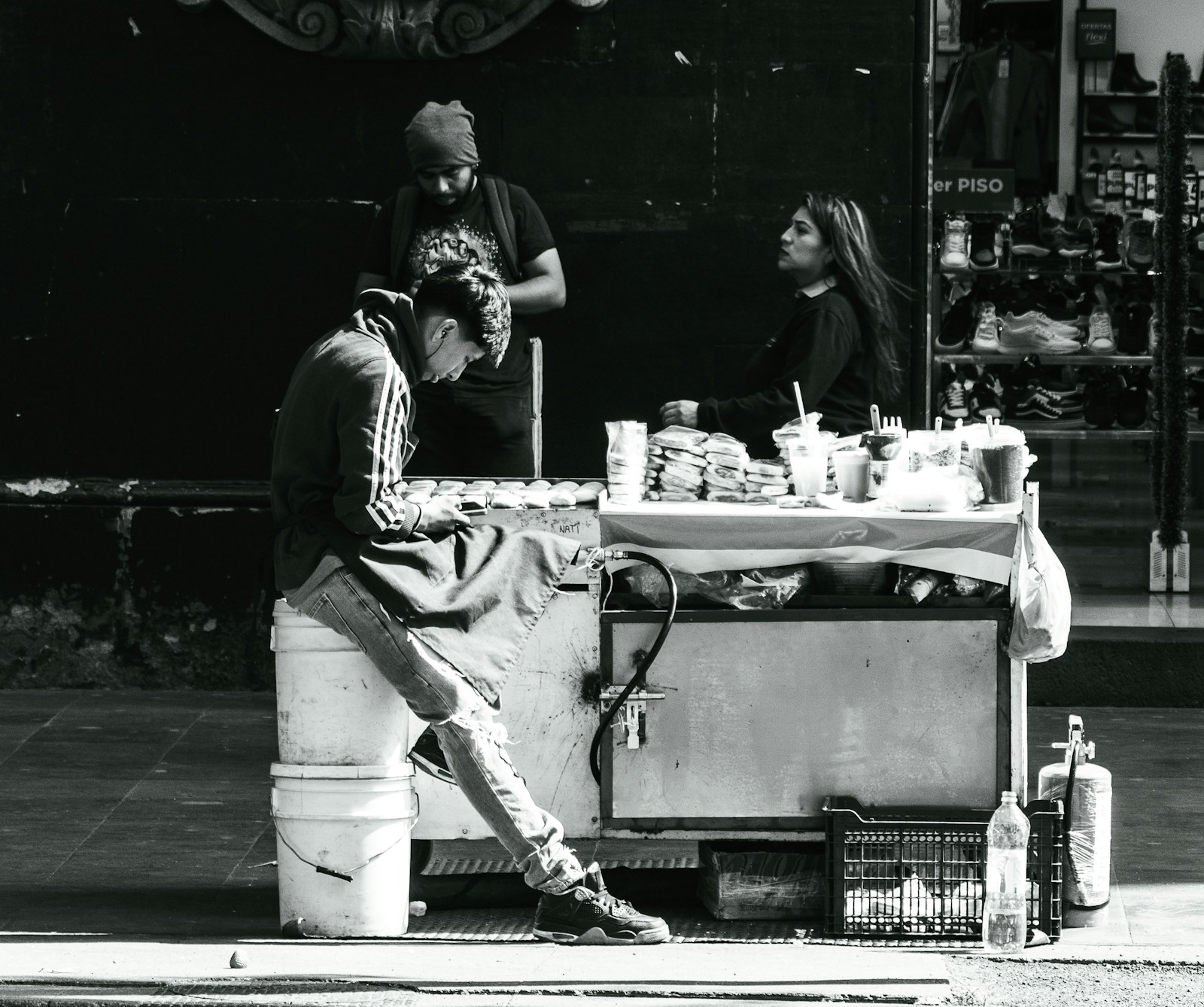
Most of the Mexican street economy announces itself by sound before you ever see it. Photo by Reza Madani on Unsplash.
## The camote cart, or why there is a train in your street at 9 pm
This one confused me the longest. A locomotive whistle, at night, in a neighborhood with no train tracks, holding one impossible note for eight or nine seconds.
It is a sweet potato cart.
Camote is sweet potato, a word that comes from Nahuatl[^rae-camote] and is completely standard in Mexico.[^dem-camote] The cart carries a sealed wood-fired oven, and the pressure that builds up inside gets released through a steam whistle. The whistle is not a gimmick bolted on for charm. It is the oven venting, and the vendor controls it.
The cart bakes camote and plátano macho, plantain, until both collapse into something jammy. Then it gets drowned in condensed milk.
¿Me da un camote con leche condensada?
Can I get a sweet potato with condensed milk?
Uno de plátano, porfa.
One plantain one, please.
It arrives scalding, in a plastic bag or a foam cup, and it is the correct thing to eat while standing on a cold street doing nothing else.
## El gaaas: the truck that keeps your kitchen alive
Most Mexican homes cook with LP gas, not electricity. Either you have a swappable cylinder, el cilindro or el tanque, or a fixed rooftop tank, el estacionario, that gets refilled from a hose.
So the gas truck is not a novelty. It is infrastructure with a loudspeaker.
You will hear a man's voice dragging the vowel out - el gaaaas - sometimes with the company name attached. If your shower goes cold mid-soap, that truck is now the most important vehicle in your life.
| Situation | What to say |
|---|---|
| Flagging them down | ¡Joven! ¡Gas! |
| Swapping a cylinder | ¿Me cambia el tanque? |
| Refilling a rooftop tank | Es estacionario, ¿me llena? |
| Asking the price | ¿A cómo está el kilo? |
| Paying | ¿Acepta tarjeta o nada más efectivo? |
Ask about card payment before they start. Plenty of trucks are cash only, and discovering that at the end is a bad time for everybody.
## Tamales oaxaqueños: the bicycle that arrives when you are already in pajamas
At night, usually after 8, a different recording rolls past. Softer, tinnier, on a loop, coming from a bicycle or a tricycle cart with a steel pot strapped to it. Something close to:
Ricos y deliciosos tamales oaxaqueños, tamales calientitos.
Rich, delicious Oaxacan tamales, nice hot tamales.
Tamales oaxaqueños are wrapped in banana leaf rather than corn husk, which makes them wider, softer, and a little more dramatic. The usual fillings are mole, verde, rajas with cheese, and dulce.
Ordering is fast, so keep it short:
¿Me da dos de mole y uno de rajas?
Can I get two mole and one rajas?
¿Tiene de dulce?
Do you have sweet ones?
If they also carry atole, get one. It is a warm corn drink and it is the entire point of the night version.
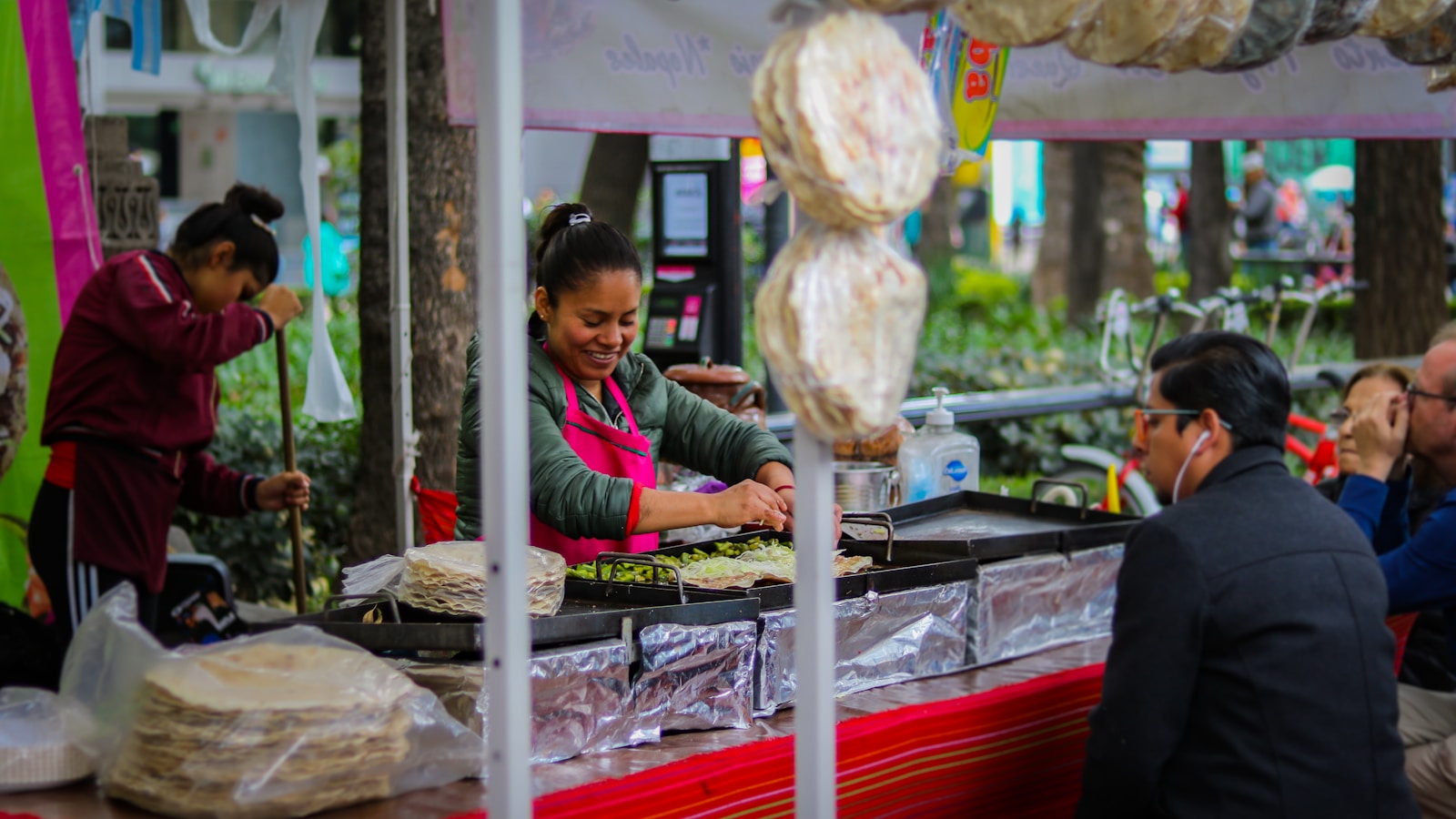
The order is three or four words long. Nobody wants your full sentence at 9 pm. Photo by Daniel Lerman on Unsplash.
## The water truck and the garrafón ritual
Plenty of people in Mexico do not drink the tap water, so drinking water arrives as a garrafón, a big 20-liter jug.[^rae-garrafon] The truck announces itself with a horn, a recording, or a guy shouting el agua.
The important part is that it is a swap, not a purchase. You hand over the empty and pay only for the water inside.
Le cambio el vacío, por favor.
I'll trade you the empty one, please.
¿Me deja dos garrafones?
Can you leave me two jugs?
¿Me lo sube al tercero? Le doy para el refresco.
Could you carry it up to the third floor? I'll tip you.
That last one matters more than your Spanish does. A full garrafón weighs about twenty kilos and stairs are stairs.
## The knife sharpener's pan flute
No words at all. Just a short, breathy descending melody on a pan flute, repeated, getting closer.
That is the afilador, the knife sharpener.[^rae-afilador] He rides a bicycle rigged so the pedals drive a grinding wheel, props it on a stand, and does your knives on the sidewalk while you wait. Scissors too.
¿Me afila estos cuchillos?
Can you sharpen these knives?
¿A cómo el cuchillo?
How much per knife?
**The flute is the oldest trick in the list.** It carries over traffic, it costs nothing to operate, and it means the same thing to everyone on the block without a single word being said.
## The organillero, who is selling nothing
In the Centro Histórico and around the Alameda you will hear a barrel organ: wheezy, slightly out of tune, cranked by hand by a man in a beige uniform and cap.
That is an organillero.[^rae-organillero] He is not a vendor. He turns the handle, a second person walks the crowd with a hat, and you tip if you enjoyed it. The instruments are genuine antiques, most of them built in Germany a century ago, and the trade is treated as part of Mexico City's street culture rather than as busking: the city's culture ministry ran a safeguarding process with the organillero associations to have the oficio declared intangible cultural heritage.[^cultura-cdmx]
Le dejo para el organillo.
Here's something for the organ.
Coins are normal and welcome. Filming a full song and walking off is the move that gets you a look.
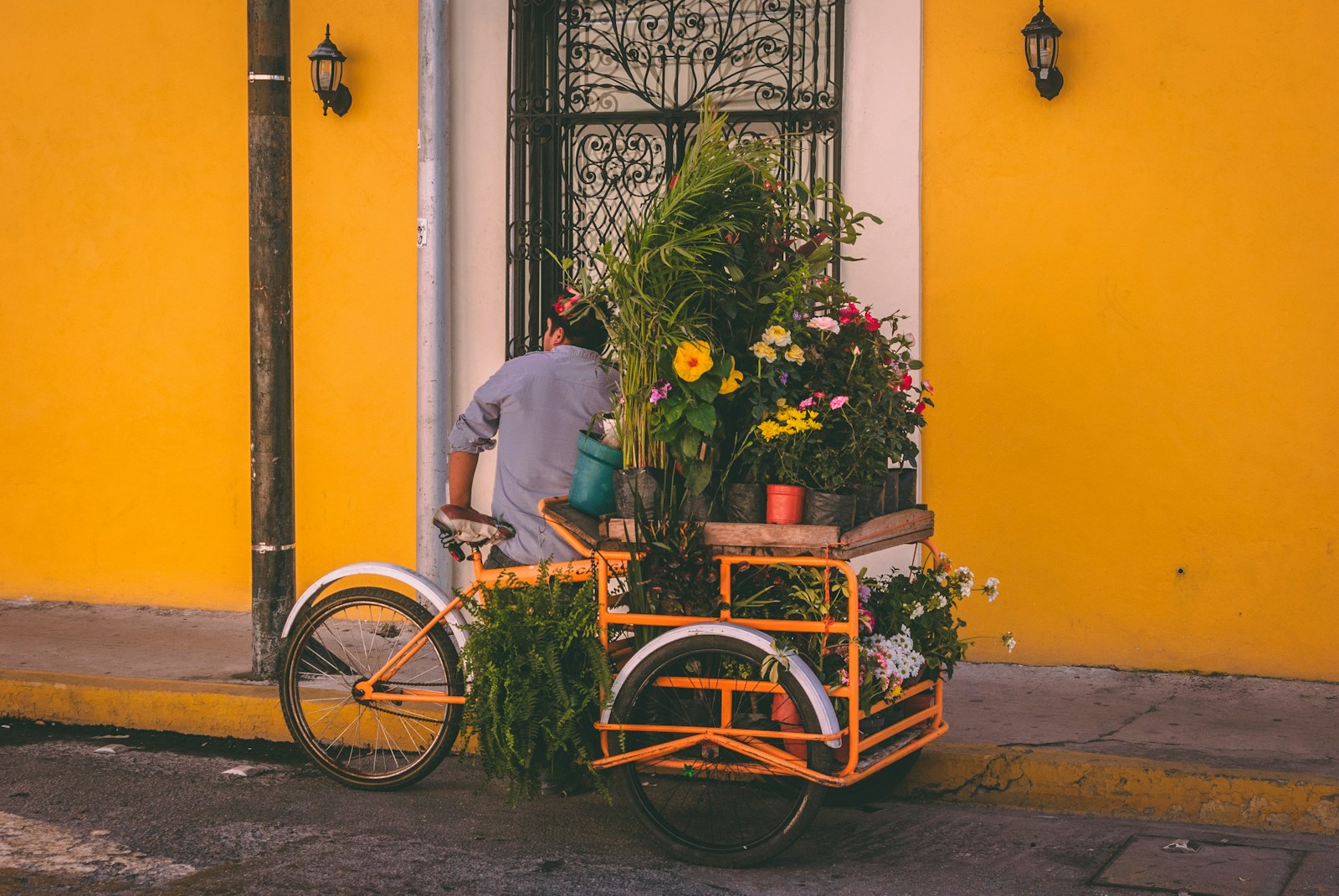
Bikes, tricycles, and carts do most of the selling. The loudspeaker is just how they knock. Photo by Jorge Zapata on Unsplash.
## How to stop any of them
The mechanics are the same for all seven, and they are simpler than you think.
| Step | What to do |
|---|---|
| Get their attention | ¡Joven! or ¡Señor! or a whistle |
| If they've passed you | ¡Aquí! |
| Say what you want | Un camote / Dos de mole / El vacío |
| Ask the price | ¿A cómo? |
| Close it out | Sale, gracias |
Joven is the workhorse. It literally means young man, and it gets used for anyone from nineteen to sixty-five, which is one of the kinder small habits in Mexican Spanish.
Do not chase the vehicle. Do not apologize for existing. **Step out, make the noise, say four words.** The whole exchange takes fifteen seconds, and after a week or two you will do it without translating anything in your head.
Then one evening you will be inside, half asleep, and you will hear a long steam whistle two streets over and think, without any effort at all: camote.
That is the moment the noise turns into a neighborhood.
[^rae-fierro]: [Diccionario de la lengua española, fierro](https://dle.rae.es/fierro) — Real Academia Española
[^rae-camote]: [Diccionario de la lengua española, camote](https://dle.rae.es/camote) — Real Academia Española
[^rae-organillero]: [Diccionario de la lengua española, organillero](https://dle.rae.es/organillero) — Real Academia Española
[^rae-garrafon]: [Diccionario de la lengua española, garrafón](https://dle.rae.es/garraf%C3%B3n) — Real Academia Española
[^rae-afilador]: [Diccionario de la lengua española, afilador](https://dle.rae.es/afilador) — Real Academia Española
[^dem-camote]: [Diccionario del español de México, camote](https://dem.colmex.mx/ver/camote) — El Colegio de México
[^mexicodesconocido]: [María del Mar Terrón, la voz detrás del "Se compran colchones"](https://www.mexicodesconocido.com.mx/maria-del-mar-terron-la-voz-detras-del-se-compran-colchones.html) — México Desconocido
[^unotv]: [“Fierro viejo que venda”: ella es la voz detrás de la icónica grabación](https://www.unotv.com/virales/quien-es-la-chica-del-fierro-viejo-y-por-que-se-hizo-famosa/) — UnoTV
[^cultura-cdmx]: [Avanza plan de salvaguardia para la declaratoria de organilleros como Patrimonio Cultural Inmaterial de la Ciudad de México](https://www.cultura.cdmx.gob.mx/comunicacion/nota/193-25) — Secretaría de Cultura de la Ciudad de México
FAQ:
Q: What does se compran colchones mean?
A: It means we buy mattresses. It is the opening line of a loudspeaker recording used by scrap buyers who drive through neighborhoods buying old appliances and metal. They are buying, not selling.
Q: What is the full se compran colchones recording?
A: The usual version is: se compran colchones, tambores, refrigeradores, estufas, lavadoras, microondas, o algo de fierro viejo que vendan. That is mattresses, drums, fridges, stoves, washers, microwaves, or any old metal you are selling.
Q: What does fierro viejo mean?
A: Old iron, or scrap metal. Fierro is the everyday Mexican form of hierro, iron. Fierro viejo is the whole category of dead appliances and metal junk the truck wants.
Q: What is the train whistle sound at night in Mexico City?
A: It is the camote cart. The oven on the cart is wood-fired, and the built-up steam is released through a whistle, which is why it sounds like a small locomotive parking outside your window.
Q: What is the truck shouting el gas?
A: It is the LP gas delivery truck. Most Mexican homes cook and heat water with gas, either from a swappable cylinder or a rooftop tank, and the truck circles the neighborhood during the day.
Q: What is the bicycle recording playing at night?
A: Tamales oaxaqueños. A vendor with a tricycle cart or a bike plays a recording advertising hot tamales, usually from around 8 pm onward.
Q: What is the pan flute I hear during the day?
A: That is the knife sharpener, the afilador. He rides a bicycle with a grinding wheel and plays a short descending pan flute melody instead of shouting.
Q: What is an organillero?
A: A barrel organ player. In Mexico City they wear beige uniforms and crank antique street organs in the Centro Histórico and around the Alameda, working for tips.
Q: How do I stop a street vendor in Mexico?
A: Step outside and call ¡joven! or ¡señor!, or whistle. If they are already past you, a loud ¡aquí! works. Then say what you want in three or four words.
Sources:
- Diccionario de la lengua española, fierro: https://dle.rae.es/fierro
- Diccionario de la lengua española, camote: https://dle.rae.es/camote
- Diccionario de la lengua española, organillero: https://dle.rae.es/organillero
- Diccionario de la lengua española, garrafón: https://dle.rae.es/garraf%C3%B3n
- Diccionario de la lengua española, afilador: https://dle.rae.es/afilador
- Diccionario del español de México, camote: https://dem.colmex.mx/ver/camote
- México Desconocido, María del Mar Terrón, la voz detrás del se compran colchones: https://www.mexicodesconocido.com.mx/maria-del-mar-terron-la-voz-detras-del-se-compran-colchones.html
- UnoTV, Fierro viejo que venda: ella es la voz detrás de la icónica grabación: https://www.unotv.com/virales/quien-es-la-chica-del-fierro-viejo-y-por-que-se-hizo-famosa/
- Secretaría de Cultura de la Ciudad de México, Avanza plan de salvaguardia para la declaratoria de organilleros como Patrimonio Cultural Inmaterial: https://www.cultura.cdmx.gob.mx/comunicacion/nota/193-25
Related words: aguas, sale, orale, lana