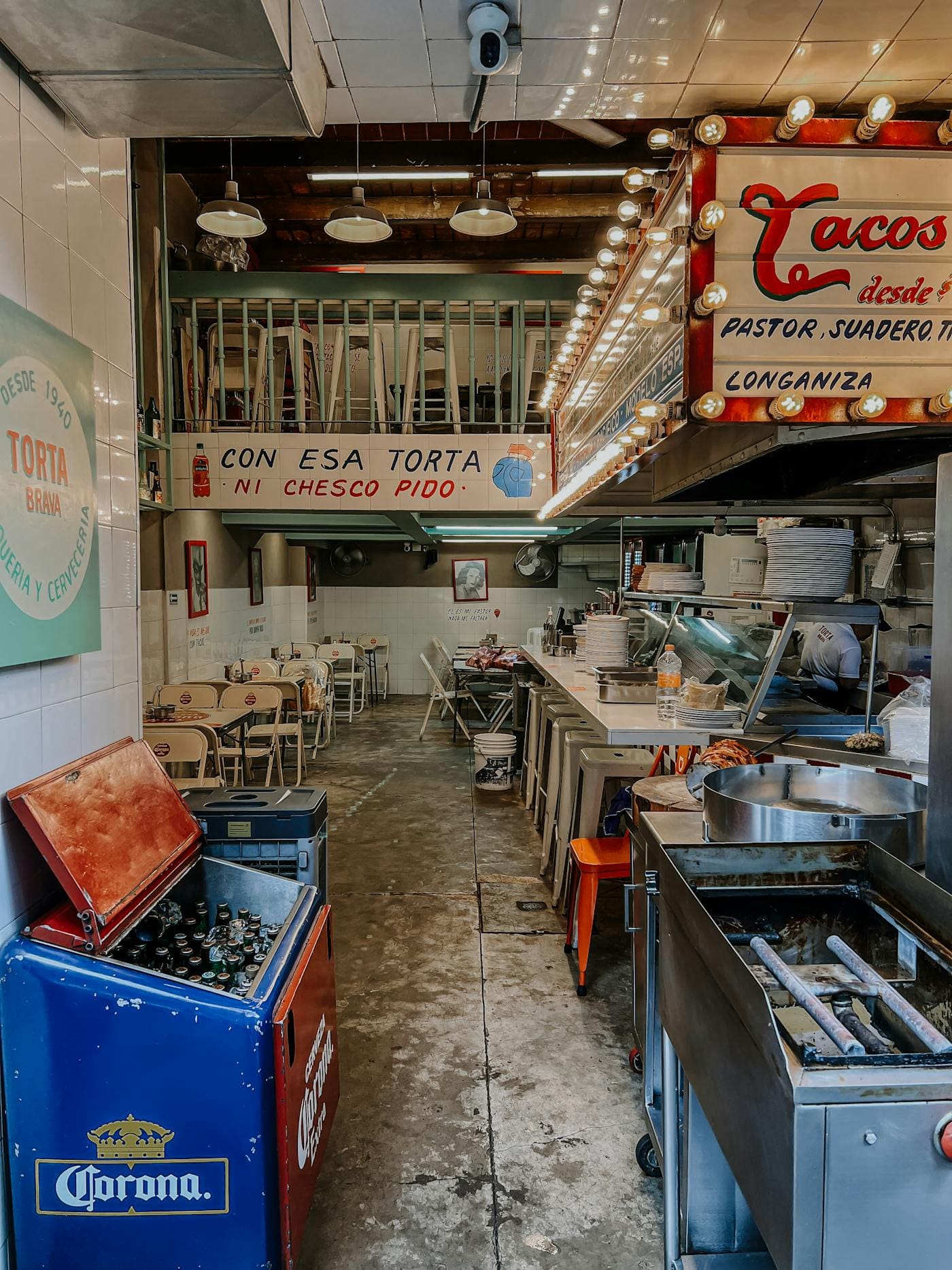
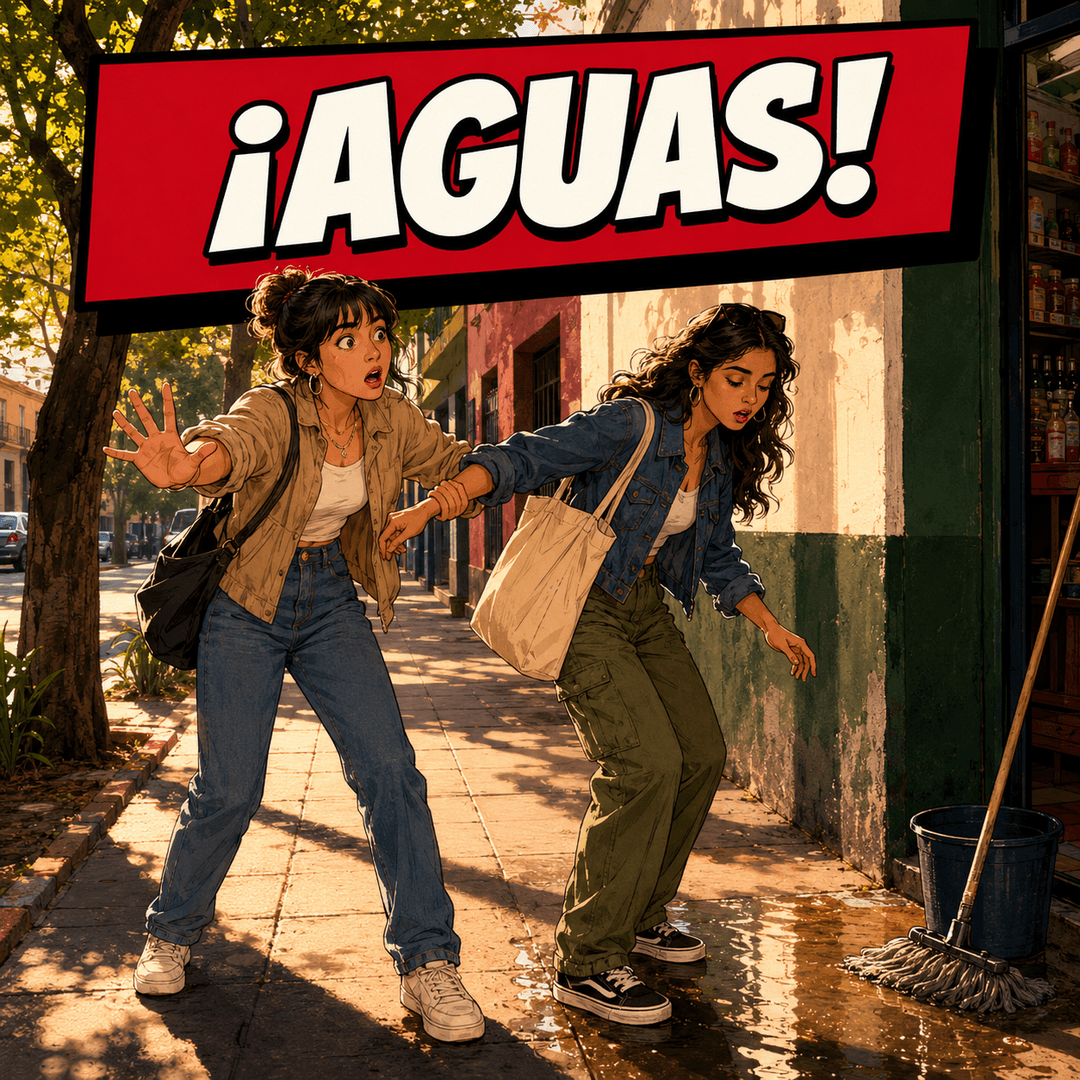
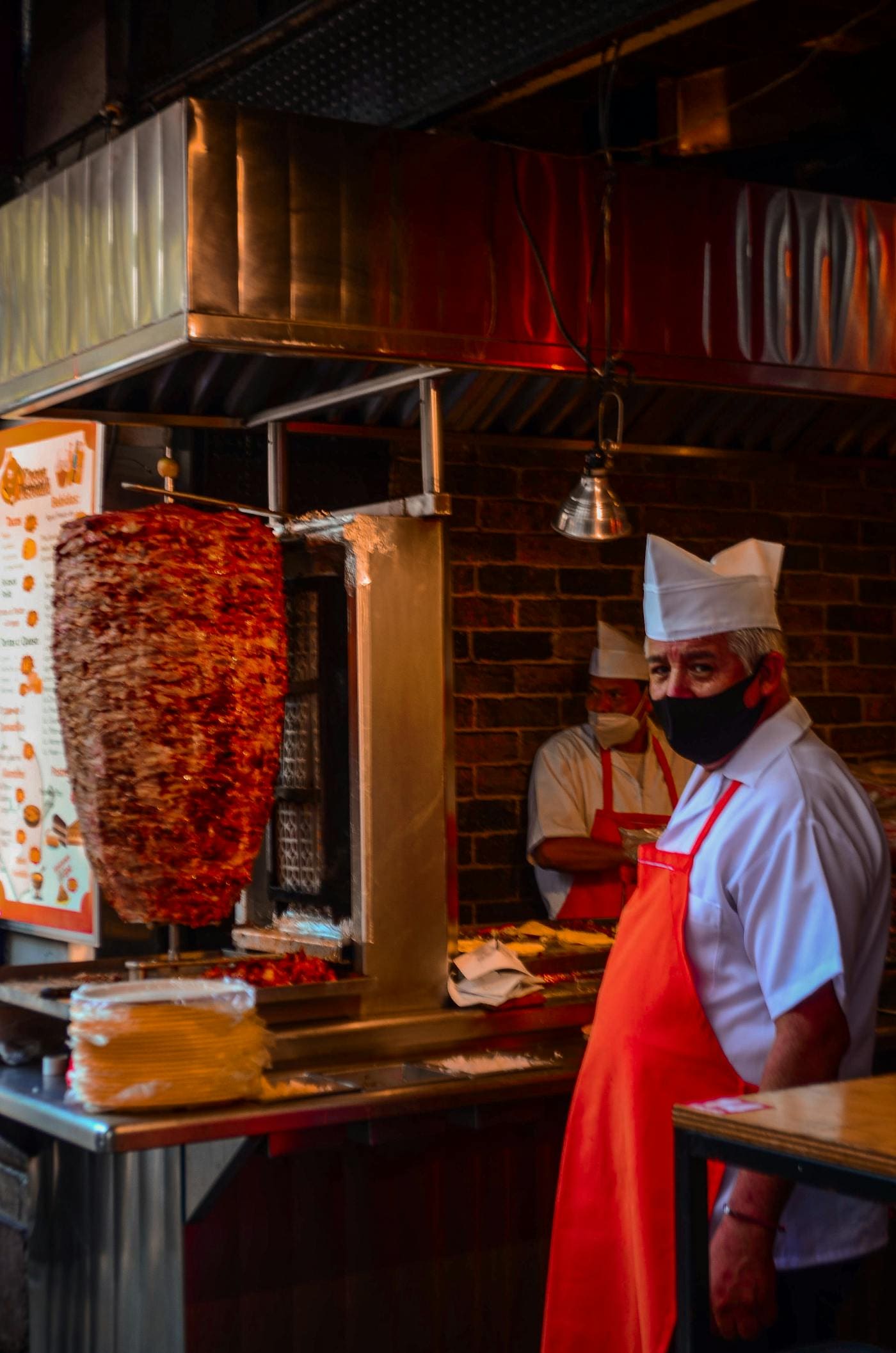
Ordering tacos in Mexico is a tiny language exam with salsa on the table.
Not because people are judging you. They are mostly trying to keep the line moving, remember who ordered the suadero, and not drop twelve plates at once. But the taquería is loud, fast, warm, and full of tiny phrases that Spanish apps rarely teach with enough urgency.
The good news: you do not need elegant Spanish. You need short, polite, useful Spanish.
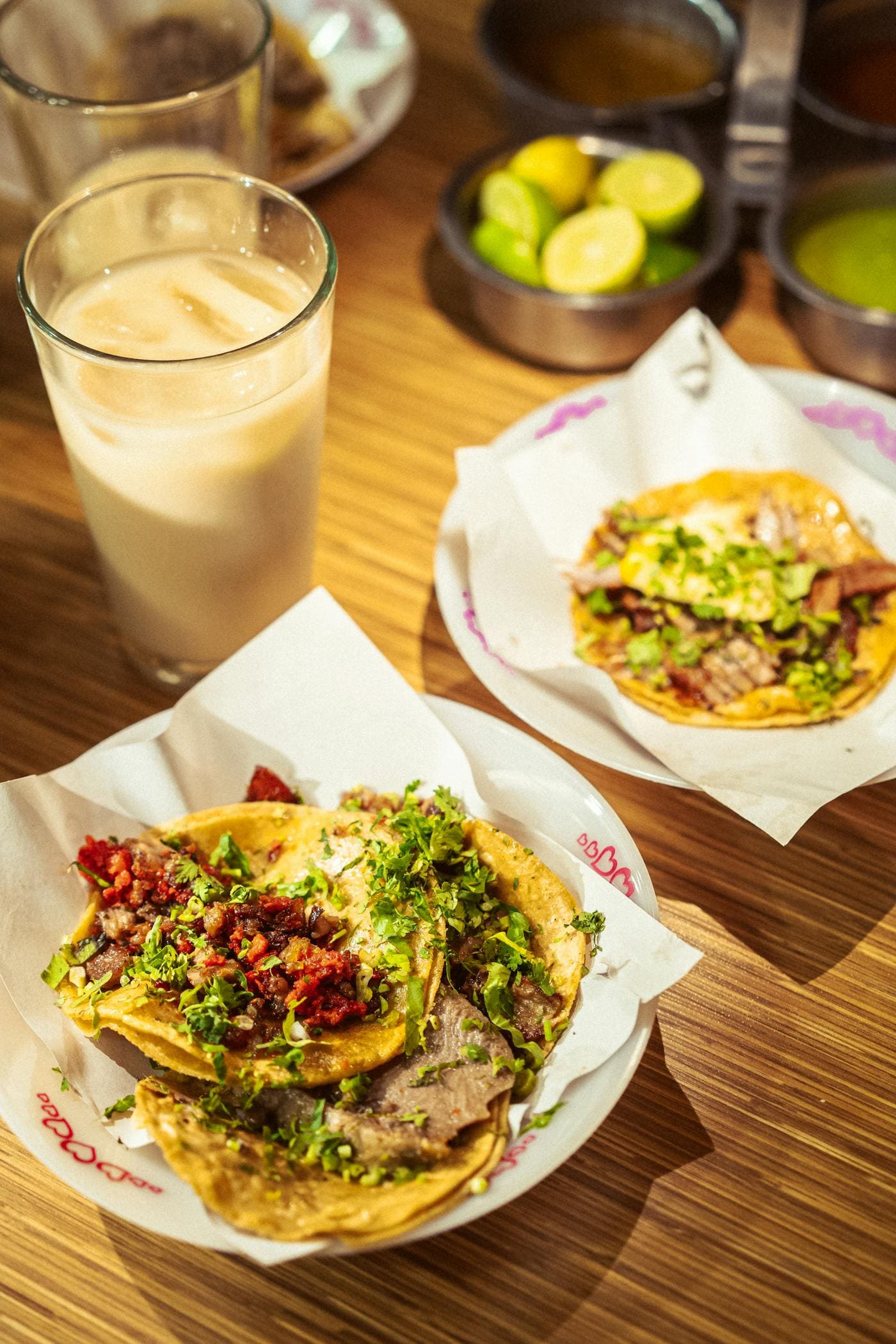
The survival phrase map
Start here. These are the phrases you will actually use while someone behind you is deciding whether to order five tacos or become a problem.
| Phrase | What it means | Use it when |
|---|---|---|
| Buenas | Hi there | Entering or getting attention |
| ¿Me das…? | Can you give me…? | Ordering casually |
| Quiero… | I want… | Clear, direct order |
| Con todo | With everything | You want the standard toppings |
| Sin cebolla | Without onion | Removing an ingredient |
| Poquita salsa | A little salsa | You respect your future self |
| Para llevar | To go | Taking food away |
| Para aquí / aquí | For here | Eating there |
| La cuenta, por favor | The check, please | Paying at a sit-down spot |
The most Mexican-sounding upgrade is not slang. It is entering with buenas instead of just launching your order into the air like a software command.
A clean first order
If you are from the US and you freeze when the taquero looks at you, memorize this:
-
Buenas, ¿me das tres al pastor con todo, por favor?Hi, can I get three al pastor with everything, please?
That sentence is doing a lot. It greets, orders, gives quantity, names the taco, handles toppings, and stays polite.
If you are not ready for con todo:
-
Dos de bistec sin cebolla, por favor.Two steak tacos without onion, please.
No poetry. No panic. Just tacos.
What con todo really means
Con todo sounds simple until you realize every taquería has its own personality. Usually it means some mix of cilantro, onion, salsa, lime, maybe pineapple for pastor, and whatever belongs to that taco in that place.
| You say | You probably get | Safer version |
|---|---|---|
| Con todo | Standard toppings | Con todo, pero poca salsa |
| Sin cebolla | No onion | Sin cebolla, por favor |
| Sin cilantro | No cilantro | Sin cilantro |
| Salsa aparte | Salsa on the side | ¿Me pones la salsa aparte? |
| Poquita salsa | A little salsa | Poquita, por favor |
| Así está bien | That’s good | Use when they are adding toppings |
If salsa scares you, say poquita salsa. Mexico will respect bravery, but your stomach may prefer diplomacy.
The polite little words
Mexican Spanish in restaurants is not stiff, but it is socially warm. Tiny phrases matter.
-
Buenas, una pregunta.Hi, quick question.
-
¿Cuál me recomiendas?Which one do you recommend?
-
Gracias, muy amable.Thanks, very kind of you.
-
Sale, gracias.Cool, thanks.
Sale is useful when someone confirms your order, gives you a number, or tells you where to pay. It is casual, not sloppy.
Common taquería moments
| Moment | Say this | Why it works |
|---|---|---|
| You need more napkins | ¿Me das unas servilletas? | Natural and direct |
| You want lime | ¿Tienes limones? | Simple and common |
| You want the salsa mild | ¿Cuál salsa no pica tanto? | Saves lives, emotionally |
| You are paying | ¿Cuánto es? | Street-food classic |
| You forgot the taco name | ¿Cómo se llama ese? | Totally normal |
| You want one more | ¿Me das otro igual? | Fast and clear |
The real flex is asking ¿cuál salsa no pica tanto? before pretending you are invincible.
For here, to go, and the bill
Use para aquí or aquí for eating there. Use para llevar for to go.
-
Para llevar, por favor.To go, please.
-
Aquí, gracias.For here, thanks.
At sit-down places, ask for la cuenta. At street stands, you may tell the cashier what you ate. This feels terrifying once, then normal forever.