---
title: "Técnico vs Rudo: The Lucha Libre Spanish That Explains the Whole Show"
description: "Learn técnico vs rudo in lucha libre, plus the Spanish for masks, falls, holds, cheating, crowd roles, and choosing who to cheer."
type: "article"
category: "guides"
url: "https://consalsa.app/blog/tecnico-vs-rudo"
canonical: "https://consalsa.app/blog/tecnico-vs-rudo"
published: "2026-09-24"
updated: "2026-09-24"
author: "Andrey the Nomad"
site: "ConSalsa.App"
license: "https://consalsa.app/terms#ip"
---

# Técnico vs Rudo: The Lucha Libre Spanish That Explains the Whole Show
URL: https://consalsa.app/blog/tecnico-vs-rudo
Date: 2026-09-24
Updated: 2026-09-24
Category: guides
Keywords: tecnico vs rudo, lucha libre spanish, rudo meaning wrestling, tecnico meaning lucha libre
Summary: Learn técnico vs rudo in lucha libre, plus the Spanish for masks, falls, holds, cheating, crowd roles, and choosing who to cheer.

Quick answer:
- In lucha libre, a técnico is usually the heroic or clean-fighting wrestler.
- A rudo is the rough, cheating, rule-bending wrestler.
- The técnico-rudo contrast gives the match its moral story.
- Crowds may cheer either side, but the roles help you understand the drama.

What you'll learn:
- How técnico and rudo structure lucha libre storytelling.
- The Spanish for masks, holds, falls, and cheating.
- How to talk about a match without missing the plot.
- Why the crowd sometimes loves the villain anyway.

Don't sound gringo:
Do not call it good guys versus bad guys out loud. The técnico is not the hero, he is the one who fights clean, and half the arena is there specifically to watch him lose. Say buenos y malos and you have announced you are watching your first card.

Body:

A <mark lang="es-MX">técnico</mark> fights clean and a <mark lang="es-MX">rudo</mark> cheats. That is the whole rule, and it is enough to follow any match in Mexico.

What it is not is good versus evil. Translating it that way is the single fastest way to misread the room, because a large part of the arena came specifically to watch the cheater win.

## Neither word was invented for wrestling

Both are plain Spanish, borrowed into the ring and given a job.

<mark lang="es-MX">Rudo</mark> is an everyday adjective for someone who acts roughly — with brusqueness, carelessness, too much force, a certain violence; unkind, discourteous.[^dem-rudo] It is what you call a person who shoves through a doorway. Nothing about it is theatrical until you put it on a poster.

<mark lang="es-MX">Técnico</mark> is even flatter. It means technical, as in a technical career or technical support.[^dem-tecnico] All the moral weight the arena gives it — honourable, disciplined, plays by the book — is loaned, not built in.

**That is why the roles never quite line up with hero and villain.** The words describe *how someone fights*, not whether they are right. A <mark lang="es-MX">técnico</mark> can be sanctimonious and dull. A <mark lang="es-MX">rudo</mark> can be the most charismatic person in the building.

| If you say | It reads as | Better |
|---|---|---|
| <mark lang="es-MX">los buenos y los malos</mark> | first time at the arena | <mark lang="es-MX">técnicos y rudos</mark> |
| <mark lang="es-MX">el héroe</mark> | you are describing a film | <mark lang="es-MX">el técnico</mark> |
| <mark lang="es-MX">el villano</mark> | same problem | <mark lang="es-MX">el rudo</mark> |
| <mark lang="es-MX">hizo trampa</mark> | true but naive | <mark lang="es-MX">es rudo, ni modo</mark> |

<figure>
  <img src="/images/blog/optimized/tecnico-vs-rudo-1-1400-bc3007a1.webp" alt="A masked luchador at the ring apron during a match in Arena Puebla" loading="lazy" />
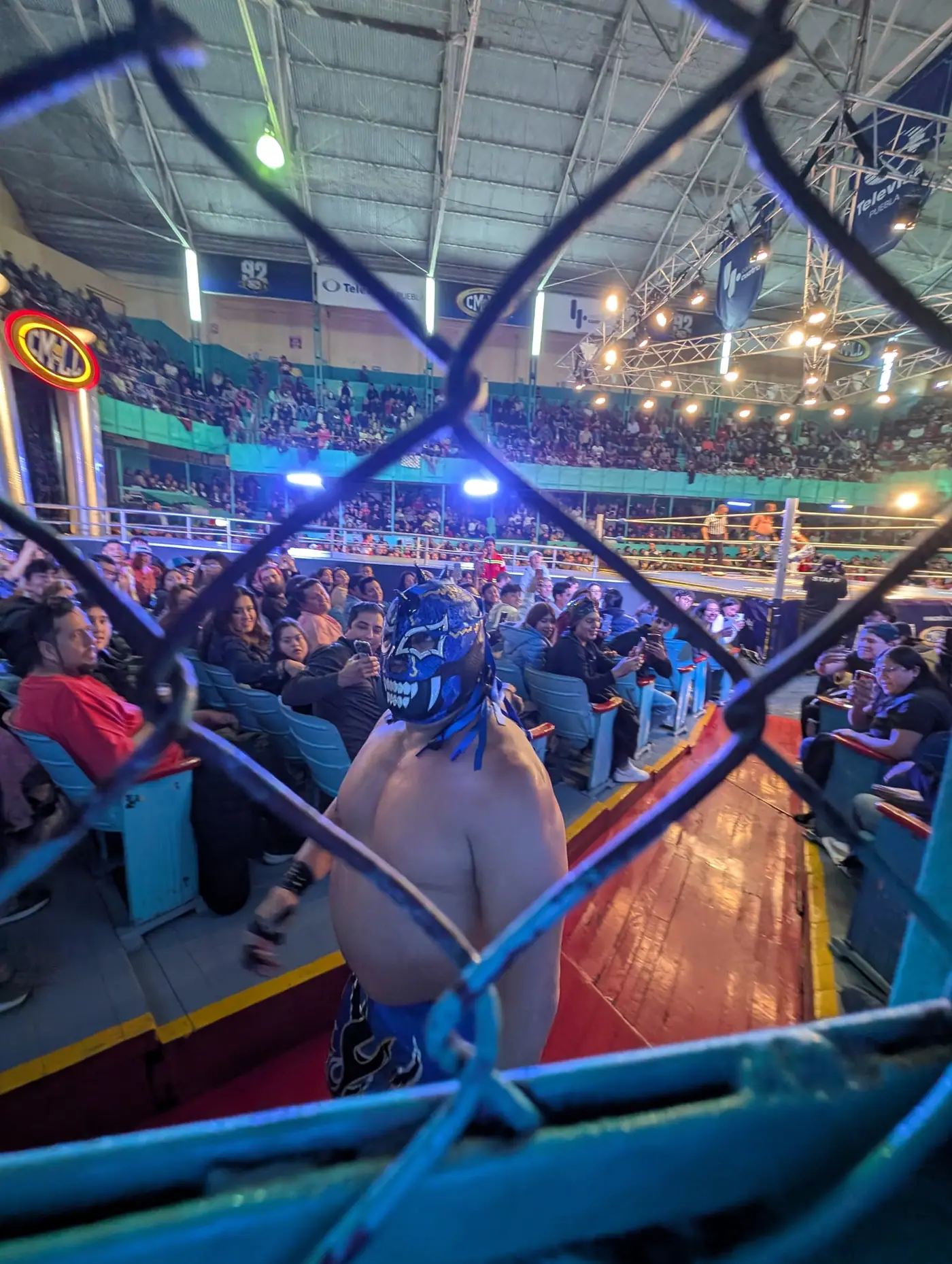
  <figcaption>The mask is not a costume here. It is the wrestler's identity, and it can be wagered. Photo by Hugoscopico, <a href="https://creativecommons.org/licenses/by-sa/4.0/">CC BY-SA 4.0</a>.</figcaption>
</figure>

## Why the cheat is often the favorite

In American wrestling the crowd is supposed to boo the heel. In Mexico that expectation collapses roughly immediately.

<mark lang="es-MX">Rudos</mark> get enormous, genuine support. Sections of the arena are openly, permanently <mark lang="es-MX">rudo</mark>. Part of it is that the rule-breaker is funnier and more inventive, part of it is that a crowd enjoys backing the side it is not supposed to, and part of it is simply inherited — people support the side their family supported.

<div class="chat-thread">
  <div class="chat-head"><span class="chat-avatar"></span><span>Fila 12, Arena México</span><span class="chat-meta">the question that gives you away</span></div>
  <ul class="chat-msgs">
    <li class="out"><span class="es" lang="es-MX">¿y quiénes son los buenos?</span><span class="en">so who are the good guys?</span></li>
    <li class="in"><span class="es" lang="es-MX">jaja no hay buenos, hay técnicos y rudos</span><span class="en">haha there are no good guys, there are técnicos and rudos</span></li>
    <li class="in"><span class="es" lang="es-MX">yo le voy a los rudos, son más divertidos</span><span class="en">I go for the rudos, they're more fun</span></li>
  </ul>
  <p class="chat-read">He did not correct the Spanish, he corrected the framing. <strong>Asking who the good guys are assumes the match has a morality. It has a structure instead.</strong></p>
</div>

## The vocabulary of the match itself

Four words carry most of what a commentator or the person beside you will say.

| Spanish | In the ring | Where it comes from |
|---|---|---|
| <mark lang="es-MX">llave</mark> | a hold, a submission | a key, the thing that locks a door[^dem-llave] |
| <mark lang="es-MX">caída</mark> | a fall, one scored round | from <mark lang="es-MX">caer</mark>, to fall by your own weight[^dem-caer] |
| <mark lang="es-MX">plancha</mark> | a flying body press | an iron, or a flat sheet of metal |
| <mark lang="es-MX">tope</mark> | a dive through the ropes | a bump, a limit, a speed hump |

<mark lang="es-MX">Llave</mark> is the one worth keeping. A hold is called a key because it locks a body the way a key locks a door — and once you hear it that way, <mark lang="es-MX">le puso una llave</mark> stops sounding like jargon and starts sounding obvious.

<div id="midpost-newsletter-slot"></div>

<figure>
  <img src="/images/blog/optimized/tecnico-vs-rudo-2-1400-65642d55.webp" alt="A veteran luchador standing at ringside in a small arena" loading="lazy" />
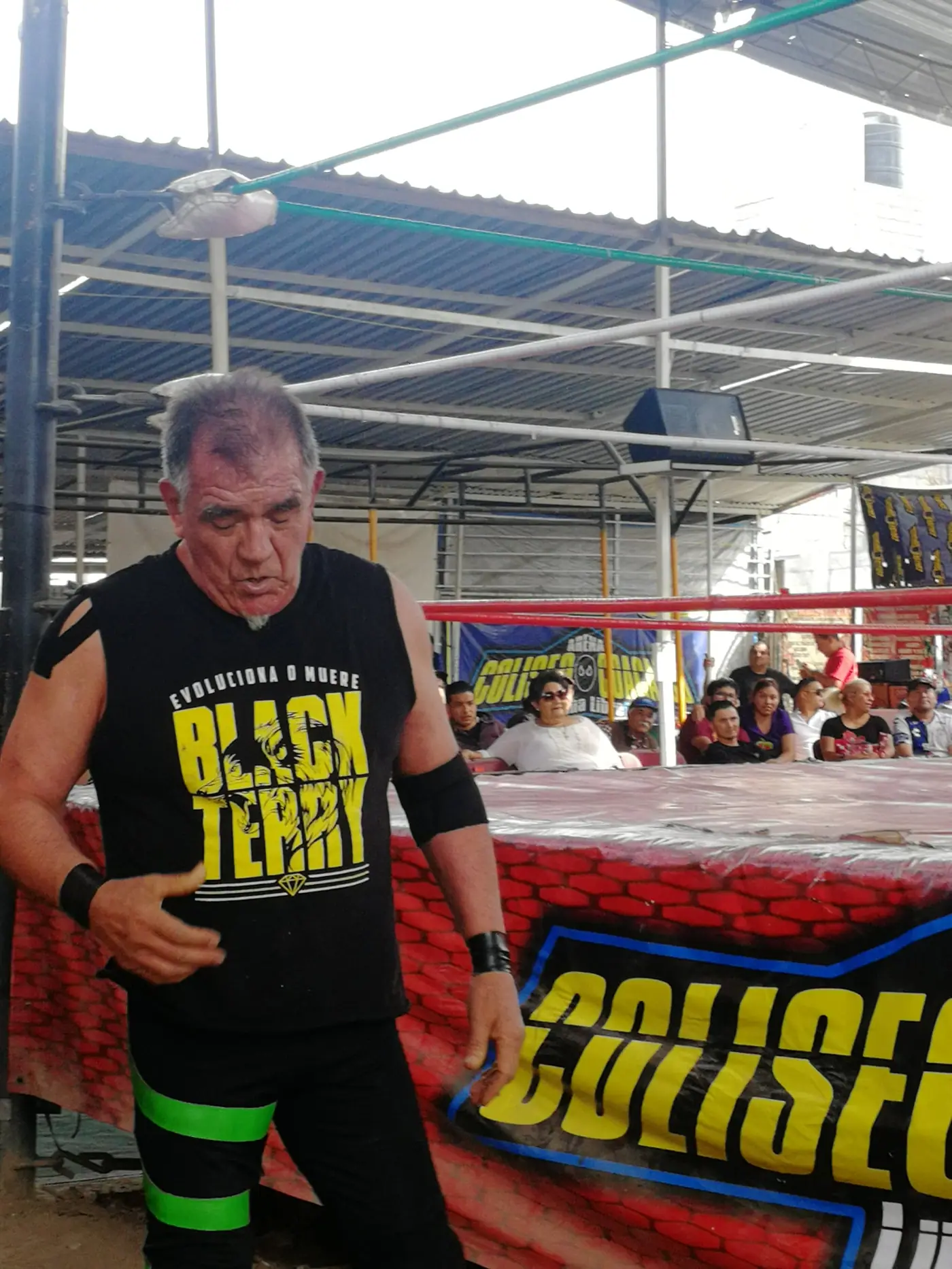
  <figcaption>Falls, not minutes. The clock is the least important thing in the building. Photo by Xalapeño, <a href="https://creativecommons.org/licenses/by-sa/4.0/">CC BY-SA 4.0</a>.</figcaption>
</figure>

## The three-fall arc

Because matches traditionally run <mark lang="es-MX">dos de tres caídas</mark>, the story has a fixed shape, and knowing it means you always know roughly where you are.

<ol class="ladder">
  <li>
    <div class="rung-card">
      <span class="rung-label">first fall</span>
      <span class="rung-es" lang="es-MX">Primera caída</span>
      <span class="rung-en" lang="en">First fall</span>
      <span class="rung-note">Establishes who is who. Often short, often taken by the <span lang="es-MX">rudos</span> after something illegal the referee somehow misses.</span>
    </div>
  </li>
  <li>
    <div class="rung-card">
      <span class="rung-label">second fall</span>
      <span class="rung-es" lang="es-MX">Segunda caída</span>
      <span class="rung-en" lang="en">Second fall</span>
      <span class="rung-note">The reversal. This is where the crowd gets loudest, because it is where the match stops being decided.</span>
    </div>
  </li>
  <li>
    <div class="rung-card">
      <span class="rung-label">third fall</span>
      <span class="rung-es" lang="es-MX">Tercera caída</span>
      <span class="rung-en" lang="en">Third fall</span>
      <span class="rung-note">The long one. Dives, near-falls, and the moves that get their own names.</span>
    </div>
  </li>
  <li>
    <div class="rung-card">
      <span class="rung-label">the wager</span>
      <span class="rung-es" lang="es-MX">Lucha de apuesta</span>
      <span class="rung-en" lang="en">A bet match</span>
      <span class="rung-note"><span lang="es-MX">Máscara contra máscara</span> or <span lang="es-MX">máscara contra cabellera</span>. The loser is unmasked or shaved, once, permanently. This is the top of the card and nothing else compares.</span>
    </div>
  </li>
</ol>

## Sides are not permanent

The other thing that breaks the good-versus-evil reading: wrestlers change alignment. A beloved <mark lang="es-MX">técnico</mark> turns <mark lang="es-MX">rudo</mark>, and the turn itself is the storyline — that is a <mark lang="es-MX">cambio de bando</mark>, and it is treated as news.

So when someone tells you a wrestler <mark lang="es-MX">se hizo rudo</mark>, they are not describing a personality change. They are telling you the plot moved.

<div class="note-card is-tip">
  <span class="note-label">Picking a side</span>
  <p>You do not need one on your first visit, and nobody expects you to have inherited one. If you want an answer ready, <span lang="es-MX">le voy a los rudos, son más divertidos</span> is honest, extremely common, and gets a laugh instead of a lecture. The city itself calls this a theatre of life with fabulous characters, which is permission enough to enjoy the villain.</p>
</div>

Mexico City made the whole thing Intangible Cultural Heritage in 2018, naming the beliefs and systems of representation around it rather than only the athletes.[^cultura-cdmx] The <mark lang="es-MX">técnico</mark> and the <mark lang="es-MX">rudo</mark> are the representation system. Everything else in the arena hangs off those two words.[^jornada-lucha]
<figure>
  <img src="/images/blog/optimized/tecnico-vs-rudo-3-1400-3b2b7eea.webp" alt="A street stall in Mexico City selling rows of lucha libre masks" loading="lazy" />
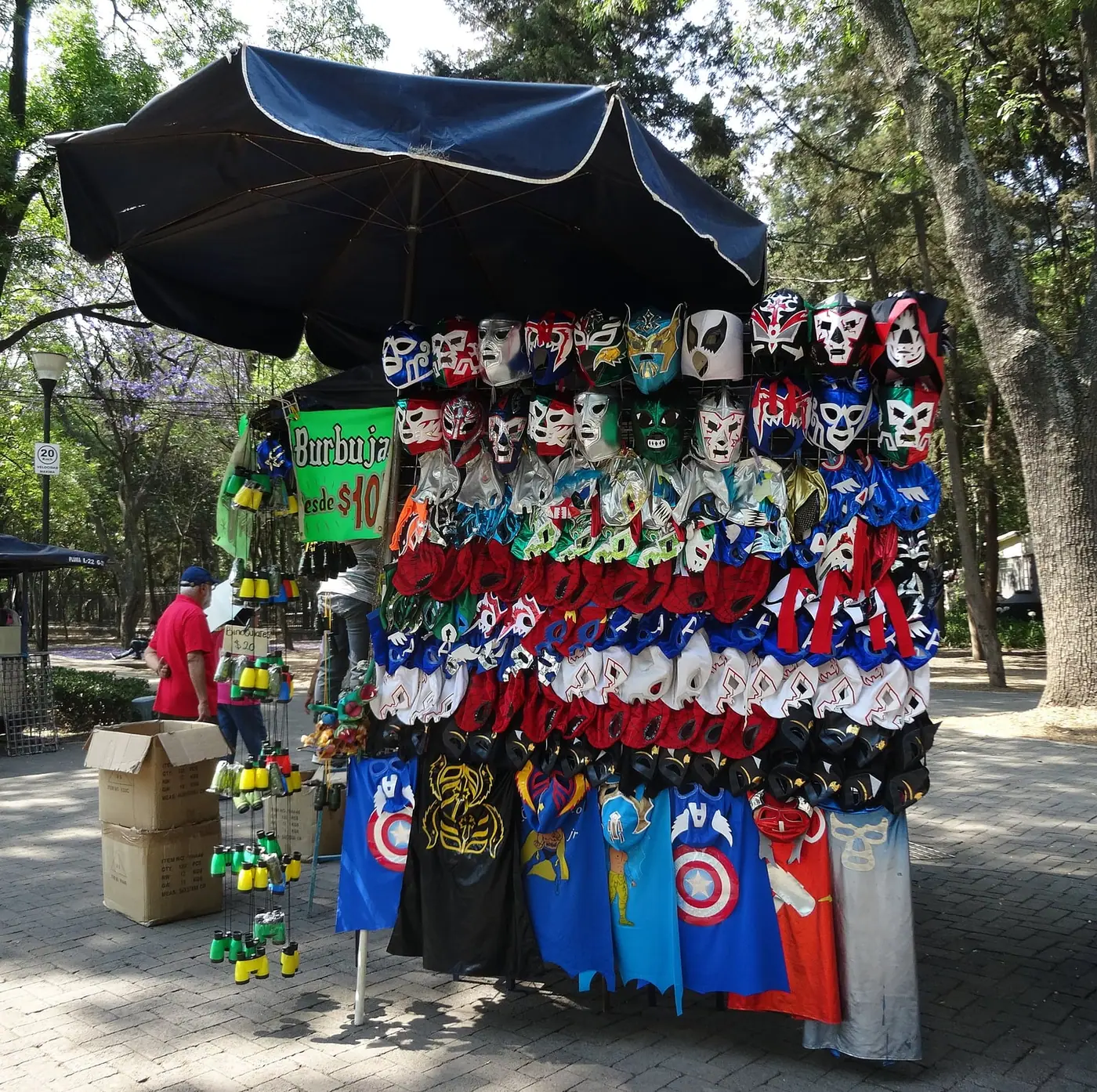
  <figcaption>By the third fall you stop tracking who is winning and start tracking who is cheating better. Photo by amanderson2, <a href="https://creativecommons.org/licenses/by/2.0/">CC BY 2.0</a>.</figcaption>
</figure>

*Hero photo by Adrián Martínez, [CC BY 2.0](https://creativecommons.org/licenses/by/2.0/).*

[^dem-rudo]: [Diccionario del español de México, rudo](https://dem.colmex.mx/ver/rudo) - El Colegio de México
[^dem-tecnico]: [Diccionario del español de México, técnico](https://dem.colmex.mx/ver/tecnico) - El Colegio de México
[^dem-llave]: [Diccionario del español de México, llave](https://dem.colmex.mx/ver/llave) - El Colegio de México
[^dem-caer]: [Diccionario del español de México, caer](https://dem.colmex.mx/ver/caer) - El Colegio de México
[^cultura-cdmx]: [Secretaría de Cultura CDMX, declaratoria de la lucha libre como Patrimonio Cultural Intangible](https://www.cultura.cdmx.gob.mx/comunicacion/nota/0667-18) - Gobierno de la Ciudad de México, julio de 2018
[^jornada-lucha]: [La Jornada, declaran a la lucha libre patrimonio cultural intangible de CDMX](https://www.jornada.com.mx/2018/07/22/cultura/a05n2cul)

FAQ:
Q: What is the difference between a técnico and a rudo?
A: A técnico fights clean and plays the hero; a rudo bends and breaks the rules and plays the villain. The contrast is what gives every match its story.

Q: Does técnico mean technical?
A: Literally yes, and that is the logic - the técnico is supposed to win through skill and legal holds rather than through fouls, chair shots and distraction.

Q: Can a wrestler change sides?
A: Yes, and a turn from técnico to rudo or back is one of the biggest storytelling moves in lucha libre. Crowds react to it enormously.

Q: Do fans only cheer for técnicos?
A: No. Rudos have devoted followings, and part of the fun is that the arena splits. Cheering the villain is a completely legitimate way to watch.

Q: What is a máscara contra máscara match?
A: A match where the loser is unmasked permanently. It is the highest-stakes contest in lucha libre, because the mask is the wrestler's public identity.

Q: What is a caída?
A: A fall. Traditional lucha matches are decided over three falls rather than a single pin, which is why a wrestler losing early is not necessarily losing the match.

Q: What is a llave?
A: A hold or lock. Técnicos are associated with clean llaves, and commentators will name them, so it is a useful word for following what is happening.

Q: How do I pick who to support?
A: Watch the entrances and follow the crowd around you. The arena tells you who the rudo is within about thirty seconds, and picking the opposite side of your neighbors is its own kind of fun.

Sources:
- Diccionario del español de México, rudo: https://dem.colmex.mx/ver/rudo
- Diccionario del español de México, técnico: https://dem.colmex.mx/ver/tecnico
- Diccionario del español de México, llave: https://dem.colmex.mx/ver/llave
- Diccionario del español de México, caer: https://dem.colmex.mx/ver/caer
- Secretaría de Cultura CDMX, declaratoria de la lucha libre como Patrimonio Cultural Intangible: https://www.cultura.cdmx.gob.mx/comunicacion/nota/0667-18
- La Jornada, declaran a la lucha libre patrimonio cultural intangible de CDMX: https://www.jornada.com.mx/2018/07/22/cultura/a05n2cul

Related words: cabron, chingon, chingar, orale