---
title: "How to Text in Mexican Spanish Without Sounding Like Google Translate"
description: "A casual guide to texting in Mexican Spanish, with WhatsApp phrases, abbreviations, tone tips, examples, and mistakes US learners should avoid."
type: "article"
category: "texting"
url: "https://consalsa.app/blog/texting-in-mexican-spanish"
canonical: "https://consalsa.app/blog/texting-in-mexican-spanish"
published: "2026-05-13"
updated: "2026-05-17"
author: "Andrey the Nomad"
site: "ConSalsa.App"
license: "https://consalsa.app/about"
---
# How to Text in Mexican Spanish Without Sounding Like Google Translate
URL: https://consalsa.app/blog/texting-in-mexican-spanish
Date: 2026-05-13
Updated: 2026-05-17
Category: texting
Keywords: mexican spanish texting, mexican texting slang, spanish texting abbreviations mexico, mexican whatsapp slang, how to text in spanish mexico
Summary: A casual guide to texting in Mexican Spanish, with WhatsApp phrases, abbreviations, tone tips, examples, and mistakes US learners should avoid.
Quick answer:
- To text naturally in Mexican Spanish, use short, warm messages with phrases like sale, va, ntp, xfa, jaja, ahorita, and ¿me mandas...?
- The safest voice for US learners and expats is clear, friendly, and lightly casual. Do not overuse wey, rude slang, or meme Spanish.
- Mexican texting often softens requests with oye, porfa, perdón, chance, cuando puedas, and jaja.
What you'll learn:
- The Mexican Spanish texting words and abbreviations you will actually see on WhatsApp
- How to sound warm and casual without overdoing slang
- When to use sale, va, jaja, ntp, xfa, and other common shortcuts
- How US learners and expats can avoid stiff, translated-sounding messages
Body:
Texting in Mexican Spanish is not about translating your English message word for word. It is about sounding like a normal human on WhatsApp: a little warm, a little efficient, and not like you asked a robot to put on a sombrero.
For US learners and expats in Mexico, the goal is simple: be clear, be friendly, and learn the small Mexican shortcuts that make messages feel natural. You do not need to text like a teenager from Roma Norte. You just need to stop writing "Estoy de acuerdo con esa propuesta" when the situation only needs [sale](/words/sale).
## The Mexican texting starter pack
These are the basics you will see in WhatsApp chats, Instagram DMs, group plans, apartment logistics, coworking conversations, and "where are you?" messages that slowly become emotional thrillers.
| Texting bit | Full version | What it means | Use it like this |
|---|---|---|---|
| jaja / jajaja | risa | haha / hahaha | Jajaja [no manches](/words/no-manches) |
| ntp | no te preocupes | don't worry | Ntp, yo paso por eso |
| xfa | porfa / por favor | please | Mándame la ubicación xfa |
| tmb | también | also / too | Yo tmb voy |
| q / qué | que / qué | that / what | Q onda? |
| xq / pq | porque / por qué | because / why | Xq no fuiste? |
| bn | bien | good / fine | Todo bn |
| vdd | verdad | right? / truth | Está caro, vdd? |
| tons / entonces | entonces | so / then | Tons nos vemos allá |
| [sale](/words/sale) | sale | cool / deal | Sale, ahí nos vemos |
| va | va | okay / works | Va, te aviso |
| [ahorita](/words/ahorita) | ahorita | now-ish / in a bit | Ahorita te marco |
Do you need all of these? No. If you use sale, va, jaja, ntp, and xfa correctly, you are already miles away from textbook stiffness.
## The big rule: do not translate your mood too literally
English texting, especially from the US, can be weirdly direct. "Can you send me the address?" is fine in English. In Mexican Spanish, the same energy often sounds better with a softener:
¿Me mandas la dirección, porfa?
Can you send me the address, please?
That is not weaker. It is smoother. Mexican Spanish uses little cushions: porfa, oye, perdón, chance, igual, pues, cuando puedas. They keep the message friendly, especially when you are asking for something.
You will see this constantly:
- Oye, ¿me pasas el contacto?
- Perdón, apenas vi tu mensaje.
- Chance llego un poquito tarde.
- Cuando puedas, ¿me mandas la info?
- Igual y nos vemos mañana.
The trick is not to become vague. The trick is to avoid sounding like every text is a legal notice.
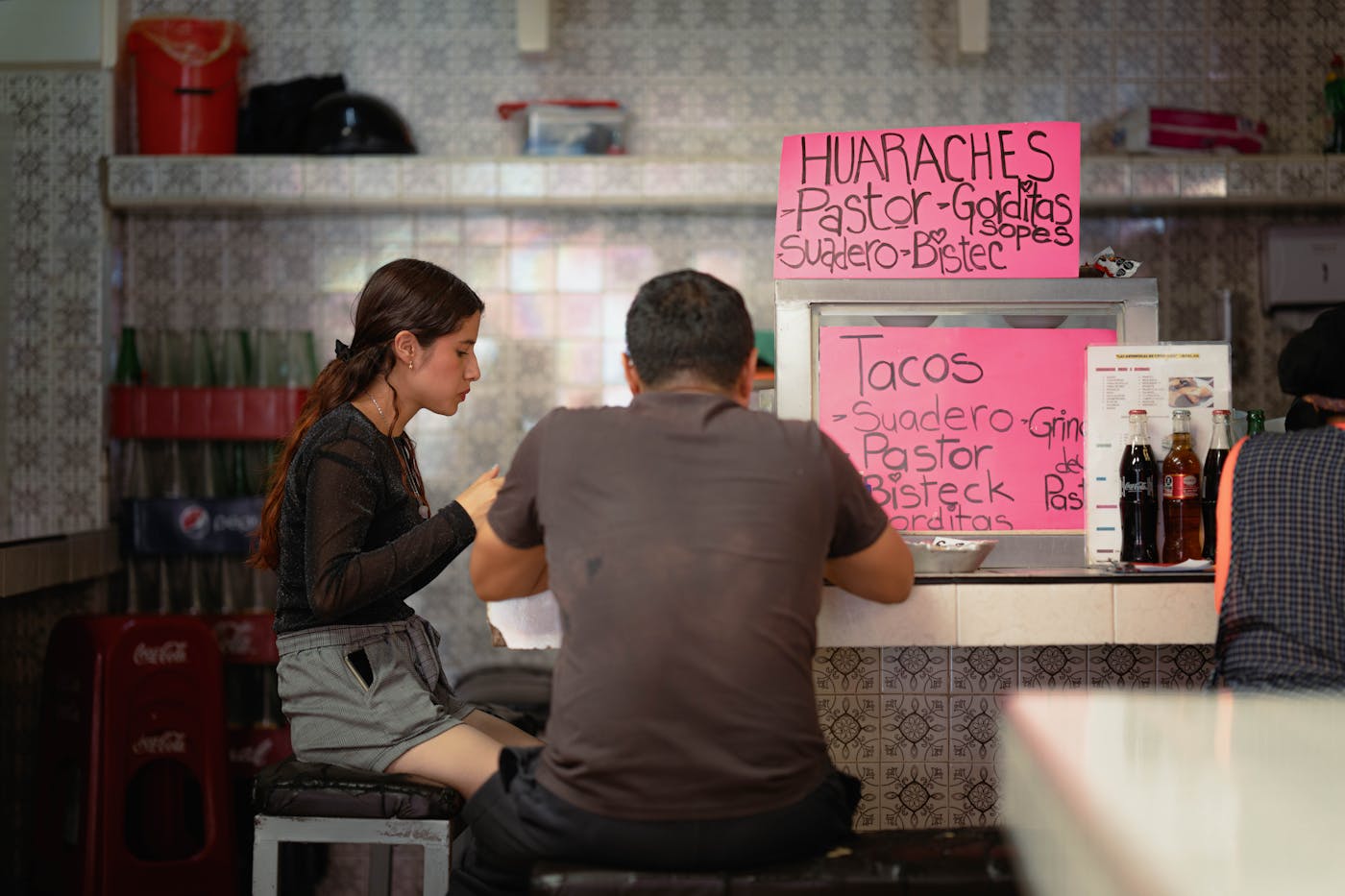
Casual Mexican Spanish is often learned between logistics, tacos, and someone asking for the ubicación. Photo by Viridiana Rivera on Pexels.
## What to write instead of Google Translate Spanish
Here is the upgrade table. These are not the only possible answers, but they are the kind of messages that sound closer to real Mexican texting.
| Situation | Stiff / translated | Better Mexican text | Why it works |
|---|---|---|---|
| Confirming plans | Estoy de acuerdo. | Sale, va. | Short, natural, warm |
| Asking for a location | ¿Puedes enviarme la dirección? | ¿Me mandas la ubicación xfa? | More WhatsApp-native |
| Running late | Estoy retrasado. | Voy tarde, perdón. | Clear and human |
| Saying no gently | No puedo asistir. | [Híjole](/words/hijole), no voy a poder. | Softer and less corporate |
| Reacting to gossip | ¿En serio? | ¿[Neta](/words/neta)? No manches. | Sounds like a real reaction |
| Saying you will call soon | Te llamaré en este momento. | Ahorita te marco. | Natural, but flexible |
| Thanking someone | Muchas gracias por su ayuda. | Mil gracias, neta. | Warm without a speech |
| Asking for patience | Espere un momento. | Dame chance tantito. | Casual and very Mexican |
Tiny warning: "dame chance" is casual. It is great with friends, roommates, and friendly coworkers. For immigration paperwork, landlords you barely know, or anything formal, use "un momento, por favor" like a responsible adult with documents.
## Jaja is doing more work than you think
In Mexican texting, jaja is not only laughter. It can soften a correction, make a request feel lighter, or signal "I am not mad."
Compare:
No, era a las 7.
No, it was at 7.
No jaja, era a las 7.
No haha, it was at 7.
The second one is friendlier. It says, "tiny correction, no drama." Same information, different temperature.
Caps matter too:
- jaja = light laugh
- jajaja = real laugh
- JAJAJA = big laugh, chaos, someone fell into the group chat emotionally
- jaja ok = sometimes passive-aggressive, depending on the person
No system can save you from tone, but jaja helps.
## The phrases that make plans feel Mexican
Mexican group plans have their own tiny grammar. If you are living in Mexico, you will see a lot of messages that are technically clear and spiritually uncertain.
[Ahorita](/words/ahorita) is the famous one. It can mean "right now," "soon," "in a bit," or "I am emotionally moving toward the idea of doing it." In texting, context tells you which one.
Use it when you truly mean soon-ish:
Ahorita te mando el link.
I'll send you the link in a bit.
Do not use it when you need precision:
Te mando el contrato hoy antes de las 5.
I'll send you the contract today before 5.
Then there is "[al rato](/words/al-rato)." It means later, but not necessarily late-late. It is good for casual follow-ups:
Te marco al rato.
I'll call you later.
And "vemos" or "nos vemos" can confirm a plan without sounding too official:
Va, nos vemos a las 8.
Cool, see you at 8.
That is a clean, normal, useful message.
Group chat plans in Mexico often sound precise right until everyone starts moving through actual CDMX traffic. Photo by Jezael Melgoza on Unsplash.
## Emojis, punctuation, and the vibe check
You do not need to emoji-bomb. But Mexican texting can feel warmer than English texting, especially with friends and family. A plain "ok" can read a little cold, depending on the relationship.
Better options:
- Va :)
- Sale, gracias!
- Perfecto, mil gracias
- Sii, jalo
- No te preocupes, ntp
About punctuation: Spanish uses opening question marks and exclamation marks. In fast texting, plenty of native speakers skip them. As a learner, use them when it feels natural, especially in clearer messages:
The more formal the relationship, the cleaner your spelling should be. The closer the relationship, the more shortcuts you can get away with.
## Stuff learners should probably not copy yet
Some texting habits are real but not beginner-friendly.
Do not overuse wey/[güey](/words/guey) in every message. It can be affectionate with friends, but it can also sound forced fast.
Do not copy flirty diminutives unless you understand the relationship. Mexican Spanish uses -ito and -ita constantly, but "cafecito" and "besito" are not the same social temperature.
Do not use rude slang just because you saw it in a meme. [No mames](/words/no-mames), [cabrón](/words/cabron), and similar words are common, but they are not neutral. Learn what they mean first. Use them much later, if ever.
Do not write giant formal paragraphs in casual chats. If someone asks "vienes?" you do not need to respond with a diplomatic cable.
## Copy-paste friendly examples
For plans:
## The safest texting voice for expats
If you are new in Mexico, aim for warm, clear, and lightly casual.
That means you can write:
Hola! Oye, ¿me mandas la dirección xfa? Sale, gracias.
Hi! Hey, can you send me the address please? Cool, thanks.
That message is not trying too hard. It is friendly, practical, and Mexican enough to feel at home in WhatsApp.
You can slowly add more personality as you hear how people text you. If your friend says "jajaja ntp, al rato te marco," you can mirror a little. If your lawyer writes with full punctuation and zero slang, do not reply "va wey xfa." Let the room text first.
Mexican texting is not about perfect slang density. It is about matching the social temperature. Get that right, and even a tiny "sale, gracias" can sound better than a whole paragraph of translated Spanish.
FAQ:
Q: How do Mexicans laugh in texts?
A: The standard written laugh is jaja. You will also see jajaja, JAJAJA for louder laughter, and sometimes jsjs or emojis depending on the person.
Q: What does ntp mean in Mexican texting?
A: Ntp usually means no te preocupes, or don't worry. It is common in casual WhatsApp messages.
Q: What does xfa mean in Mexican Spanish texts?
A: Xfa means porfa, short for por favor. It is casual and common with friends, classmates, coworkers you know well, or quick favor requests.
Q: Should I use accents when texting in Spanish?
A: Use them when you can, especially in longer or clearer messages. Many native speakers skip accents in fast texting, but learners benefit from keeping them because they reduce confusion.
Q: What does q means in WhatsApp Spanish?
A: q is short for que (that/what). It is everywhere in casual Mexican texts — kbn for qué bien, k ondas for qué onda, and so on. Reading them is easier than typing them.
Q: Is it weird to send long messages in Mexico?
A: Sometimes. Mexicans often break long thoughts into several short messages instead of one wall of text. Voice notes are also extremely common — many people prefer them over typing.
Q: What does tqm mean in Mexican texting?
A: Tqm means te quiero mucho — I love you a lot. It is casual and warm, used between close friends, family, and partners. Not romantic by default.
Q: How do Mexicans say bye in a text?
A: Common sign-offs are bye, chau, nos vemos, te escribo al rato, or a quick emoji. Many conversations just trail off after sale or va instead of a formal goodbye.
Sources:
- Diccionario de la lengua española, Real Academia Española: https://dle.rae.es/
- Ortografía de la lengua española, Real Academia Española: https://www.rae.es/ortograf%C3%ADa/
- Diccionario del español de México, El Colegio de México: https://dem.colmex.mx/
- Academia Mexicana de la Lengua: https://www.academia.org.mx/
- Fundéu BBVA, recomendaciones para el español escrito en pantallas: https://www.fundeu.es/
Related words: sale, que-onda, neta, ahorita, no-manches, guey