---
title: "Tianguis Spanish in Mexico City: Bargaining, Sizes, and When to Just Smile"
description: "A tianguis is a day, not a place. The Spanish that actually matters is about schedule and quantity - qué día lo ponen, ya van a levantar, ¿en cuánto me da los tres?"
type: "article"
category: "markets"
url: "https://consalsa.app/blog/tianguis-spanish-mexico-city"
canonical: "https://consalsa.app/blog/tianguis-spanish-mexico-city"
published: "2026-06-06"
updated: "2026-08-20"
author: "Andrey the Nomad"
site: "ConSalsa.App"
license: "https://consalsa.app/about"
---

# Tianguis Spanish in Mexico City: Bargaining, Sizes, and When to Just Smile
URL: https://consalsa.app/blog/tianguis-spanish-mexico-city
Date: 2026-06-06
Updated: 2026-08-20
Category: markets
Keywords: tianguis spanish, mexico city market phrases, bargaining in mexican spanish, que dia ponen el tianguis, tianguis vs mercado difference, mercado sobre ruedas cdmx
Summary: A tianguis is a day, not a place. The Spanish that actually matters is about schedule and quantity - qué día lo ponen, ya van a levantar, ¿en cuánto me da los tres?

Quick answer:
- A tianguis is a market that exists on one weekday and disappears. The first question is not where, it is qué día lo ponen.
- The verbs that matter are poner (to set up) and levantar (to tear down): ya lo pusieron, ya van a levantar.
- Price flexibility usually lives in quantity, not in a discount. Ask ¿en cuánto me da los tres? instead of ¿me lo deja más barato?
- A tianguis is not a mercado. A mercado is a permanent building with a roof and a number; a tianguis is a street on a schedule.

What you'll learn:
- Why qué día lo ponen is the question that unlocks a neighborhood.
- The set-up and tear-down verbs nobody teaches: poner, levantar, salir, ya casi.
- How to get a better price by changing the quantity instead of arguing about the number.
- The difference between tianguis, mercado, mercado sobre ruedas, and bazar.

Don't sound gringo:
Ask a neighbor ¿qué día ponen el tianguis por aquí? and you have just learned more about your colonia than any map will tell you. Every street has a day, and locals know all of them.

Body:

Most guides teach you how to haggle at a <mark lang="es-MX">tianguis</mark>. Almost nobody teaches you the question that actually matters, which is <mark lang="es-MX">¿qué día lo ponen?</mark>

Because a tianguis is not a place. It is a **day**. The same stretch of street is a normal street on Tuesday, a market on Wednesday, and a normal street again by Wednesday night. If you go looking for "the tianguis" the way you would look for a shop, you will stand on an empty road being confused in two languages.

## The tianguis is a schedule, and it always was

This is not a modern quirk. In the pre-Hispanic city, the <mark lang="es-MX">tianquiztli</mark> - the Nahuatl word behind <mark lang="es-MX">tianguis</mark> - was the designated place for trading goods and services, and trading anywhere else was not just unusual, it was forbidden. INAH describes it plainly: the market was a sacred space, and commerce was permitted only in these plazas, strictly prohibited in houses.[^inah-tianquiztli] Each one had a <mark lang="es-MX">momoztli</mark>, a small platform where offerings were made to the god of markets and where cheats were punished. Officials checked that the measures were honest, and the biggest of them - Tlatelolco, Texcoco, Tenochtitlan - were organized into sections by product, with cacao beans doing the work of small change.[^chilango-primeros]

So: a specific place, on a specific schedule, with someone watching the scale. Change the century and very little of that has moved.

The modern layer is just as literal about days. In late 1969 the federal government launched the <mark lang="es-MX">mercados sobre ruedas</mark> programme to bring cheaper produce into neighborhoods, and within weeks it was running **seven routes, one for each day of the week**.[^eluniversal-ruedas] The city's own open-data portal still publishes them with the day of the week as a field, because that is the field that identifies them.[^datos-ruedas] Chilango's citywide tianguis map is popular for the same reason - people are not looking up an address, they are looking up a **day**.[^chilango-mapa]

| Lo que preguntas | What it gets you |
|---|---|
| ¿Qué día ponen el tianguis por aquí? | The day. Start here, always |
| ¿Hasta qué hora está? | Usually early afternoon, not evening |
| ¿Dónde empieza? | Tianguis have a head and a tail, not a door |
| ¿Ya lo pusieron? | Whether it is up yet this morning |
| ¿Este es el de los jueves? | Confirms you are at the right one |

<div class="note-card is-tip">
  <span class="note-label">The one question that changes your week</span>
  <p><b lang="es-MX">Oye, ¿qué día ponen el tianguis por aquí?</b></p>
  <p>Ask a neighbor, the guy at the tortillería, anyone. Every colonia has a day, and everybody who lives there knows it.</p>
</div>

<figure>
  <img src="/images/blog/tianguis-cdmx-1.jpg" alt="People walking among covered stalls at an outdoor street market." loading="lazy" />
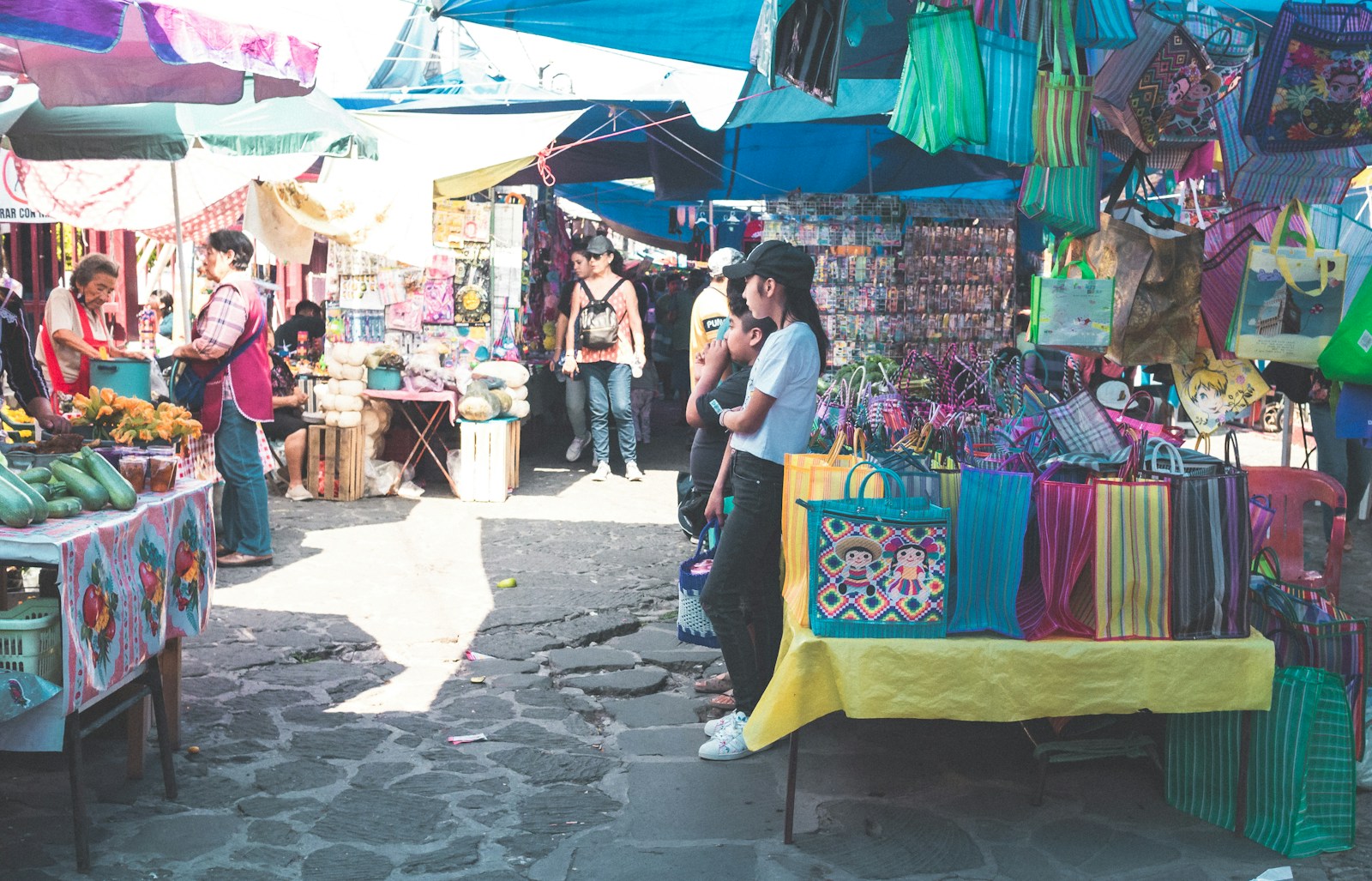
  <figcaption>The street is the market only on its day. By the same evening it is a street again. Photo by <a href="https://unsplash.com/photos/yxxLqanlCtc" target="_blank" rel="noopener noreferrer">Armands Brants on Unsplash</a>.</figcaption>
</figure>

<div id="midpost-newsletter-slot"></div>

## Poner and levantar: the two verbs that run the day

English says a market "is on." Mexican Spanish says somebody **puts it up** and later **takes it down**, and both verbs get used constantly.

<ul class="examples">
  <li class="example">
    <div class="es" lang="es-MX">Ya lo pusieron, desde temprano.</div>
    <div class="en" lang="en">They already set it up, since early.</div>
  </li>
  <li class="example">
    <div class="es" lang="es-MX">Ya van a levantar, apúrate.</div>
    <div class="en" lang="en">They are about to pack up, hurry.</div>
  </li>
  <li class="example">
    <div class="es" lang="es-MX">Hoy no salió el de las verduras.</div>
    <div class="en" lang="en">The vegetable guy didn't come out today.</div>
  </li>
  <li class="example">
    <div class="es" lang="es-MX">Está en su punto como a las once.</div>
    <div class="en" lang="en">It's at its best around eleven.</div>
  </li>
</ul>

Notice <mark lang="es-MX">salir</mark> in there. Vendors don't "open," they **come out**. <mark lang="es-MX">No salió hoy</mark> is the normal way to say a stall isn't there, and it carries no judgment - people get sick, trucks break, it rains.

<ol class="ladder">
  <li><div class="rung-card">
    <span class="rung-label">7-9 am</span>
    <span class="rung-es" lang="es-MX">Apenas están poniendo</span>
    <span class="rung-en" lang="en">They're only just setting up</span>
    <span class="rung-note">Best produce, half the stalls, nobody in a hurry to talk.</span>
  </div></li>
  <li><div class="rung-card">
    <span class="rung-label">10 am-1 pm</span>
    <span class="rung-es" lang="es-MX">Está en su punto</span>
    <span class="rung-en" lang="en">It's at its peak</span>
    <span class="rung-note">Everything is out, everything is loud, prices are what they are.</span>
  </div></li>
  <li><div class="rung-card">
    <span class="rung-label">2-4 pm</span>
    <span class="rung-es" lang="es-MX">Ya van a levantar</span>
    <span class="rung-en" lang="en">They're about to pack up</span>
    <span class="rung-note">Now quantities get generous, because nobody wants to carry it home.</span>
  </div></li>
</ol>

That last rung is the part worth internalising. **The end of the day is when the price actually moves** - not because you negotiated well, but because a crate of tomatoes is heavier than a discount.

## Bargaining is about quantity, not confrontation

Here is where most foreigners go wrong. They treat the number as the negotiable thing, push on it, and get a polite wall.

Try moving the **amount** instead.

<div class="do-dont">
  <div class="dd-col dd-do"><p class="dd-title">Suele funcionar</p><ul>
    <li><b lang="es-MX">¿En cuánto me da los tres?</b> - bundles, and gives them room to round down</li>
    <li><b lang="es-MX">¿Y si me llevo el kilo completo?</b> - volume is a real lever</li>
    <li><b lang="es-MX">¿Es lo menos?</b> - asked once, with a smile</li>
    <li><b lang="es-MX">Deme los que estén más maduritos.</b> - ripe today is cheaper today</li>
  </ul></div>
  <div class="dd-col dd-dont"><p class="dd-title">Casi nunca funciona</p><ul>
    <li><b lang="es-MX">Está muy caro.</b> - reads as an accusation</li>
    <li><b lang="es-MX">¿No tiene más barato?</b> - vague, so the answer is vague</li>
    <li><b lang="es-MX">En otro puesto está en la mitad.</b> - then go there</li>
    <li><b lang="es-MX">¿Es lo menos? ¿Seguro? ¿De verdad?</b> - once is asking, three times is haggling</li>
  </ul></div>
</div>

And be honest about the ceiling: on food, on cheap household goods, on anything already priced in round numbers, there often is no discount at all. That is not a vendor being difficult. The margin genuinely isn't there.

<figure>
  <img src="/images/blog/tianguis-cdmx-2.jpg" alt="A vendor bending over crates of leafy green produce at a market stall." loading="lazy" />
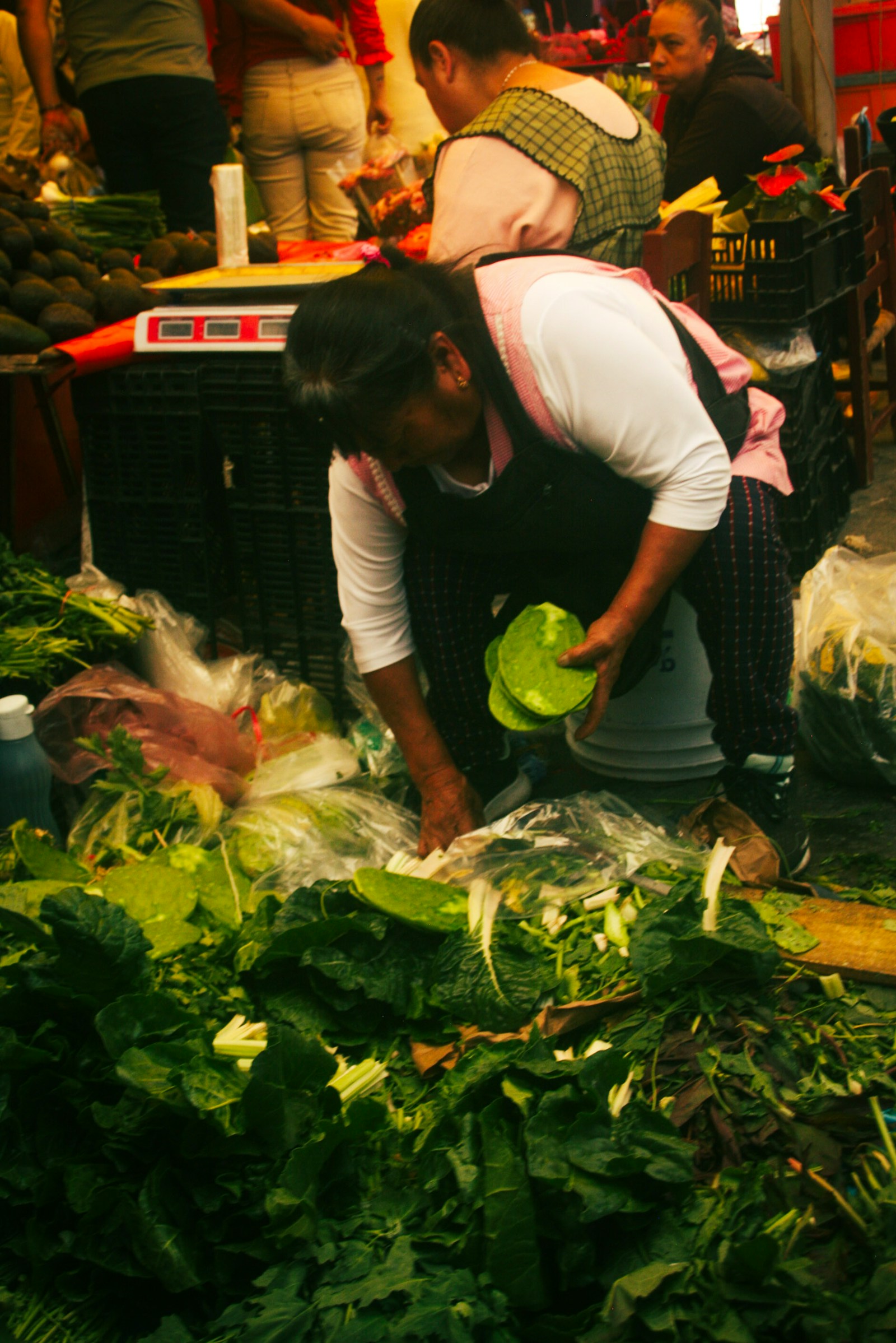
  <figcaption>Quantity is the lever. <span lang="es-MX">¿En cuánto me da los tres?</span> opens a door that <span lang="es-MX">está muy caro</span> closes. Photo by <a href="https://unsplash.com/photos/vduqAiRf6jY" target="_blank" rel="noopener noreferrer">diego cruz on Unsplash</a>.</figcaption>
</figure>

## Tianguis, mercado, bazar: they are not synonyms

Getting these straight will save you a lot of crossed wires when someone gives you directions.

| Palabra | Qué es en realidad |
|---|---|
| Tianguis | Street, one day a week, packs up at night |
| Mercado | Permanent building, open daily, has a name and often a number |
| Mercado sobre ruedas | Same idea as a tianguis, but an organized municipal route |
| Bazar | Usually vintage, design or antiques, often weekends, often indoors |
| Puesto | One single stall, anywhere |
| Marchante / marchanta | The vendor - and also what the vendor may call you |

That last one surprises people. <mark lang="es-MX">Marchante</mark> works in both directions: you can call the seller <mark lang="es-MX">marchante</mark>, and they may well call **you** <mark lang="es-MX">marchantita</mark> or <mark lang="es-MX">marchante</mark> right back. It is warm, slightly old-fashioned, and completely normal.

<div class="chat-thread">
  <div class="chat-head"><span class="chat-avatar"></span><span>un martes cualquiera</span><span class="chat-meta">nota el día</span></div>
  <ul class="chat-msgs">
    <li class="out"><span class="es" lang="es-MX">Oye, ¿el tianguis de tu calle es hoy?</span><span class="en">Hey, is the tianguis on your street today?</span></li>
    <li class="in"><span class="es" lang="es-MX">No, ese es el miércoles. Hoy hay uno chiquito en Zacatecas</span><span class="en">No, that one's Wednesday. Today there's a small one on Zacatecas</span></li>
    <li class="out"><span class="es" lang="es-MX">¿Hasta qué hora?</span><span class="en">Until what time?</span></li>
    <li class="in"><span class="es" lang="es-MX">Como a las 4 ya están levantando, ve antes de las 2</span><span class="en">By 4 they're packing up, go before 2</span></li>
  </ul>
  <p class="chat-read">Four messages, and none of them were about price. <strong>Day, place, closing time - that is the whole navigation problem.</strong></p>
</div>

## Sizes: talla for clothes, número for shoes

A small thing that instantly marks you as someone who has done this before.

| Lo que necesitas | Cómo se dice |
|---|---|
| Clothing size | ¿Qué talla es? |
| Shoe size | ¿Tiene del veintisiete? |
| Another size | ¿No tiene otra talla? |
| Try it on | ¿Me lo puedo medir? |
| It fits | Sí me queda |
| Too tight | Me queda apretado |
| Too big | Me queda guango |
<mark lang="es-MX">Medir</mark> is worth stealing. Textbooks give you <mark lang="es-MX">probarme</mark>, and that is fine, but at a clothing stall with a mirror leaning against a pole, people usually say <mark lang="es-MX">¿me lo puedo medir?</mark> And <mark lang="es-MX">guango</mark> - loose, baggy - is one of those words that is worth far more than its length.

<figure>
  <img src="/images/blog/tianguis-cdmx-3.jpg" alt="A heap of round tan-skinned tropical fruit, two of them cut open on top." loading="lazy" />
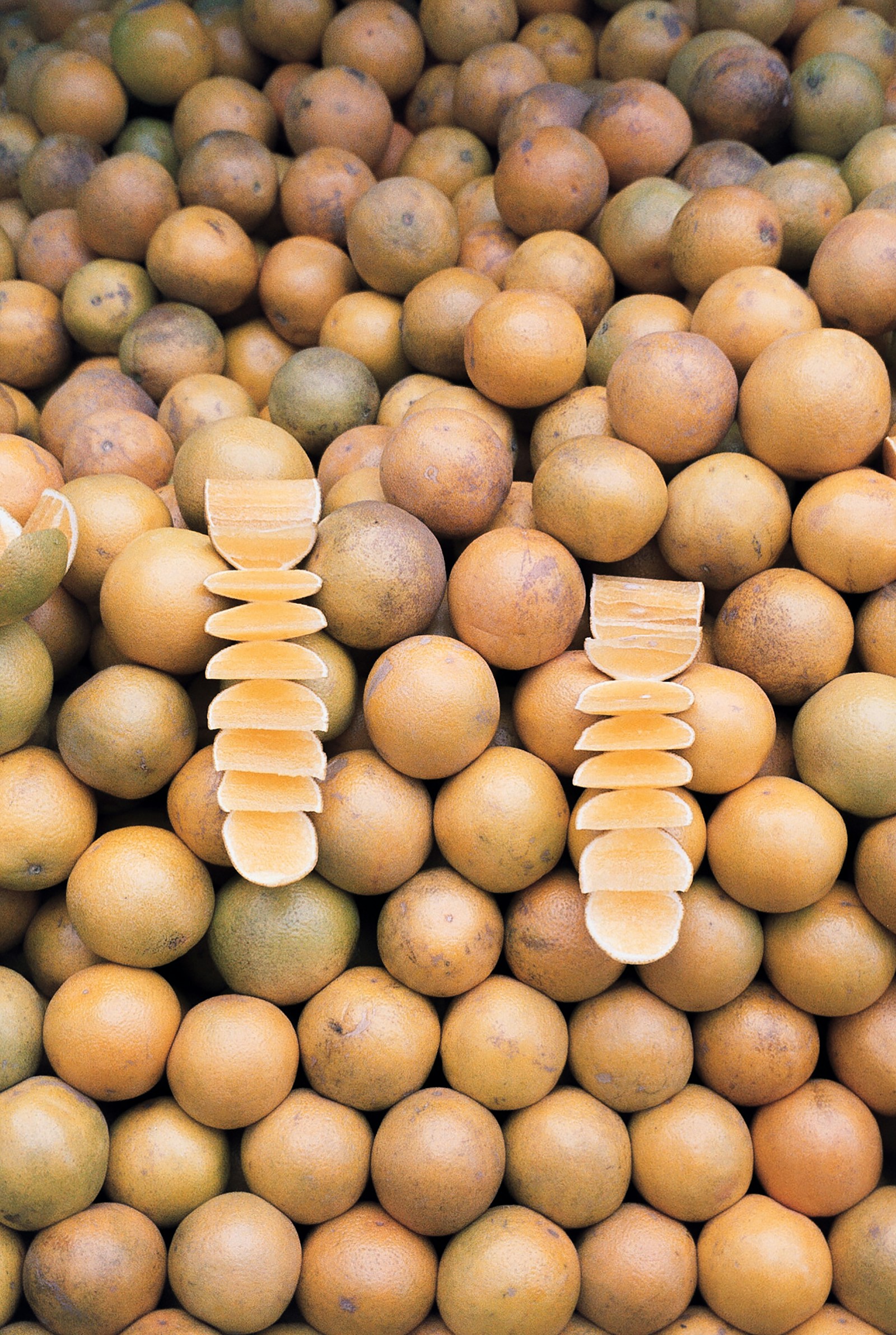
  <figcaption>Ask for the ripe ones. <span lang="es-MX">Los que estén más maduritos</span> is a real request, not a euphemism for cheap. Photo by <a href="https://unsplash.com/photos/rYBAZ9aDO4E" target="_blank" rel="noopener noreferrer">Evelyn Verdín on Unsplash</a>.</figcaption>
</figure>

## The exit nobody teaches

You will look at things you don't want. That is the entire point of a tianguis. The phrase for it is not <mark lang="es-MX">no gracias</mark>, which can land a little flat, but this:

<ul class="examples">
  <li class="example">
    <div class="es" lang="es-MX">Gracias, ahorita nada más estoy viendo.</div>
    <div class="en" lang="en">Thanks, I'm just looking right now.</div>
  </li>
  <li class="example">
    <div class="es" lang="es-MX">Al rato regreso, gracias.</div>
    <div class="en" lang="en">I'll come back in a bit, thanks.</div>
  </li>
</ul>

<mark lang="es-MX">Al rato regreso</mark> is doing something specific: it leaves the door open without promising anything, and everybody involved understands that. Nobody is offended when you don't come back. It is the market version of a soft no, and it is the most-used sentence in the whole place.

Learn the day. Learn <mark lang="es-MX">poner</mark> and <mark lang="es-MX">levantar</mark>. Move the quantity instead of the price. The rest is just walking around with a bag, which turns out to be the good part.

[^inah-tianquiztli]: [INAH, Glifo tianquiztli: el mercado como lugar sagrado](https://inah.gob.mx/foto-del-dia/glifo-tianquiztli-el-mercado-como-lugar-sagrado) — Instituto Nacional de Antropología e Historia
[^eluniversal-ruedas]: [El Universal, Los primeros mercados sobre ruedas](https://www.eluniversal.com.mx/mochilazo-en-el-tiempo/los-primeros-mercados-sobre-ruedas/) — El Universal, Mochilazo en el tiempo
[^datos-ruedas]: [Portal de Datos Abiertos de la CDMX, Mercados sobre ruedas](https://datos.cdmx.gob.mx/dataset/mercados-sobre-ruedas) — Gobierno de la Ciudad de México
[^chilango-mapa]: [Chilango, mapa de todos los tianguis de CDMX](https://www.chilango.com/noticias/crean-mapa-con-todos-los-tianguis-de-cdmx-ubicaciones-dias-y-horarios/) — Chilango
[^chilango-primeros]: [Chilango, así fueron los primeros tianguis de México](https://www.chilango.com/cultura/primeros-tianguis-de-mexico-prehispanico/) — Chilango

FAQ:
Q: What is a tianguis?
A: An open-air market that sets up on a specific weekday, on the street, and is gone by evening. The word comes from Nahuatl tianquiztli, the pre-Hispanic word for market.

Q: What is the difference between a tianguis and a mercado?
A: A mercado is a permanent public market building open every day. A tianguis appears on the street on one day of the week and is taken down the same night.

Q: How do I ask which day the tianguis happens?
A: Say ¿qué día ponen el tianguis? or ¿qué día es el tianguis por aquí?

Q: What does ya van a levantar mean?
A: It means they are about to pack up. Levantar is the verb for taking down the stalls, and it is your signal that the good stuff is gone.

Q: What is a mercado sobre ruedas?
A: A government-organized itinerant market created in the late 1960s, with routes assigned by day of the week. In everyday speech people call these tianguis too.

Q: Can I bargain at a tianguis?
A: Sometimes, and it works best through quantity. Ask ¿en cuánto me da los tres? rather than pushing on the price of one item.

Q: How do I ask the price fast?
A: Say ¿a cómo? It is the short, normal, local version of ¿cuánto cuesta?

Q: What does se lo dejo en mean?
A: It means I will let you have it for. It is the seller making an offer: se lo dejo en cien.

Q: How do I ask about size?
A: Say ¿qué talla es? for clothes, and ¿qué número? for shoes. Número is the shoe word, not talla.

Q: How do I leave without buying?
A: Say gracias, ahorita nada más estoy viendo. It is honest, common, and closes the conversation kindly.

Sources:
- INAH, Glifo tianquiztli: el mercado como lugar sagrado: https://inah.gob.mx/foto-del-dia/glifo-tianquiztli-el-mercado-como-lugar-sagrado
- El Universal, Los primeros mercados sobre ruedas: https://www.eluniversal.com.mx/mochilazo-en-el-tiempo/los-primeros-mercados-sobre-ruedas/
- Portal de Datos Abiertos de la CDMX, Mercados sobre ruedas: https://datos.cdmx.gob.mx/dataset/mercados-sobre-ruedas
- Chilango, mapa de todos los tianguis de CDMX: https://www.chilango.com/noticias/crean-mapa-con-todos-los-tianguis-de-cdmx-ubicaciones-dias-y-horarios/
- Chilango, así fueron los primeros tianguis de México: https://www.chilango.com/cultura/primeros-tianguis-de-mexico-prehispanico/

Related words: lana, chido, fresa, no-manches