---
title: "Quién Sabe, Depende, Igual: Is That a Maybe, or a Soft No?"
description: "Learn quién sabe, depende, igual, chance, and no sabría decirte, the Mexican Spanish replies that soften uncertainty, avoidance, and quiet no's."
type: "article"
category: "phrases"
url: "https://consalsa.app/blog/uncertainty-mexican-spanish"
canonical: "https://consalsa.app/blog/uncertainty-mexican-spanish"
published: "2026-07-09"
updated: "2026-07-09"
author: "Andrey the Nomad"
site: "ConSalsa.App"
license: "https://consalsa.app/about"
---

# Quién Sabe, Depende, Igual: Is That a Maybe, or a Soft No?
URL: https://consalsa.app/blog/uncertainty-mexican-spanish
Date: 2026-07-09
Updated: 2026-07-09
Category: phrases
Keywords: quién sabe meaning, depende meaning spanish, igual mexican spanish maybe, no sabría decirte meaning, mexican spanish uncertainty, how mexicans say I don't know
Summary: Learn quién sabe, depende, igual, chance, and no sabría decirte, the Mexican Spanish replies that soften uncertainty, avoidance, and quiet no's.

Quick answer:
- Quién sabe can mean genuine uncertainty, skeptical distance, or a gentle refusal to own the answer.
- Depende usually invites one more condition; ask ¿de qué? only when the detail actually matters.
- Igual and chance can keep a possibility alive without making a promise, especially around casual plans.
- No sabría decirte is a polite, slightly formal way to avoid guessing or taking responsibility for an answer.

What you'll learn:
- How to separate a real lack of information from hesitation, privacy, politeness, and a soft social exit.
- Which replies keep a conversation warm without chasing someone who is clearly leaving the answer loose.
- How follow-through, timing, and concrete details reveal more than the uncertainty word by itself.
- When to accept an indirect answer and when practical stakes justify one calm clarification.

Don't sound gringo:
Do not hear chance, igual, or quién sabe and mentally upgrade them to yes. A possibility becomes a plan only when someone adds a time, place, or action.

Body:

You invite someone out and get <mark lang="es-MX">quién sabe</mark>. Is that a maybe, a soft no, or an honest “I have no idea”? Annoyingly, it can be any of the three.

Mexican Spanish has plenty of room between a clean answer and a lie: <mark lang="es-MX">depende</mark>, <mark lang="es-MX">igual</mark>, <mark lang="es-MX">chance</mark>, and <mark lang="es-MX">no sabría decirte</mark> all live there. Do not become suspicious of every soft answer. Listen for what kind of uncertainty you have been handed and whether it needs a reply.

## The uncertainty ladder

| Phrase | Basic meaning | What it may do socially |
|---|---|---|
| No sé | I don't know | Direct lack of knowledge |
| Quién sabe | Who knows | Distance, doubt, open uncertainty |
| Depende | It depends | Requests or withholds a condition |
| Igual | Maybe / perhaps | Floats a possibility |
| Chance | Maybe / there is a chance | Keeps the door slightly open |
| No sabría decirte | I couldn't tell you | Polite refusal to guess or commit |

RAE defines <mark lang="es-MX">saber</mark> around knowing or having information.[^rae-saber] Real conversation adds another question: who is willing to stand behind the answer? <mark lang="es-MX">No sabría decirte</mark> avoids a bad guess. <mark lang="es-MX">Quién sabe</mark> may close down gossip, while <mark lang="es-MX">depende</mark> leaves room for a condition or decision.

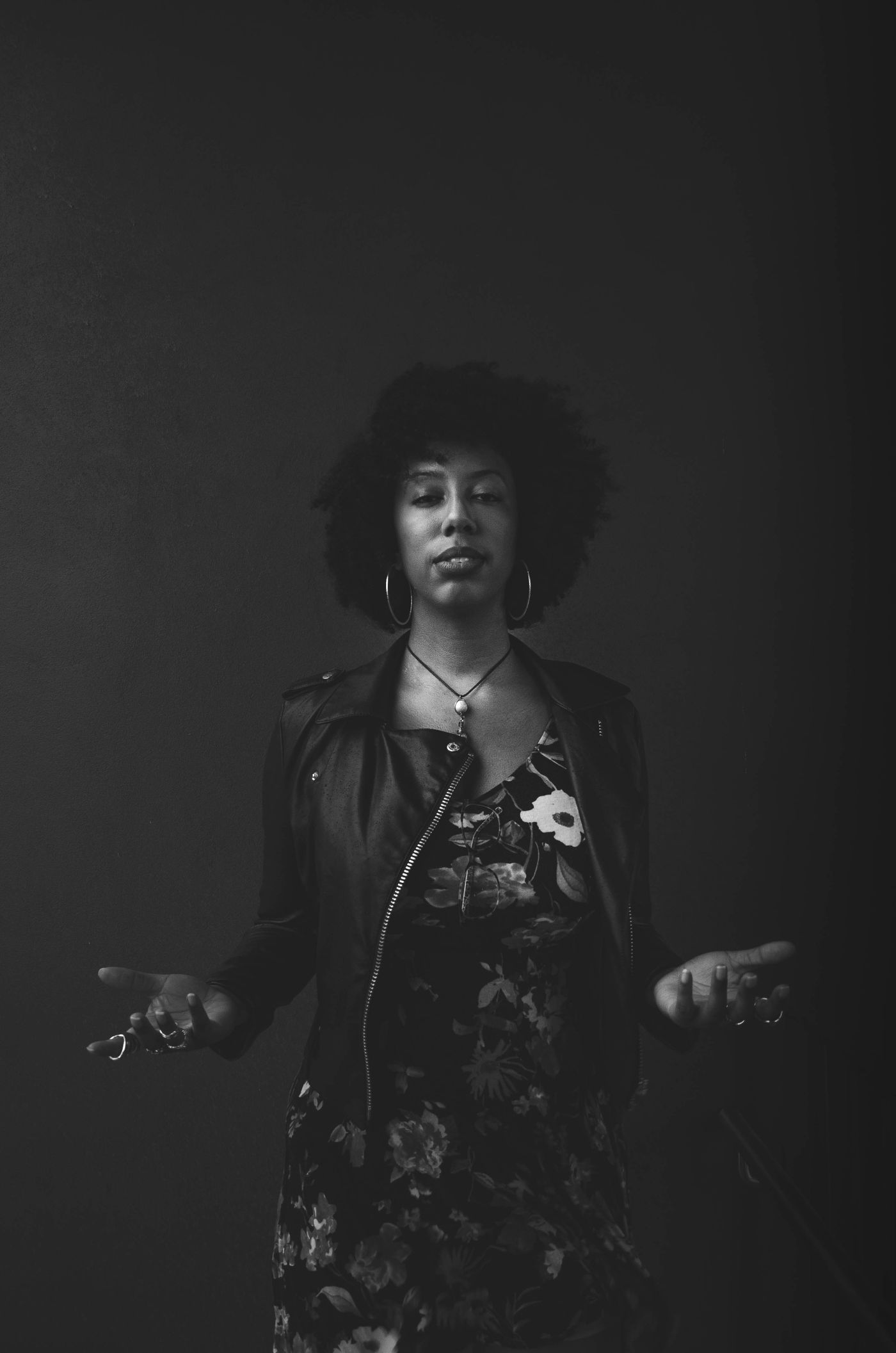
<figure>
  <img src="/images/blog/pexels-uncertainty-shrug.jpg" alt="A woman shrugging with open hands against a dark background." loading="lazy" />
  <figcaption>Not every uncertain answer is empty; sometimes the speaker is carefully limiting the claim. Photo by <a href="https://www.pexels.com/photo/serious-black-woman-shrugging-hands-against-dark-background-4882245/" target="_blank" rel="noopener noreferrer">Jacob on Pexels</a>.</figcaption>
</figure>

## Quién sabe creates distance

Literally, <mark lang="es-MX">quién sabe</mark> asks “who knows?” The grammar moves knowledge away from the speaker. That can express honest mystery, skepticism, resignation, or a desire not to gossip.

<ul class="examples">
  <li class="example">
    <div class="es" lang="es-MX">¿Va a llover? Quién sabe.</div>
    <div class="en" lang="en">Is it going to rain? Who knows.</div>
  </li>
  <li class="example">
    <div class="es" lang="es-MX">¿Por qué terminaron? Quién sabe, mejor pregúntale a ella.</div>
    <div class="en" lang="en">Why did they break up? Who knows—better ask her.</div>
  </li>
  <li class="example">
    <div class="es" lang="es-MX">¿Sí va a cumplir? Mmm, quién sabe.</div>
    <div class="en" lang="en">Is he really going to follow through? Hmm, who knows.</div>
  </li>
</ul>

Listen to what arrives before and after. A long <mark lang="es-MX">mmm</mark> plus <mark lang="es-MX">quién sabe</mark> may communicate doubt. A quick answer followed by a redirect may be a privacy boundary. If the speaker changes the subject, let the subject change.
## Depende gives you a hinge

<mark lang="es-MX">Depende</mark> is useful because it announces a condition, even when the condition is still offstage. RAE defines <mark lang="es-MX">depender</mark> through being conditioned by something else.[^rae-depender]

| Question | Depende may be waiting for | Useful next line |
|---|---|---|
| ¿Vas a ir? | Work, energy, another plan | ¿De cómo salgas del trabajo? |
| ¿Está caro? | Budget or comparison | ¿Comparado con qué? |
| ¿Te gusta? | Context or version | ¿Depende del lugar? |
| ¿Se puede? | Rules, time, permission | ¿Qué tendría que pasar? |

A blunt <mark lang="es-MX">¿de qué?</mark> is grammatically fine. A fuller guess often feels more collaborative because it shows you were listening.

<figure>
  <img src="/images/blog/pexels-uncertainty-cafe-talk.jpg" alt="Two people silhouetted while talking across a cafe table." loading="lazy" />
  <figcaption>A good follow-up offers a path forward instead of demanding certainty on command. Photo by <a href="https://www.pexels.com/photo/casual-conversation-in-cafe-with-natural-light-30692467/" target="_blank" rel="noopener noreferrer">AMORIE SAM on Pexels</a>.</figcaption>
</figure>

## Igual and chance are possibilities, not reservations

In Mexican conversation, <mark lang="es-MX">igual</mark> can do more than mean “equal” or “the same.” Research using spoken Mexican Spanish documents <mark lang="es-MX">igual</mark> and <mark lang="es-MX">igual y</mark> for possibility, attenuation, expectation, and hypothesis.[^scielo-igual] <mark lang="es-MX">Chance</mark>, borrowed and thoroughly at home in Mexican Spanish, can mean an opportunity, a bit of time, or a possibility.[^dem-chance]

<ul class="examples">
  <li class="example">
    <div class="es" lang="es-MX">Igual y llego después.</div>
    <div class="en" lang="en">Maybe I'll come later.</div>
  </li>
  <li class="example">
    <div class="es" lang="es-MX">Chance paso un rato.</div>
    <div class="en" lang="en">I might stop by for a bit.</div>
  </li>
  <li class="example">
    <div class="es" lang="es-MX">Dame chance de revisar.</div>
    <div class="en" lang="en">Give me a chance / a moment to check.</div>
  </li>
</ul>

Neither first line is a confirmed plan. If you hear one, do not add the person to a reservation until they confirm.

<div id="midpost-newsletter-slot"></div>

## Read the next move, not your favorite word

An answer in conversation creates expectations for what comes next. Cervantes describes question-answer and offer-acceptance/rejection as adjacent pairs: one turn makes another kind of turn relevant.[^cervantes-pair] Soft uncertainty complicates that pair, but the follow-up still reveals direction.

| After the vague phrase, they... | Better reading |
|---|---|
| Offer a day, time, or condition | Real possibility |
| Ask you a question back | Engaged but undecided |
| Say they will confirm and do | Reliable uncertainty |
| Change the subject | Likely exit or boundary |
| Repeat the same vague answer | Stop pushing |
| Never follow up | Not a plan |

One clarification is usually enough. After that, watch what the person does. A second vague answer is still information, even if it is not the answer you hoped for.

<figure>
  <img src="/images/blog/pexels-uncertainty-cdmx-cafe.jpg" alt="People talking inside a cafe in Mexico City, seen through the front window." loading="lazy" />
  <figcaption>Conversation often leaves some information on the table; follow-through shows whether it matters. Photo by <a href="https://www.pexels.com/photo/people-eating-in-a-restaurant-12240729/" target="_blank" rel="noopener noreferrer">Peaton Hugo on Pexels</a>.</figcaption>
</figure>

## How to ask once without making it heavy

Pick a question that makes answering easier.

<ul class="examples">
  <li class="example">
    <div class="es" lang="es-MX">¿Te aparto lugar o me confirmas mañana?</div>
    <div class="en" lang="en">Should I save you a spot, or will you confirm tomorrow?</div>
  </li>
  <li class="example">
    <div class="es" lang="es-MX">¿Depende de la hora?</div>
    <div class="en" lang="en">Does it depend on the time?</div>
  </li>
  <li class="example">
    <div class="es" lang="es-MX">Si no te late, cero problema.</div>
    <div class="en" lang="en">If you're not into it, no problem.</div>
  </li>
</ul>

That last line can release social pressure, but use it sincerely. If the other person says no, do not immediately reopen the pitch with three “better” options.

## When soft uncertainty is not enough

For safety, money, housing, medication, transport, and work deadlines, you can ask for a clearer boundary. Politeness is not the same as accepting unusable information.

Try <mark lang="es-MX">necesito saber hoy para organizarme</mark>, <mark lang="es-MX">¿me confirmas antes de las seis?</mark>, or <mark lang="es-MX">si no sabes, ¿con quién lo puedo revisar?</mark> These lines explain the practical need rather than accusing the other person of evasion.

Cervantes work on communicative competence and courtesy is a useful reminder that repetition, hesitation, and contextual framing are part of communication, not defects outside “real Spanish.”[^cervantes-courtesy] Your job is to match clarity to stakes.

## Give your own maybe a landing time

You can use these phrases too. Just attach a responsible next move.

<mark lang="es-MX">Chance voy</mark> is easy. <mark lang="es-MX">Chance voy; te confirmo mañana antes de comer</mark> is kind. <mark lang="es-MX">No sabría decirte</mark> is prudent. <mark lang="es-MX">No sabría decirte, pero en recepción seguro saben</mark> is useful.

If you are the one answering, add when you will know, who should follow up, or whether the other person should plan without you. <mark lang="es-MX">Chance</mark> can stay casual; the extra sentence keeps your friend from waiting on a decision you have not made.

[^rae-saber]: [Diccionario de la lengua española, saber](https://dle.rae.es/saber) — Real Academia Española.
[^rae-depender]: [Diccionario de la lengua española, depender](https://dle.rae.es/depender) — Real Academia Española.
[^scielo-igual]: [Valores epistémicos de igual e igual y en datos del español de México](https://www.scielo.org.mx/scielo.php?pid=S2448-82242023000100077&script=sci_abstract&tlng=es) — Anuario de Letras, UNAM.
[^dem-chance]: [Diccionario del español de México, chance](https://dem.colmex.mx/ver/chance) — El Colegio de México.
[^cervantes-pair]: [Diccionario de términos clave de ELE, par adyacente](https://cvc.cervantes.es/ensenanza/biblioteca_ele/diccio_ele/diccionario/paradyacente.htm) — Instituto Cervantes.
[^cervantes-courtesy]: [Competencia comunicativa y cortesía](https://cvc.cervantes.es/ensenanza/biblioteca_ele/asele/pdf/01/01_0191.pdf) — Instituto Cervantes.

FAQ:
Q: What does quién sabe mean in Mexican Spanish?
A: Literally, it asks who knows. In conversation it can mean I don't know, who knows, maybe, or I would rather not commit to an answer.

Q: Is depende a rude answer?
A: No. It signals that the answer changes with a condition. Ask one relevant follow-up if you need to know which condition matters.

Q: Does igual mean maybe in Mexico?
A: Yes, in casual conversation igual can introduce a possibility, similar to maybe or perhaps. It does not guarantee that the thing will happen.

Q: What does no sabría decirte mean?
A: It means I couldn't really tell you. It is a polite way to avoid guessing, overpromising, or claiming knowledge the speaker does not have.

Q: How do I know if a vague answer is a soft no?
A: Look for the next move. If there is no alternative, question, time, or follow-up after one gentle clarification, treat the lack of momentum as meaningful.

Q: Should I ask ¿por qué? after quién sabe?
A: Only if the relationship and stakes justify it. Often ¿qué tendría que pasar? or a concrete option sounds less confrontational.

Q: Can I use these phrases myself?
A: Yes. Use them honestly: for uncertainty, not to keep someone waiting when you already know your answer is no.

Sources:
- Diccionario de la lengua española, saber: https://dle.rae.es/saber
- Diccionario de la lengua española, depender: https://dle.rae.es/depender
- Anuario de Letras, valores epistémicos de igual e igual y: https://www.scielo.org.mx/scielo.php?pid=S2448-82242023000100077&script=sci_abstract&tlng=es
- Diccionario del español de México, chance: https://dem.colmex.mx/ver/chance
- Instituto Cervantes, par adyacente: https://cvc.cervantes.es/ensenanza/biblioteca_ele/diccio_ele/diccionario/paradyacente.htm
- Instituto Cervantes, competencia comunicativa y cortesía: https://cvc.cervantes.es/ensenanza/biblioteca_ele/asele/pdf/01/01_0191.pdf

Related words: ni-modo, ahorita, al-rato, chale