---
title: "Sin Carne Isn't Enough: How to Order Vegetarian Food in Mexico"
description: "Sin carne won't keep lard out of your beans. Learn the Mexican Spanish that actually works for vegetarian and vegan ordering, plus the safe dishes."
type: "article"
category: "food"
url: "https://consalsa.app/blog/vegetarian-spanish-mexico"
canonical: "https://consalsa.app/blog/vegetarian-spanish-mexico"
published: "2026-08-21"
updated: "2026-08-21"
author: "Andrey the Nomad"
site: "ConSalsa.App"
license: "https://consalsa.app/about"
---

# Sin Carne Isn't Enough: How to Order Vegetarian Food in Mexico
URL: https://consalsa.app/blog/vegetarian-spanish-mexico
Date: 2026-08-21
Updated: 2026-08-21
Category: food
Keywords: vegetarian spanish mexico, how to say vegetarian in spanish mexico, vegan spanish mexico, sin carne meaning, manteca in beans mexico, ordering vegetarian food mexico city
Summary: Sin carne won't keep lard out of your beans. Learn the Mexican Spanish that actually works for vegetarian and vegan ordering, plus the safe dishes.

Quick answer:
- Sin carne is not enough. Ask about manteca (pork lard) and caldo de pollo (chicken stock) by name.
- Say soy vegetariano or soy vegano, then ask per dish: ¿lleva manteca? and ¿lo hacen con caldo de pollo?
- For many people, carne means beef or pork steak, so ham, chicken, and broth can slip through a confident no.
- Safe bets: nopales, huitlacoche, flor de calabaza, rajas, esquites, and frijoles de olla when the cook confirms no lard.

What you'll learn:
- Why sin carne fails and which two words actually protect you.
- Where lard and chicken stock hide: beans, tamales, flour tortillas, rice.
- The dishes that are almost always a yes, and what to still ask about.
- How to ask warmly so you sound curious, not like a difficult tourist.

Don't sound gringo:
Don't ask ¿tiene carne? Kitchens answer that literally, and lard is not carne. Ask ¿lleva manteca? instead - llevar is the verb Mexican cooks use for what goes into a dish.

Body:

I ate <mark lang="es-MX">frijoles</mark> almost every day for about six weeks before I found out they had lard in them.

It was not a trick. I had asked. I had asked in Spanish, in a full sentence, at a <mark lang="es-MX">fonda</mark> in Roma Sur, and I was quietly proud of the sentence. <mark lang="es-MX">¿Los frijoles tienen carne?</mark> The señora said no.

She was telling the truth. There was no <mark lang="es-MX">carne</mark> in the beans. There was <mark lang="es-MX">manteca</mark>.

**Nobody lied to me. I just asked the wrong question for six weeks.**

The phrase that keeps you vegetarian in Mexico is not <mark lang="es-MX">sin carne</mark>. It is <mark lang="es-MX">sin manteca</mark> and <mark lang="es-MX">sin caldo de pollo</mark>, asked one dish at a time. Mexico is a genuinely easy place to eat plants, as long as you ask about fat and broth instead of asking about meat.

## The phrases that actually work

Start with these. The middle column is the part you say out loud.

| What you mean | Say this |
|---|---|
| I'm vegetarian | Soy vegetariano / vegetariana |
| I'm vegan | Soy vegano / vegana |
| Does it have lard? | ¿Lleva manteca? |
| Is it made with chicken stock? | ¿Lo hacen con caldo de pollo? |
| No meat, no ham, no chicken | Sin carne, sin jamón y sin pollo |
| Is it all vegetables? | ¿Es todo de verdura? |
| What do you have without meat? | ¿Qué tiene sin carne? |
| Beans simmered, not refried | ¿Hay frijoles de olla? |

One small grammar move does most of the work here: **use <mark lang="es-MX">llevar</mark>, not <mark lang="es-MX">tener</mark>**.

<mark lang="es-MX">¿Tiene carne?</mark> asks whether there is meat sitting in the dish. <mark lang="es-MX">¿Lleva manteca?</mark> asks what went into making it. <mark lang="es-MX">Llevar</mark> is the verb Mexican kitchens use for ingredients, and it pulls answers out of the cooking process instead of the plate.

## Why sin carne does not do the job

Four separate things are happening, and none of them is anyone being difficult.

**First, <mark lang="es-MX">carne</mark> is narrower in practice than in the dictionary.** The RAE defines it as the muscular part of an animal's body,[^rae-carne] which technically covers chicken, fish, and ham. In everyday CDMX speech, <mark lang="es-MX">carne</mark> usually means beef or pork, in visible pieces, as the main event. Ask a <mark lang="es-MX">torta</mark> counter for something <mark lang="es-MX">sin carne</mark> and you can very reasonably be handed ham.

**Second, lard is a fat, not a meat.** <mark lang="es-MX">Manteca</mark> is the solid fat rendered from animals, especially pork.[^dem-manteca] In a kitchen's mental model it belongs with oil and salt, not with the <mark lang="es-MX">guisado</mark> of the day. Asking about meat does not reach it.

**Third, broth is a flavor base.** The word <mark lang="es-MX">caldo</mark> is defined as a liquid made from the juices of meat and vegetables plus the water they cooked in.[^dem-caldo] Meat is baked into the definition. Nobody thinks of it as an ingredient worth mentioning, the same way you would not list "water" when describing your soup.

**Fourth, one surface cooks everything.** A street stand or a <mark lang="es-MX">fonda</mark> runs on a single <mark lang="es-MX">comal</mark>, one pot of frying oil, and one knife and board. The <mark lang="es-MX">quesadilla de queso</mark> lands where the <mark lang="es-MX">chorizo</mark> was two minutes ago, the <mark lang="es-MX">papas</mark> come out of the same oil as the <mark lang="es-MX">chicharrón</mark>. This is not carelessness, it is what a two-square-meter kitchen looks like. If shared surfaces matter to you, ask about them directly rather than hoping: <mark lang="es-MX">¿lo hacen en el mismo comal?</mark> or <mark lang="es-MX">¿fríen todo en el mismo aceite?</mark>

**One thing this post is not.** It is about ordering vegetarian or vegan by preference, in ordinary Mexican kitchens, where lard in the beans is a disappointment rather than an emergency. If you have a true allergy, or a religious requirement you cannot bend, you need to ask harder and differently: name the ingredient, ask about the pan, the oil, and the board, and be willing to walk away from a maybe.

Even the word for the diet is soft. RAE's entry for <mark lang="es-MX">vegetariano</mark> describes someone who eats mainly vegetables,[^rae-vegetariano] and "mainly" is doing a lot of quiet work in that sentence. So <mark lang="es-MX">soy vegetariano</mark> is a useful opener, not a filter.

<figure>
  <img src="/images/blog/vegetarian-spanish-mexico-1.jpg" alt="Nopal cactus paddles with prickly pear fruit growing against a bright blue sky." loading="lazy" />
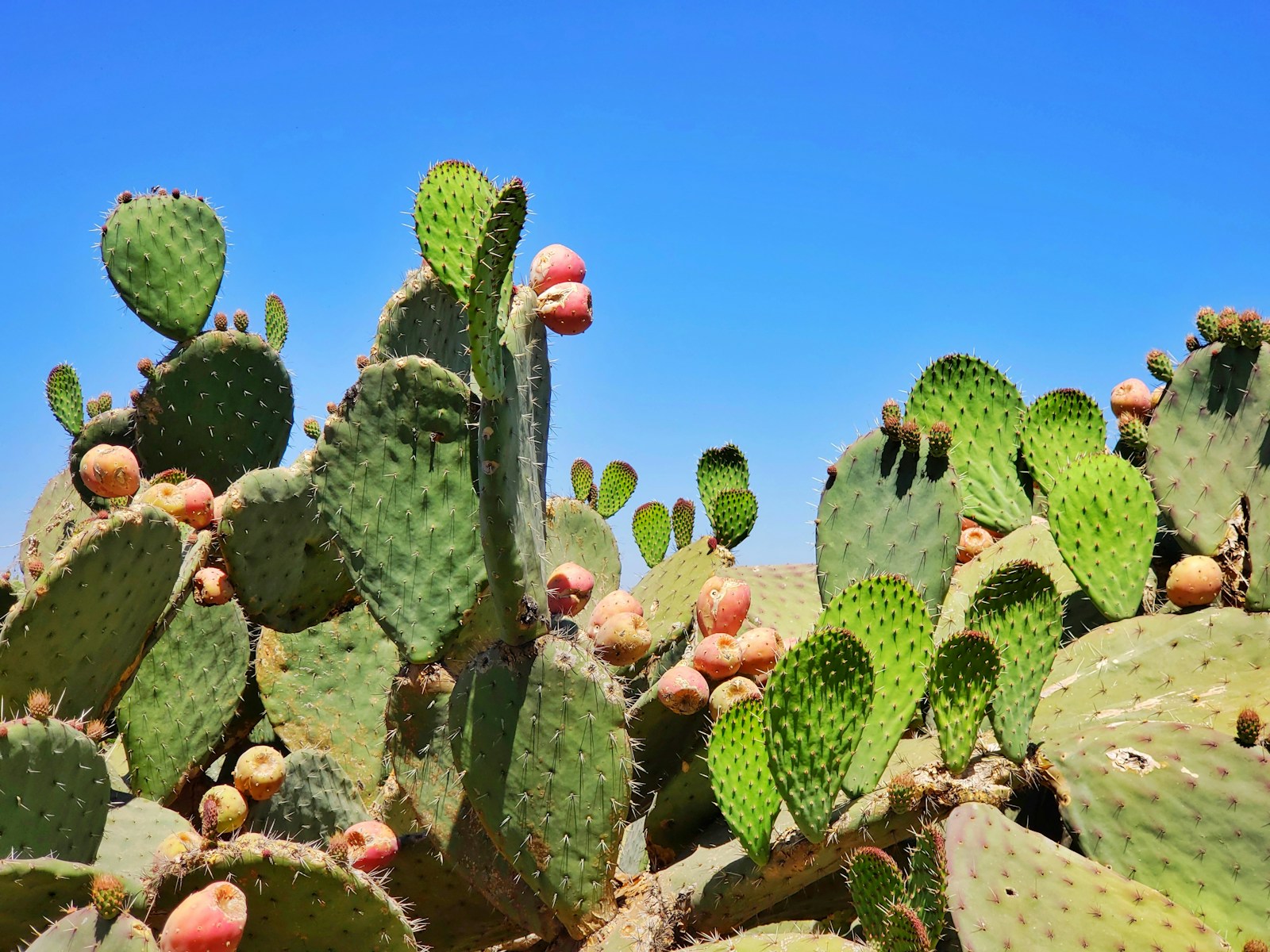
  <figcaption>Nopales are one of the safest orders in the country, and they grow on the flag. Photo by <a href="https://unsplash.com/photos/6ZeLo8O7lU0" target="_blank" rel="noopener noreferrer">Miguel Urieta on Unsplash</a>.</figcaption>
</figure>

## Manteca: the beans, the tamales, the flour tortillas

<mark lang="es-MX">Manteca de cerdo</mark> is not a shortcut ingredient. Larousse Cocina lists it as essential for <mark lang="es-MX">tamal</mark> dough and traditional breads, as a flavoring for beans, moles, and <mark lang="es-MX">pipianes</mark>, and as the frying fat for <mark lang="es-MX">antojitos</mark> like quesadillas, tacos, <mark lang="es-MX">flautas</mark>, and <mark lang="es-MX">empanadas</mark>.[^larousse-manteca]

That is a long list, and it is why the beans caught me.

Here is where to actually look:

| Dish | The risk | What to ask |
|---|---|---|
| Frijoles refritos | Usually fried in lard | ¿Los frijoles llevan manteca? |
| Frijoles de olla | Usually just water, onion, epazote | ¿Son de olla o refritos? |
| Tamales | Masa is typically beaten with lard | ¿La masa lleva manteca? |
| Tortillas de maíz | Normally fine: corn, water, lime | Nothing needed |
| Tortillas de harina | Often lard or shortening | ¿Las de harina llevan manteca? |
| Quesadillas fritas | Fried, sometimes in lard | ¿Las fríen en aceite o en manteca? |

Corn tortillas from a <mark lang="es-MX">tortillería</mark> are the reliable friend in this whole story. Flour tortillas are the one people forget, especially up north, where lard in the dough is the default rather than the exception.

<ul class="examples">
  <li class="example">
    <div class="es" lang="es-MX">¿Los frijoles llevan manteca o son de olla?</div>
    <div class="en" lang="en">Do the beans have lard, or are they simmered?</div>
  </li>
  <li class="example">
    <div class="es" lang="es-MX">¿La masa del tamal lleva manteca?</div>
    <div class="en" lang="en">Is the tamal dough made with lard?</div>
  </li>
</ul>

## Caldo de pollo: the ingredient nobody mentions

Red Mexican rice looks like the most vegetarian thing on the counter. It is rice, tomato, maybe peas and carrot. Very often it was cooked in chicken stock or with a spoon of chicken bouillon powder, and nobody would think to say so.

The same goes for <mark lang="es-MX">sopa de fideo</mark>, plenty of <mark lang="es-MX">moles</mark>, and a lot of the day's <mark lang="es-MX">guisados</mark> at a <mark lang="es-MX">fonda</mark>.

<ul class="examples">
  <li class="example">
    <div class="es" lang="es-MX">¿El arroz lo hacen con caldo de pollo o con agua?</div>
    <div class="en" lang="en">Is the rice made with chicken stock or with water?</div>
  </li>
  <li class="example">
    <div class="es" lang="es-MX">¿Lleva consomé de pollo?</div>
    <div class="en" lang="en">Does it have chicken bouillon in it?</div>
  </li>
</ul>

**The word <mark lang="es-MX">consomé</mark> is worth memorizing.** In a home or fonda kitchen it usually means the powdered bouillon in the yellow jar, and it goes into things that have no visible meat anywhere.

<div id="midpost-newsletter-slot"></div>

## The dishes that are almost always a yes

This is the part that made me relax. Once you stop trying to translate a salad bar into Spanish, Mexican food is full of things that were never built around meat in the first place.

| Order this | What it is | Still ask about |
|---|---|---|
| Nopales | Grilled or simmered cactus paddle | Nothing, usually |
| Huitlacoche | Earthy corn fungus, cooked with onion | The pan fat |
| Flor de calabaza | Squash blossom, often in quesadillas | Queso, if vegan |
| Rajas | Poblano chile strips | Crema, if vegan |
| Papa | Potato, often with chorizo, so ask | Chorizo |
| Esquites / elote | Corn cup or corn on the cob | Mayonesa, queso, and the broth: often mantequilla or consomé de pollo |
| Guacamole | Avocado, lime, chile | Nothing |
| Frijoles de olla | Beans simmered in a pot | Manteca |

<mark lang="es-MX">Nopal</mark> is the cactus whose pads and fruit are both edible,[^dem-nopal] and it turns up grilled, in salads, and inside <mark lang="es-MX">tacos</mark>. <mark lang="es-MX">Huitlacoche</mark> is the fungus that grows on tender corn cobs, prized in central Mexico and used as a filling for <mark lang="es-MX">antojitos</mark>, soups, and stews.[^larousse-huitlacoche] <mark lang="es-MX">Flor de calabaza</mark> is the squash blossom, most commonly stuffed into quesadillas or turned into soup in the central states.[^larousse-flor]

None of these are compromise food. They are things people order because they want them.

<figure>
  <img src="/images/blog/vegetarian-spanish-mexico-2.jpg" alt="A Mexican market stall stacked with dried chillies, fresh limes, and vegetables in crates." loading="lazy" />
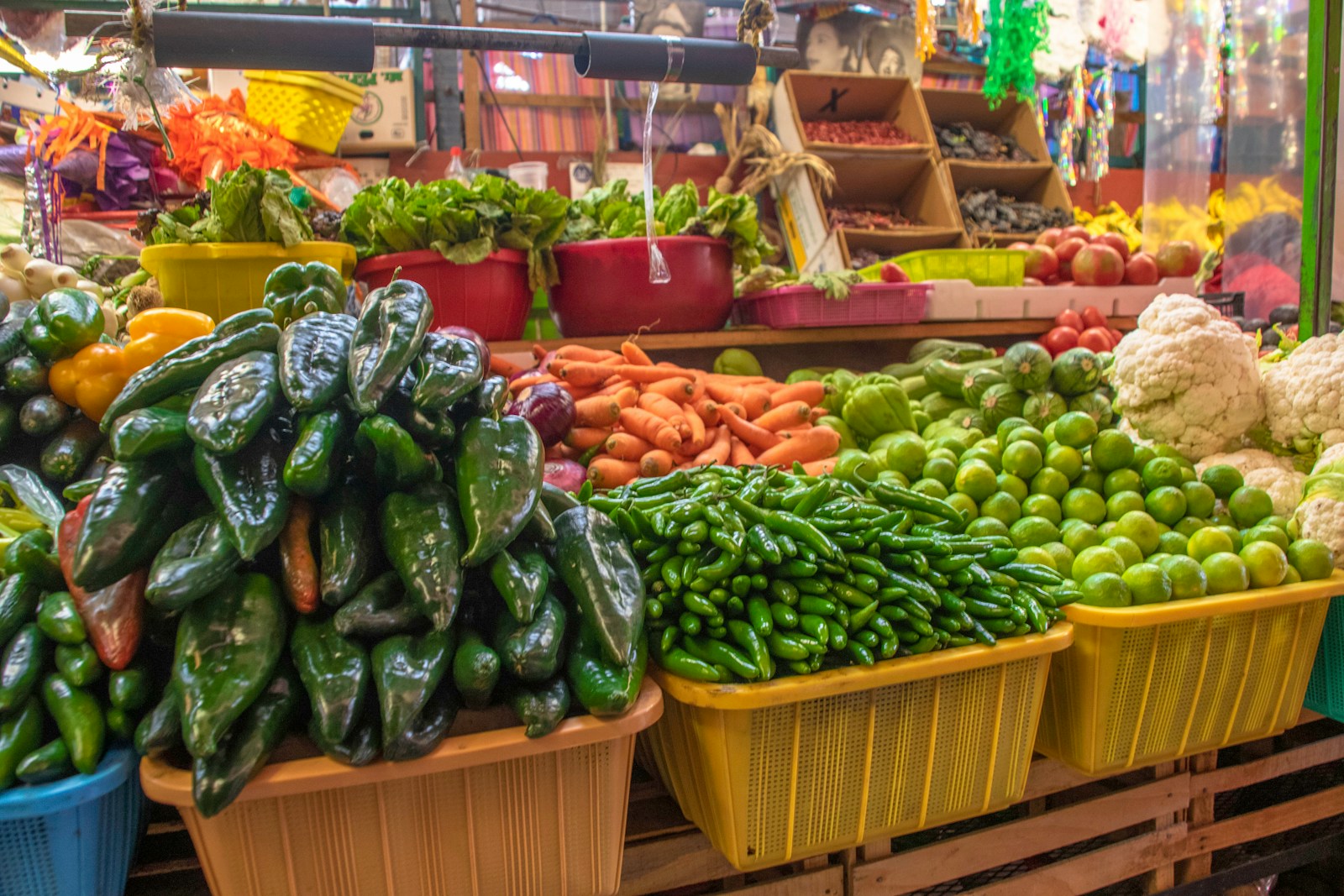
  <figcaption>The market is the honest version of Mexican food: corn, beans, chile, and about forty vegetables you have not met yet. Photo by <a href="https://unsplash.com/photos/nCmdKJVhHvw" target="_blank" rel="noopener noreferrer">Miranda Garside on Unsplash</a>.</figcaption>
</figure>

## The vegan layer: queso, crema, mayonesa, huevo

If you are vegan, there is a second pass to make, and it is easier than the first one because the ingredients are visible.

<mark lang="es-MX">Esquites</mark> are the clearest example. The base is corn kernels boiled with salt and <mark lang="es-MX">epazote</mark>, served in their own broth, and the mayonnaise, <mark lang="es-MX">crema</mark>, and cheese are things that get added sometimes, not always.[^dem-esquite] That means you are not stripping the dish down. You are asking for it the plain way.

The catch is the liquid, not the toppings. **Plenty of stands finish the pot with <mark lang="es-MX">mantequilla</mark> or a spoonful of <mark lang="es-MX">consomé de pollo</mark>**, so the corn can be the vegetarian part and the broth around it not. Ask before you commit: <mark lang="es-MX">¿el caldito lleva mantequilla o consomé de pollo?</mark>

<ul class="examples">
  <li class="example">
    <div class="es" lang="es-MX">Sin mayonesa, sin queso y sin crema, por favor. Solo chile y limón.</div>
    <div class="en" lang="en">No mayo, no cheese, no cream, please. Just chile and lime.</div>
  </li>
  <li class="example">
    <div class="es" lang="es-MX">¿Me lo puede hacer sin queso?</div>
    <div class="en" lang="en">Could you make it without cheese?</div>
  </li>
  <li class="example">
    <div class="es" lang="es-MX">Soy vegano, no como nada de origen animal.</div>
    <div class="en" lang="en">I'm vegan, I don't eat anything of animal origin.</div>
  </li>
</ul>

The last one is worth having ready as a single clean sentence. It saves the four-round conversation about whether fish counts.
<figure>
  <img src="/images/blog/vegetarian-spanish-mexico-3.jpg" alt="A plate of tacos with corn tortillas, chopped onion, and cilantro seen from above." loading="lazy" />
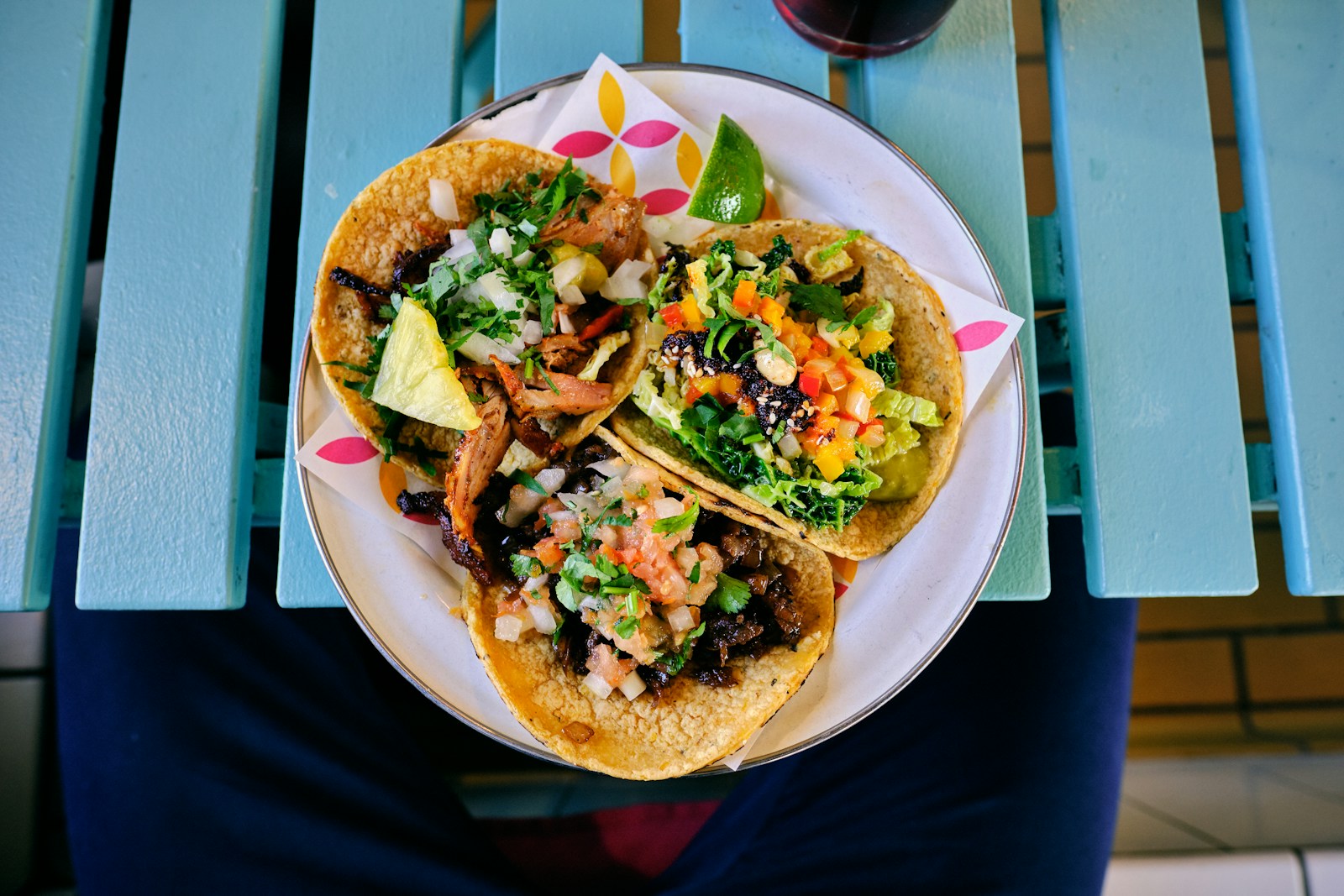
  <figcaption>Nopal, huitlacoche, flor de calabaza, papa, rajas: the taco does not require an animal to be a taco. Photo by <a href="https://unsplash.com/photos/ZQf4jzkpz1k" target="_blank" rel="noopener noreferrer">Krisztian Tabori on Unsplash</a>.</figcaption>
</figure>

## How to ask without becoming the difficult table

This is the part I got wrong longer than the beans, and it has nothing to do with vocabulary.

**Ask about the dish, not about yourself.** A list of personal rules delivered at a counter during the lunch rush lands as a problem to solve. A question about one specific dish lands as a normal question.

**Lead with what you do eat.** <mark lang="es-MX">Me encantan los nopales</mark> opens a different conversation than <mark lang="es-MX">no como carne</mark>.

**Let them recommend.** <mark lang="es-MX">¿Qué me recomienda?</mark> is a small act of trust, and people take it seriously. You will usually get something better than what you would have picked.

The hardest version of this is not a counter at all. It is a table in someone's home, where your partner's mother has been cooking since the morning. Ask early, quietly, in the kitchen, and ask about one thing: <mark lang="es-MX">¿lleva manteca?</mark> Doing it at the table, in front of everybody, turns your diet into the topic of the meal, which is the one outcome nobody wants, you least of all.

<ul class="examples">
  <li class="example">
    <div class="es" lang="es-MX">Disculpe, ¿qué me recomienda sin carne y sin manteca?</div>
    <div class="en" lang="en">Excuse me, what would you recommend without meat and without lard?</div>
  </li>
  <li class="example">
    <div class="es" lang="es-MX">No como carne, pero como de todo lo demás.</div>
    <div class="en" lang="en">I don't eat meat, but I eat everything else.</div>
  </li>
  <li class="example">
    <div class="es" lang="es-MX">Perdón la pregunta, ¿lleva manteca?</div>
    <div class="en" lang="en">Sorry to ask, does it have lard in it?</div>
  </li>
</ul>

<mark lang="es-MX">Perdón la pregunta</mark> is the softener that does the most work. It signals that you know you are adding a step, and it costs you nothing.

## When the answer is no

Sometimes everything on the comal has pork in it, and that is the whole menu.

The move is to take the no cleanly.

<ul class="examples">
  <li class="example">
    <div class="es" lang="es-MX">Ah, ni modo. Gracias, jefa.</div>
    <div class="en" lang="en">Ah, oh well. Thanks.</div>
  </li>
  <li class="example">
    <div class="es" lang="es-MX">Está bien, gracias. Otro día.</div>
    <div class="en" lang="en">That's fine, thanks. Another time.</div>
  </li>
</ul>

Do not negotiate, do not explain your reasoning, and definitely do not explain it in English. Say thanks and walk to the next stand, which in most of CDMX is about nine meters away.

And it is worth holding onto the bigger picture while you ask all these small questions. UNESCO's listing for traditional Mexican cuisine puts the foundation of the whole system as corn, beans, and chile, grown in milpas and chinampas.[^unesco-cocina] The base of this food was always plants. **The lard is an addition, and additions can be asked about.**

You are not asking Mexico for a favor. You are asking for the corn, the beans, and the chile without the fat, which is a much smaller request than it feels like the first time you say it out loud.

[^dem-manteca]: [Diccionario del español de México, manteca](https://dem.colmex.mx/ver/manteca) — El Colegio de México
[^dem-caldo]: [Diccionario del español de México, caldo](https://dem.colmex.mx/ver/caldo) — El Colegio de México
[^dem-esquite]: [Diccionario del español de México, esquite](https://dem.colmex.mx/ver/esquite) — El Colegio de México
[^dem-nopal]: [Diccionario del español de México, nopal](https://dem.colmex.mx/ver/nopal) — El Colegio de México
[^rae-carne]: [Diccionario de la lengua española, carne](https://dle.rae.es/carne) — Real Academia Española
[^rae-vegetariano]: [Diccionario de la lengua española, vegetariano](https://dle.rae.es/vegetariano) — Real Academia Española
[^larousse-manteca]: [Larousse Cocina, manteca de cerdo](https://laroussecocina.mx/palabra/manteca-de-cerdo/) — Larousse Cocina
[^larousse-flor]: [Larousse Cocina, flor de calabaza](https://laroussecocina.mx/palabra/flor-de-calabaza/) — Larousse Cocina
[^larousse-huitlacoche]: [Larousse Cocina, huitlacoche](https://laroussecocina.mx/palabra/huitlacoche/) — Larousse Cocina
[^unesco-cocina]: [Traditional Mexican cuisine, ancestral, ongoing community culture, the Michoacán paradigm](https://ich.unesco.org/en/RL/traditional-mexican-cuisine-ancestral-ongoing-community-culture-the-michoacan-paradigm-00400) — UNESCO

FAQ:
Q: How do you say vegetarian in Mexican Spanish?
A: Soy vegetariano if you are male, soy vegetariana if you are female. For vegan, say soy vegano or soy vegana. Both words are understood everywhere, but they do not automatically exclude lard or broth, so ask about those separately.

Q: Why is sin carne not enough in Mexico?
A: In everyday use, carne usually means beef or pork in visible pieces. Lard is treated as a cooking fat, chicken stock as a flavor base, and ham as sandwich filling. All three can honestly pass a no-meat answer.

Q: How do I ask if beans have lard?
A: Say ¿los frijoles llevan manteca? Manteca is pork lard. If you want a safer default, ask for frijoles de olla, which are simmered in water rather than fried in fat, and confirm anyway.

Q: Does Mexican rice have chicken in it?
A: Often, yes. Red Mexican rice is commonly cooked with caldo de pollo or chicken bouillon powder. Ask ¿el arroz lo hacen con caldo de pollo o con agua?

Q: Are corn tortillas vegetarian?
A: Corn tortillas from a tortillería are normally just nixtamalized corn, water, and lime, so they are fine. Flour tortillas, especially in northern Mexico, are usually made with lard or shortening. Ask ¿las tortillas de harina llevan manteca?

Q: Is ham considered meat in Mexico?
A: Not always in casual speech. Someone can tell you a torta has no carne and still hand you one with jamón. Name it: sin jamón, sin pollo, sin carne.

Q: What Mexican dishes are usually vegetarian?
A: Nopales, huitlacoche, flor de calabaza, rajas con crema, papa, quesadillas, esquites, elote, guacamole, and enchiladas de queso. Vegans should still ask about queso, crema, mayonesa, and huevo.

Q: How do I ask about vegetarian food without sounding rude?
A: Ask about the dish, not about your diet. ¿Qué me recomienda sin carne? works better than a list of rules. Then say gracias and take what is offered without negotiating.

Q: What does de olla mean on a bean menu?
A: Frijoles de olla are beans simmered in a pot with water, onion, and epazote. Frijoles refritos are those beans fried afterward, usually in lard. De olla is the safer starting point.

Sources:
- Diccionario del español de México, manteca: https://dem.colmex.mx/ver/manteca
- Diccionario del español de México, caldo: https://dem.colmex.mx/ver/caldo
- Diccionario del español de México, esquite: https://dem.colmex.mx/ver/esquite
- Diccionario del español de México, nopal: https://dem.colmex.mx/ver/nopal
- Diccionario de la lengua española, carne: https://dle.rae.es/carne
- Diccionario de la lengua española, vegetariano: https://dle.rae.es/vegetariano
- Larousse Cocina, manteca de cerdo: https://laroussecocina.mx/palabra/manteca-de-cerdo/
- Larousse Cocina, flor de calabaza: https://laroussecocina.mx/palabra/flor-de-calabaza/
- Larousse Cocina, huitlacoche: https://laroussecocina.mx/palabra/huitlacoche/
- UNESCO, Traditional Mexican cuisine: https://ich.unesco.org/en/RL/traditional-mexican-cuisine-ancestral-ongoing-community-culture-the-michoacan-paradigm-00400

Related words: sale, aguas, neta, chido