---
title: "What Sugar Skulls Really Mean, and Why They Have Names on Them"
description: "Learn what sugar skulls mean for Día de Muertos, why names appear on calaveras, and how to talk about them without Halloween confusion."
type: "article"
category: "guides"
url: "https://consalsa.app/blog/what-do-sugar-skulls-mean"
canonical: "https://consalsa.app/blog/what-do-sugar-skulls-mean"
published: "2026-10-12"
updated: "2026-10-12"
author: "Andrey the Nomad"
site: "ConSalsa.App"
license: "https://consalsa.app/terms#ip"
---
# What Sugar Skulls Really Mean, and Why They Have Names on Them
URL: https://consalsa.app/blog/what-do-sugar-skulls-mean
Date: 2026-10-12
Updated: 2026-10-12
Category: guides
Keywords: what do sugar skulls mean, sugar skull names meaning, calaveras de azucar meaning
Summary: Learn what sugar skulls mean for Día de Muertos, why names appear on calaveras, and how to talk about them without Halloween confusion.
Quick answer:
- Sugar skulls, or calaveras de azúcar, are decorative skulls used around Día de Muertos.
- Names can identify the person remembered or playfully name a living recipient.
- They connect death with memory, sweetness, humor, and affection rather than horror.
- Do not treat them as generic Halloween skulls.
What you'll learn:
- What sugar skulls represent on and around Día de Muertos.
- Why names appear on the forehead of some calaveritas.
- How to ask for a personalized skull at a market.
- How to avoid treating calaveritas like horror props.
Don't sound gringo:
Do not call every calavera 'spooky.' In Día de Muertos, skull imagery can be sweet, playful, satirical, devotional, or personal.
Body:
Sugar skulls, or calaveras de azúcar, are decorative skulls used around [Día de Muertos](/blog/dia-de-los-muertos-or-dia-de-muertos). Names can identify the person remembered or playfully name a living recipient.[^src1]
Sugar skulls are bright enough that it is easy to look first and think later. A better Spanish-learning move is to notice the name, the material, the market, and the altar context before you turn the image into a caption or decoration.
## Sugar skulls are not horror props
Calaveritas de azúcar are small skulls, but the mood is not horror. The sweetness matters. The color matters. The tiny size matters. They make death visible without making it only terrifying, which is why translating them as "spooky skull candy" misses the emotional balance.
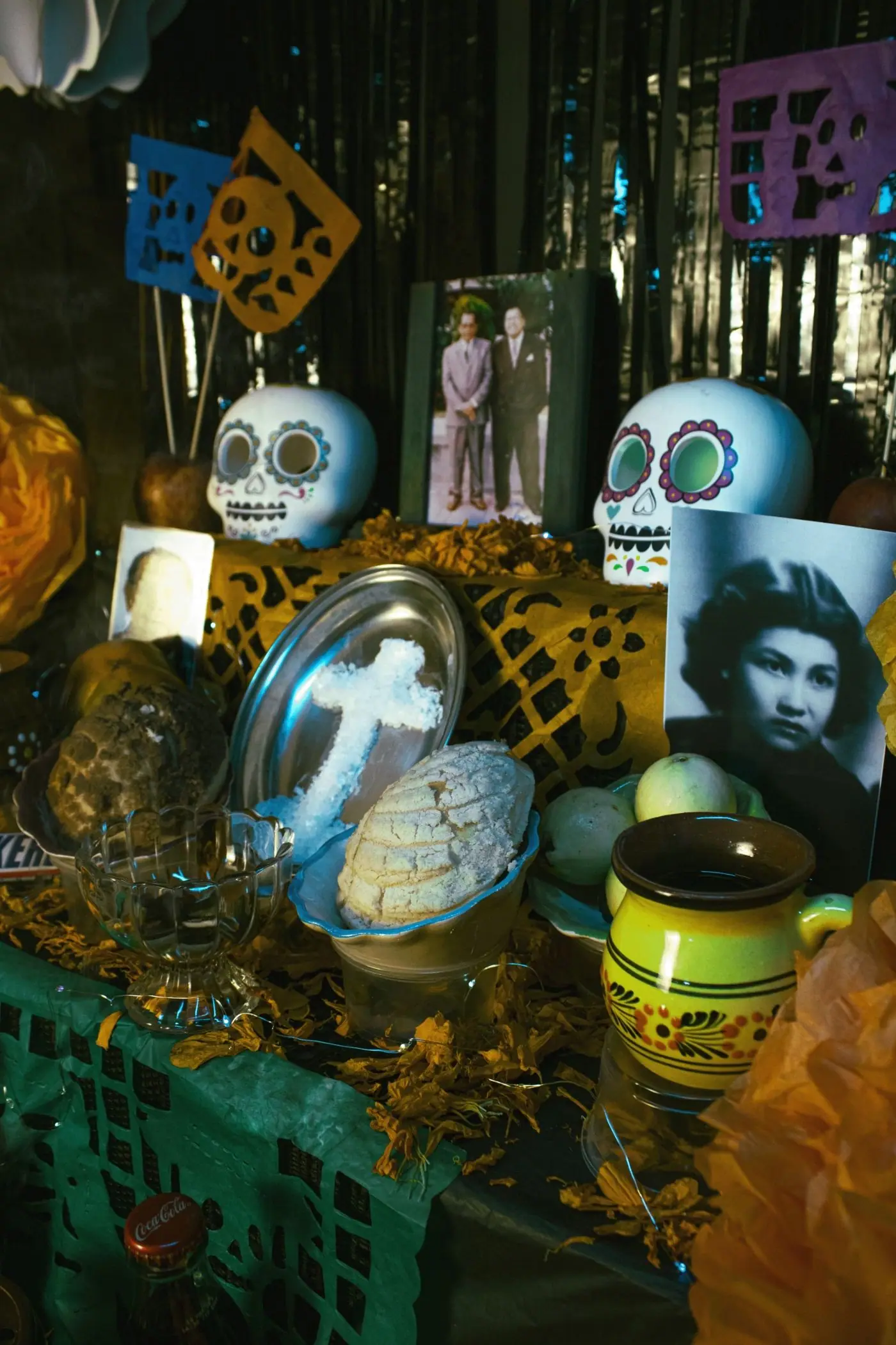
A bright market-style skull image fits the topic when it shows craft and color rather than horror.
## Why names go on the forehead
The name on the forehead is not a random creepy label. It personalizes the skull. Sometimes it points to someone remembered; sometimes it is playful and goes to a living friend. Either way, the name turns a general symbol into something intimate.
## Calaverita, alfeñique, and market etiquette
At a market, ask practical questions: ¿de qué están hechas?, ¿le pueden poner un nombre?, ¿cuánto cuesta la personalizada?. Those are useful, human questions. You do not need to make the vendor carry a whole culture lesson while people are waiting behind you.
¿Qué significa?
What does it mean?
¿Cómo lo dicen ustedes?
How do you all say it?
Gracias, así lo digo mejor.
Thanks, now I can say it better.
## How they show up on an ofrenda
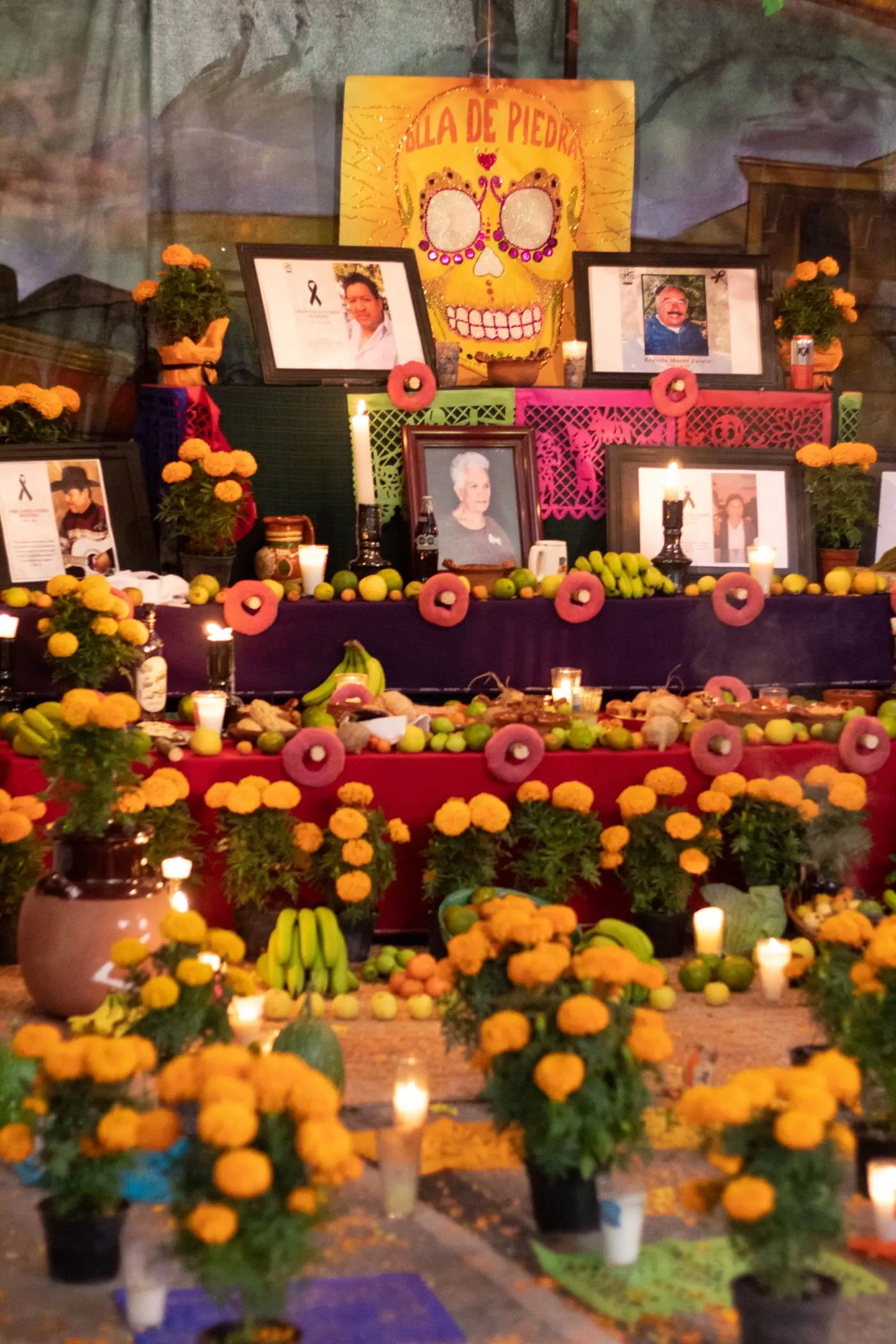
On an ofrenda, treat calaveritas as part of [the whole arrangement](/blog/day-of-the-dead-altar-objects): photos, candles, food, flowers, water, and memory.[^src2] If you want a picture, ask first. The object may be public and festive, or it may be sitting inside a family grief that is not yours to frame.
## Tone: sweetness without trivializing death
The sweetness is the point rather than a contradiction of it. A sugar skull carries a name and is meant to be cheerful about one specific dead person, which is a different thing from being cheerful about death in general.
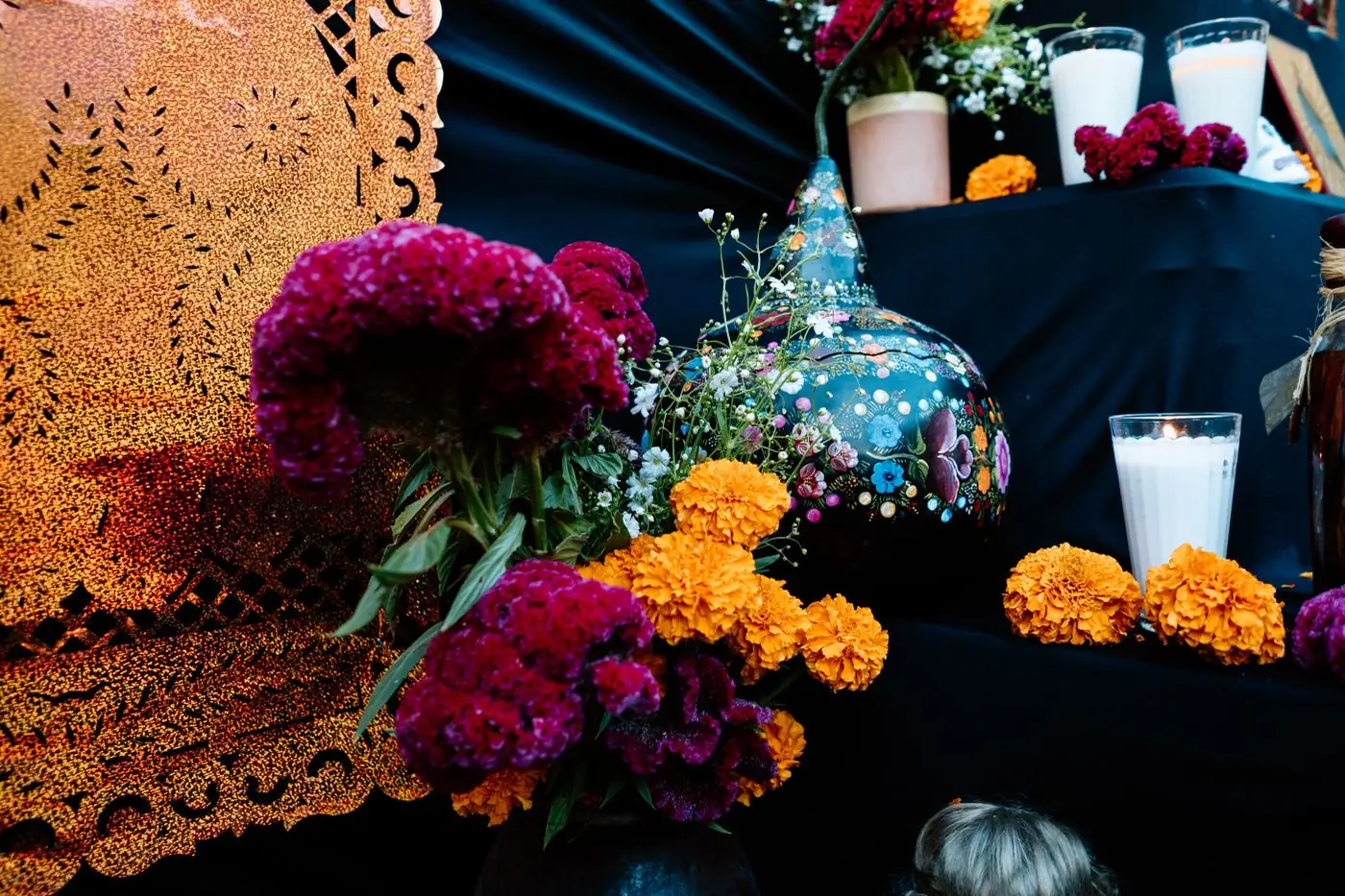
Names and handmade details are the key visual story: personalization is part of the meaning.
| Situation | Better move | Why |
|---|---|---|
| You are unsure | ¿Qué significa? | Short and honest |
| You need local usage | ¿Cómo lo dicen ustedes? | Invites lived context |
| You might overstep | Lo digo con respeto | Lowers the temperature |
| Someone corrects you | Gracias, así lo digo mejor | Keeps connection open |
Calaveritas work best visually when the image keeps sweetness and remembrance together.
## The name on the skull is the point, not a creepy detail
For many US learners, the first reaction is, "Wait, why would you put someone's name on a skull?" That reaction is understandable if your main skull association is horror. In this context, though, the name helps personalize the offering. It can point toward a person being remembered, or it can be playful in the style of small poetic calaveritas that joke with death instead of pretending death is not there.
At a market, you might hear calaverita de azúcar, calavera, or alfeñique, depending on the material and region.[^src4][^src3] If you want one with a name, ask ¿le pueden poner un nombre? or ¿se puede personalizar? That sounds natural and practical. It also avoids treating the vendor like a cultural explainer while they are trying to sell sweets.
If you see sugar skulls on a family altar, slow down. The skulls may look bright and photogenic, but the altar is not a prop wall.[^src5] A respectful question is ¿puedo tomar una foto? or, even softer, ¿está bien si tomo foto? If the answer is no, that is the whole answer. You do not need to negotiate.
The marketing version of sugar skulls often strips away the name, the altar, and the person. ConSalsa.App learners should go the other direction. Connect the word to the scene: a market stall, a family table, a remembered name, a sweet object that makes death less sterile and more intimate. That is where the Spanish becomes more than vocabulary.
One small phrase goes a long way at a stall: qué bonitas están. It is warmer than simply asking price first, and it gives you a natural bridge into ¿cuánto cuesta la personalizada? or ¿de qué están hechas?
A sugar skull is not scary because it is a skull, and it is not casual just because it is colorful. Learn calaverita, ask before photographing private altars, and let the sweetness sit next to the memory instead of sanding it down.
[^src1]: [El País México, ofrenda elements](https://elpais.com/mexico/2025-11-01/ofrenda-de-dia-de-muertos-cuando-se-pone-el-origen-de-la-tradicion-y-el-significado-de-sus-elementos.html)
[^src2]: [INAH, Día de Muertos](https://www.inah.gob.mx/)
[^src3]: [Diccionario de la lengua española, calavera](https://dle.rae.es/calavera)
[^src4]: [Diccionario de la lengua española, azúcar](https://dle.rae.es/az%C3%BAcar)
[^src5]: [Secretaría de Cultura, Día de Muertos](https://www.gob.mx/cultura)
FAQ:
Q: What do sugar skulls mean?
A: They are sweet, decorative skulls connected to Día de Muertos, remembrance, and playful ways of facing death.
Q: Why do sugar skulls have names on them?
A: Names personalize the calaverita. The name may refer to someone remembered, someone living, or a playful gift depending on context.
Q: What is calaverita de azúcar?
A: It means little sugar skull. You can use it at a market or when describing the object more naturally in Spanish.
Q: What is alfeñique?
A: Alfeñique is a sugar paste or sweet craft tradition used for figures, including skulls, in some regions.
Q: Can I buy one with my name on it?
A: Yes, often at markets or bakeries. Ask ¿le pueden poner un nombre? or ¿se puede personalizar?
Q: Can I photograph sugar skulls on an altar?
A: Ask first. Public displays are different from private family ofrendas.
Q: Are sugar skulls Halloween decorations?
A: No. They may look festive, but they belong to Mexican Día de Muertos contexts.
Sources:
- El País México, ofrenda elements: https://elpais.com/mexico/2025-11-01/ofrenda-de-dia-de-muertos-cuando-se-pone-el-origen-de-la-tradicion-y-el-significado-de-sus-elementos.html
- INAH, Día de Muertos: https://www.inah.gob.mx/
- Diccionario de la lengua española, calavera: https://dle.rae.es/calavera
- Diccionario de la lengua española, azúcar: https://dle.rae.es/az%C3%BAcar
- Secretaría de Cultura, Día de Muertos: https://www.gob.mx/cultura
Related words: neta, padre, fuchi, mande