---
title: "Joven, Jefe, Seño: What to Call a Stranger in Mexico"
description: "Joven, jefe, seño, or usted? How to get a stranger's attention in Mexico - in a shop, a taqueria, or on the street - without sounding rude or too familiar."
type: "article"
category: "slang"
url: "https://consalsa.app/blog/what-to-call-people-mexico"
canonical: "https://consalsa.app/blog/what-to-call-people-mexico"
published: "2026-07-07"
updated: "2026-08-21"
author: "Andrey the Nomad"
site: "ConSalsa.App"
license: "https://consalsa.app/about"
---
# Joven, Jefe, Seño: What to Call a Stranger in Mexico
URL: https://consalsa.app/blog/what-to-call-people-mexico
Date: 2026-07-07
Updated: 2026-08-21
Category: slang
Keywords: what to call people in mexico, how to address strangers in mexico, mexican spanish people labels, jefe meaning mexican spanish, joven seno usted mexico
Summary: Joven, jefe, seño, or usted? How to get a stranger's attention in Mexico - in a shop, a taqueria, or on the street - without sounding rude or too familiar.
Quick answer:
- Mexican address words signal closeness, respect, humor, age, and context.
- Compa and carnal are friendly but familiar; jefe and joven can work in service contexts.
- Güey is common with friends but risky with strangers, elders, or formal situations.
- When unsure, use neutral politeness first and let the other person set the register.
What you'll learn:
- How to choose between compa, carnal, primo, jefe, joven, amigo, and güey.
- Which labels are warm, risky, respectful, or too familiar.
- How service counters, friend groups, and street interactions change the word.
- How to avoid sounding fake-local by using the right amount of familiarity.
Don't sound gringo:
Not everyone is your amigo, and almost nobody you just met needs to be your güey. Start neutral, then warm up.
Body:
Mexican Spanish has a whole shelf of words for calling people: [compa](/words/compa), [carnal](/words/carnal), primo, [jefe](/words/jefe), joven, amigo, [güey](/words/guey). The trick is that they do not just name the person. They name the relationship.
Use the wrong one and you might sound too cold, too familiar, too macho, too fake-local, or like you learned Spanish exclusively from one extremely confident taxi driver. Luckily, you do not need a nickname for every human interaction.
## The people-label map
| Word | Best with | Risk |
|---|---|---|
| Compa | Friendly casual men | Too familiar |
| Carnal | Close friends | Too intimate |
| Primo | Playful / regional | Can sound forced |
| Jefe | Casual service / older men | Needs tone |
| Joven | Service context | Can sound odd by age |
| Amigo | Neutral friendly | Not always local |
| Güey | Close friends | Rude with strangers |
The DEM records carnal as popular Mexican Spanish for brother and friend.[^dem-carnal] That tells you the vibe: close, warm, informal. It does not mean you should call the Airbnb host carnal while asking why the shower is making electric sounds.
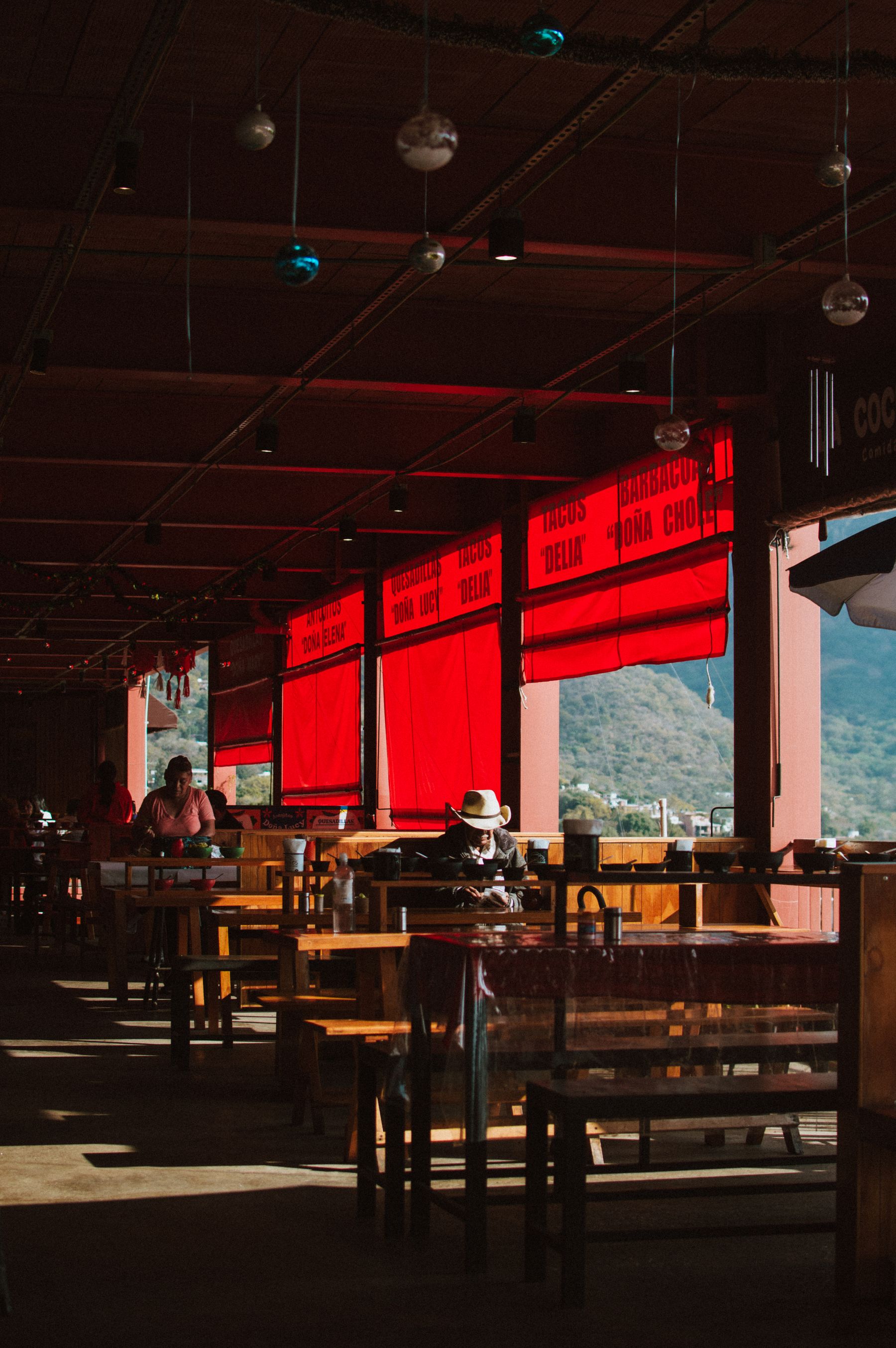
Address words change as you move through the city: counter, street, friend group, date, family. Photo by Jimmy Elizarraras on Pexels.
## Compa and carnal
Compa comes from compañero, a companion, colleague, or person who shares something with you.[^rae-companero] In everyday use, it can feel like buddy or mate. It is friendly but not formal.
Gracias, compa.
Thanks, man / buddy.
Carnal is warmer and closer. Use it with friends who already have that energy. If you use carnal too early, it can sound like you are trying to skip the relationship line.
It is not that foreigners can never say it. It is that the word carries a jacket you should not wear before it fits.
## Jefe, joven, and service contexts
The DEM records jefe for boss, father, and male household head depending on use.[^dem-jefe] In casual service contexts, jefe can also be a friendly-respectful way to address a man, especially at a stand, repair shop, or taxi-ish interaction.
Jefe, ¿me da dos de pastor?
Boss, can I get two al pastor?
But if you are unsure, skip the label:
Disculpa, ¿me das dos de pastor?
Excuse me, can I get two al pastor?
That is clean, polite, and safe. The label is seasoning, not the meal. For travelers, that is liberating: you can buy tacos, ask directions, or handle a repair without performing local masculinity in every sentence.
## Primo, amigo, and güey
Primo literally means cousin.[^rae-primo] In some contexts it becomes playful address, like cousin or bro, but it can sound very region-specific or theatrical if you throw it around without the local rhythm.
Amigo is understood everywhere and RAE gives it the basic friend meaning.[^rae-amigo] It is often safer than slang, but in Mexico it can also sound slightly vendor-ish or tourist-ish depending on tone.
Güey is the big one learners overuse. It is common with friends, yes. It is also not a neutral universal comma. If you call a stranger güey, you may sound rude, childish, or weirdly intimate.
| Safer | Riskier |
|---|---|
| Disculpa | Güey |
| Oye | Carnal |
| Joven | Primo |
| Señor / señora | Compa |
This table is not saying never use the words. It is saying let the relationship invite them.
Friend labels need friend-level trust. Photo by Pavel Danilyuk on Pexels.
## How to recover if you chose wrong
If someone laughs, corrects you, or looks puzzled, do not make it a federal case. Smile and soften.
Perdón, todavía estoy agarrando la onda.
Sorry, I am still getting the hang of it.
Va, mejor sin tanta confianza.
Cool, better without being so familiar.
Agarrar la onda fits here because the DEM records onda with senses around understanding a skill or vibe.[^dem-onda] You are saying you are still catching the social rhythm.
When in doubt, a plain disculpa does more work than a risky nickname. Photo by Susan Flores on Pexels.
## Default to plain
The safest strategy is boring in the best way: start with disculpa, make the request, and add warmth at the end if the interaction allows it.
Disculpa, ¿me das uno de suadero, porfa?
Excuse me, can I get one suadero taco, please?
Gracias, buen día.
Thanks, have a good day.
That script will not make you sound like the most local person in the room. It will make you sound polite, clear, and unlikely to accidentally adopt a stranger as your brother.
## Borrow slowly
Call people what the relationship can hold. Compa and carnal are not badges you earn by memorizing slang. Jefe and joven are context tools. Güey is for people who have basically given you permission.
Start neutral. Listen for what people call each other, then borrow slowly. Let Mexico warm you up before you start calling everyone brother.
[^dem-carnal]: [Diccionario del español de México, carnal](https://dem.colmex.mx/ver/carnal) - El Colegio de México.
[^dem-jefe]: [Diccionario del español de México, jefe](https://dem.colmex.mx/ver/jefe) - El Colegio de México.
[^rae-companero]: [Diccionario de la lengua española, compañero](https://dle.rae.es/compañero) - Real Academia Española.
[^rae-amigo]: [Diccionario de la lengua española, amigo](https://dle.rae.es/amigo) - Real Academia Española.
[^rae-primo]: [Diccionario de la lengua española, primo](https://dle.rae.es/primo) - Real Academia Española.
[^dem-onda]: [Diccionario del español de México, onda](https://dem.colmex.mx/ver/onda) - El Colegio de México.
FAQ:
Q: What does compa mean in Mexico?
A: Compa means buddy, friend, or mate, from compañero. It is friendly and familiar.
Q: What does carnal mean?
A: Carnal can mean brother or close friend in popular Mexican Spanish.
Q: Can I call a waiter jefe?
A: Sometimes, especially in casual places, but use it lightly. Joven or disculpa can be safer.
Q: Is güey rude?
A: Güey is common among friends, but it can sound rude or too familiar with strangers, elders, or formal people.
Q: What does primo mean if we are not cousins?
A: Primo can be playful friendly address, but it depends heavily on region, age, and relationship.
Q: What should I call someone I do not know?
A: Use disculpa, joven, señor, señora, or just the request without a label.
Q: How do I avoid sounding fake?
A: Use fewer labels. Let Mexican speakers around you model the relationship first.
Sources:
- Diccionario del español de México, carnal: https://dem.colmex.mx/ver/carnal
- Diccionario del español de México, jefe: https://dem.colmex.mx/ver/jefe
- Diccionario de la lengua española, compañero: https://dle.rae.es/compañero
- Diccionario de la lengua española, amigo: https://dle.rae.es/amigo
- Diccionario de la lengua española, primo: https://dle.rae.es/primo
- Diccionario del español de México, onda: https://dem.colmex.mx/ver/onda
Related words: compa, carnal, jefe, guey