---
title: "Shown a Day of the Dead Altar? 7 Phrases That Land"
description: "Say qué bonita está, gracias por compartirla, and ask about the photos - the warm phrases for a Day of the Dead ofrenda, plus the one tone mistake that makes you look out of place."
type: "article"
category: "seasonal"
url: "https://consalsa.app/blog/what-to-say-at-an-ofrenda"
canonical: "https://consalsa.app/blog/what-to-say-at-an-ofrenda"
published: "2026-10-25"
updated: "2026-10-25"
author: "Andrey the Nomad"
site: "ConSalsa.App"
license: "https://consalsa.app/terms#ip"
---
# Shown a Day of the Dead Altar? 7 Phrases That Land
URL: https://consalsa.app/blog/what-to-say-at-an-ofrenda
Date: 2026-10-25
Updated: 2026-10-25
Category: seasonal
Keywords: what to say at an ofrenda, ofrenda meaning, day of the dead phrases spanish, en paz descanse meaning, te acompaño en tu sentir, day of the dead etiquette, mexican altar respect
Summary: Say qué bonita está, gracias por compartirla, and ask about the photos - the warm phrases for a Day of the Dead ofrenda, plus the one tone mistake that makes you look out of place.
Quick answer:
- An ofrenda is the altar a Mexican family builds for Day of the Dead to welcome their dead back home with photos, food, candles, and marigolds.
- The safest things to say are simple and warm: qué bonita está, ¿quién es él/ella?, and gracias por compartirla.
- If the person on the altar died recently, en paz descanse and te acompaño en tu sentir are the respectful condolences.
- Day of the Dead is not sad or scary - it's loving and a little festive, so keep your tone warm, curious, and present, not solemn.
What you'll learn:
- What an ofrenda actually is and why families build one at home every year.
- The exact phrases to say when someone shows you their altar - and what each one means.
- How to give condolences for a recent death without freezing up.
- The tone mistake that makes visitors look out of place, and how to avoid it.
Don't sound gringo:
Do not treat the ofrenda like a funeral. Visitors often go quiet and somber, like at a wake, and it kills the mood. The family is happy - their people are visiting. Match that. A warm qué bonita and a real question about the photos lands far better than a hushed, sorry-for-your-loss face.
Body:
It's the first of November. You came over to a friend's place in CDMX for tacos, nothing fancy, and halfway through her abuela takes your arm and walks you toward the corner of the living room.
There's an altar there. Candles glowing, marigold petals tracked across the floor, little glasses of mezcal, pan de muerto, photos of people you've never met. The whole family turns to look at you, smiling, waiting for you to say something.
And your brain just goes blank.
I've watched this happen to friends more times than I can count. The instinct is to drop your voice and go solemn, like you wandered into a funeral by accident. Don't do that.
When a Mexican family shows you their ofrenda, they're not showing off decorations. **They're introducing you to their dead.** That's a small honor, and it deserves a warm answer, not a stiff one.
You only need a few words. Say qué bonita está, then gracias por enseñármela, then ask a real question about one of the photos. That's it. **Those three moves cover ninety percent of the moment.**
The thing that trips people up isn't the words. It's the tone. People treat it like a wake, and it isn't one.
## The ofrenda phrase map
| Spanish | What it literally means | When to use it |
|---|---|---|
| qué bonita está | it's beautiful | First thing, when they show you the altar |
| gracias por compartirla | thanks for sharing it | To acknowledge the trust |
| ¿quién es él/ella? | who is he/she? | Pointing gently at a photo |
| en paz descanse | rest in peace | After naming someone who died |
| te acompaño en tu sentir | I'm with you in your grief | Condolences for a recent death |
| que descanse | may they rest | Soft, warm closer about the person |
| me da gusto conocerla | glad to get to know her | About the person through the altar |
## What an ofrenda actually is
An ofrenda is an offering - the home altar a family builds for Day of the Dead to bring their dead back for the night.[^rae-ofrenda] The whole festivity is recognized by UNESCO as part of Mexico's intangible cultural heritage.[^unesco-muertos] But at home it's not a museum piece. It has a job to do.
You'll see photos of the people who died, their favorite food and drink, a glass of water for the journey, candles, copal incense, salt, and cempasúchil - the bright orange marigolds whose smell is supposed to guide the souls home.[^gob-muertos]
And it gets specific. If grandpa loved tequila and cigarettes, there's tequila and cigarettes sitting right there. If a kid died, there are toys and candy.
That detail is the whole point. This altar is for one particular person, not "the dead" in the abstract.
So when a family shows it to you, **they're letting you into something private and a little sacred.** Receive it warmly. Don't perform sadness.
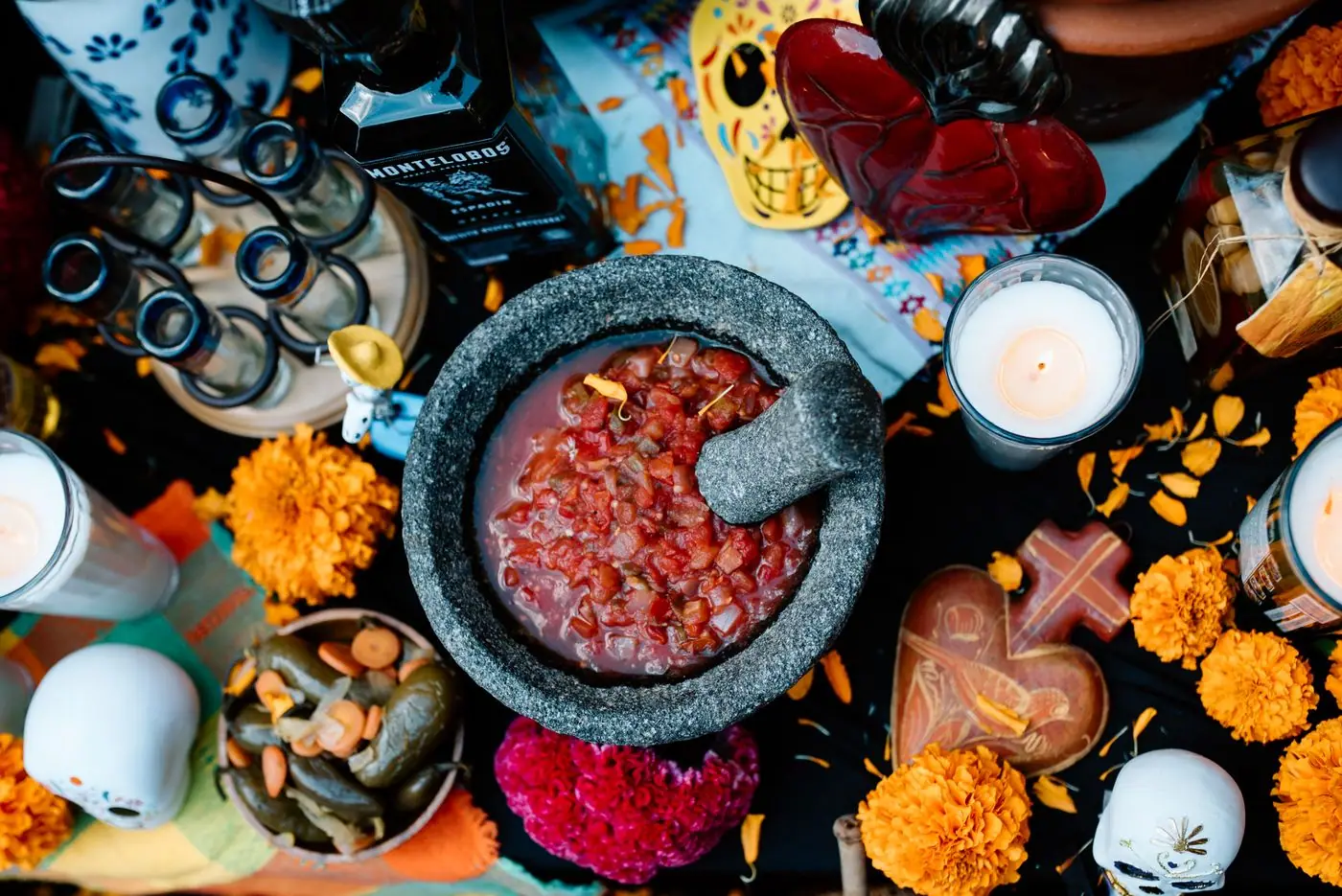
An ofrenda is built to bring specific people home for the night - the photos and the favorite foods are the heart of it. Photo by Brunxs on Pexels.
## What to say first
Keep it simple. The best opener is short and genuine. **Qué bonita está - "it's beautiful" - is almost never wrong.**
Follow it with gracias por enseñármela or gracias por compartirla, both meaning "thanks for showing me / sharing it." That tells the family you get it. They trusted you with something.
Then comes the part most visitors skip. **Ask about the people.** Point gently at a photo and say ¿quién es él? or ¿ella quién era?
Families want to talk about their dead. That's literally why the altar exists. A real question isn't an intrusion. It's the nicest thing you can do.
Qué bonita está tu ofrenda, gracias por enseñármela.
Your altar is beautiful, thank you for showing me.
¿Y él quién era? Cuéntame de él.
And who was he? Tell me about him.
If the food on the altar looks great, say so - but **do not eat it or touch it without asking.** That food is set out for the dead. People do share it later, usually the next day, but you wait to be offered.
Want a photo? Ask first: ¿puedo tomarle una foto? Most families happily say yes to a respectful shot of the altar.
## What to say when someone died recently
This is where people freeze. Two phrases carry you through it.
**En paz descanse means "rest in peace."**[^rae-descansar] You tuck it in right after you name the person: tu abuela, que en paz descanse - "your grandmother, may she rest in peace." In writing you'll see it shortened to EPD. It's respectful, standard, and never sounds weird.
**Te acompaño en tu sentir is the warm way to say "I'm sorry for your loss."** It literally means "I'm with you in your feeling." It sounds far more human than the textbook lo siento mucho.[^rae-pesame] If it feels like a mouthful, mi más sentido pésame works too, just a touch more formal.
Want something gentle and short? Que descanse - "may they rest" - is soft and kind.
And one thing nobody mentions: you don't have to fill the silence. Pair any of these with a calm, steady presence and let it sit. A little tranquilo energy is exactly right here.
Te acompaño en tu sentir, de verdad.
I'm so sorry for your loss, truly.
Tu papá, que en paz descanse, se ve buena gente en la foto.
Your dad, may he rest in peace, looks like a good guy in the photo.
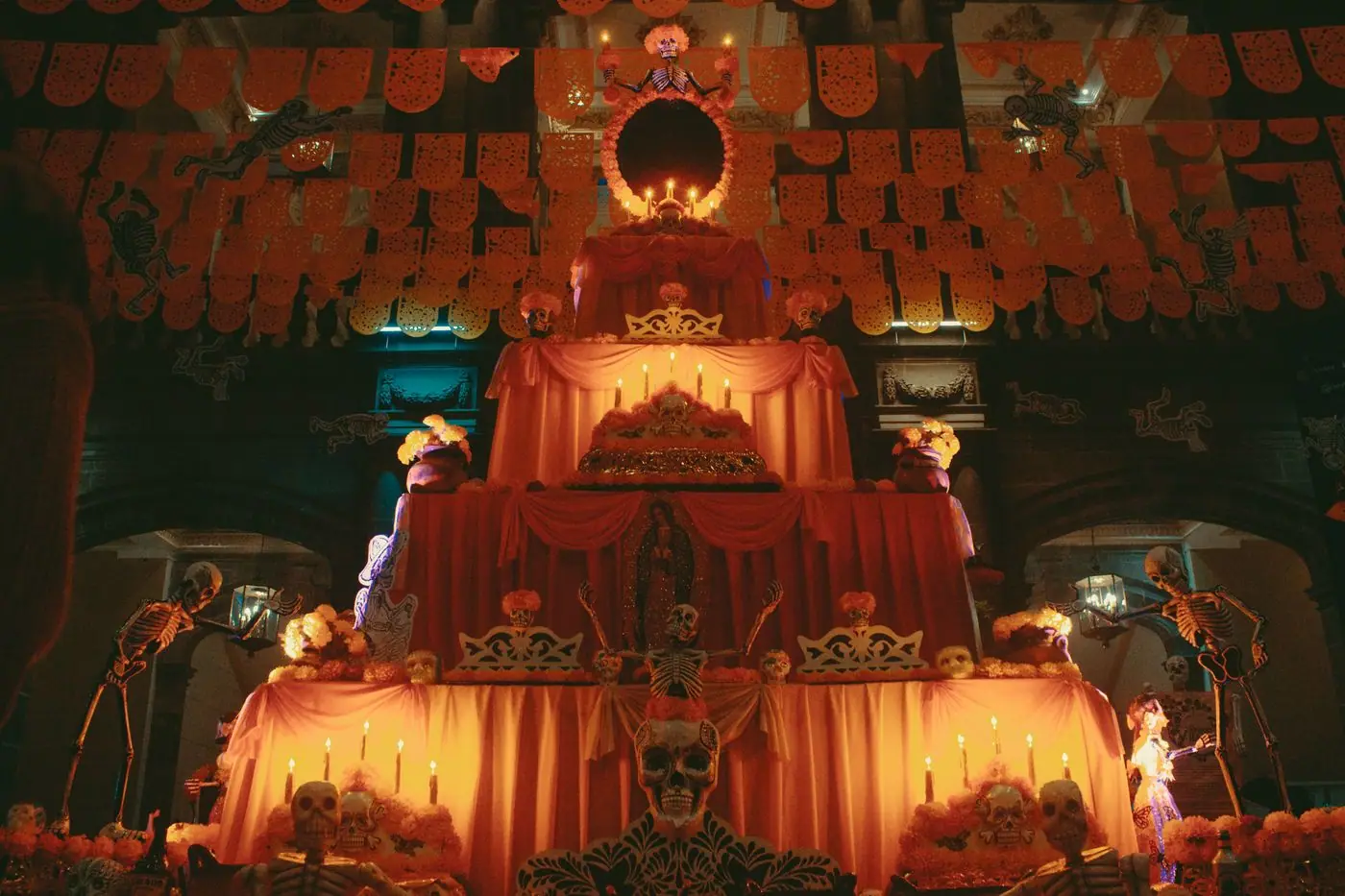
Asking who someone was, with real curiosity, is the most welcome thing you can do at an ofrenda. Photo by Chris Luengas on Pexels.
## The tone mistake - and the safe vs risky table
The single biggest mistake is treating the ofrenda like a wake. Day of the Dead is loving, a little festive, and full of stories. The dead are neta being celebrated here, not mourned in silence.
Walk up with a hushed, sorry-for-everything face and the family ends up feeling like they have to comfort you. That's backwards. You're the guest.
So match their energy instead. If they laugh telling a story about grandpa, laugh with them. If a story moves you, let it show. **Warm and present beats solemn and stiff every time.**
| You might say | Tone | Better move |
|---|---|---|
| Qué bonita está | warm, perfect | Keep going - ask about the photos |
| ¿Quién era? | curious, welcome | Exactly what families want |
| Te acompaño en tu sentir | respectful condolence | Great for a recent loss |
| Está medio tenebroso | sounds like Halloween | Drop it - this isn't about fear |
| Qué triste todo | makes it a funeral | Switch to qué bonita instead |
| ¿Cuánto costó? | cold, transactional | Ask about the person, not the cost |
| (touching the food) | crosses a line | Ask first, or just admire it |
## Who, where, and when to dial it back
Most of the time you'll meet an ofrenda at a friend's home, a workplace, a school, or a public altar in a plaza. At home, with people you know, warm and curious is the whole game. Call the altar padre, ask questions, swap stories.
A cemetery on the night of the 1st or 2nd is a different setting. Dial the respect up a notch. Families camp at the graves with candles and food, sometimes all night. **Don't make graves a photo backdrop, and never turn one into a selfie.** If someone waves you over to sit, sale - say yes, and just be there with them.
And if your mind goes blank again, fall back to the simplest honest thing: qué bonita ofrenda, gracias por compartirla. That one sentence has carried more foreigners through the night than any speech.
[^rae-ofrenda]: [Diccionario de la lengua española, ofrenda](https://dle.rae.es/ofrenda) - Real Academia Española
[^rae-pesame]: [Diccionario de la lengua española, pésame](https://dle.rae.es/pésame) - Real Academia Española
[^rae-descansar]: [Diccionario de la lengua española, descansar](https://dle.rae.es/descansar) - Real Academia Española
[^gob-muertos]: [Día de Muertos, tradición y significado](https://www.gob.mx/cultura/articulos/dia-de-muertos) - Gobierno de Mexico
[^unesco-muertos]: [Indigenous festivity dedicated to the dead](https://ich.unesco.org/en/RL/indigenous-festivity-dedicated-to-the-dead-00054) - UNESCO
FAQ:
Q: What does ofrenda mean?
A: Ofrenda means offering. For Day of the Dead it's the altar a family builds at home or on a grave with photos of the dead, their favorite food and drink, candles, marigolds, and personal objects, to welcome them back for the night.
Q: What do you say when someone shows you their ofrenda?
A: Start simple and warm: qué bonita está (it's beautiful), gracias por compartirla (thanks for sharing it), and a genuine question like ¿quién es él? or ¿ella quién era? about the people in the photos. Curiosity is welcome.
Q: What does en paz descanse mean?
A: En paz descanse means may they rest in peace. It's the standard respectful thing to say about someone who has died, often shortened in writing to EPD. You say it after mentioning the person, like mi abuela, que en paz descanse.
Q: What does te acompaño en tu sentir mean?
A: Te acompaño en tu sentir literally means I accompany you in your feeling. It's the warm, natural Mexican way to say I'm sorry for your loss - softer and more human than the textbook lo siento mucho.
Q: Is it rude for a foreigner to visit a Day of the Dead ofrenda?
A: Not at all, if you're invited and respectful. Families are usually proud to show it. Be curious, ask about the people, don't touch the food or objects without asking, and keep your tone warm rather than treating it like a funeral.
Q: Can you take photos of an ofrenda?
A: Ask first - ¿puedo tomarle una foto? Most families say yes to a respectful photo of the altar. Be more careful photographing graves at a cemetery, and never make it a selfie backdrop. The altar is for their dead, not for content.
Q: What should you NOT say at an ofrenda?
A: Avoid sounding like you're at a wake. Don't over-apologize, don't say it's creepy or spooky, and don't call it sad. Day of the Dead is loving and a little festive. Treat the dead person as someone still worth talking about warmly.
Q: What is the difference between Day of the Dead and Halloween?
A: Halloween is about fear and costumes. Day of the Dead (November 1 and 2) is about remembering and welcoming back specific dead loved ones. The ofrenda is the heart of it - food and photos to bring them home for the night, not a scary decoration.
Sources:
- Diccionario de la lengua española - ofrenda (Real Academia Española): https://dle.rae.es/ofrenda
- Diccionario de la lengua española - pésame: https://dle.rae.es/pésame
- Diccionario de la lengua española - descansar: https://dle.rae.es/descansar
- Gobierno de Mexico - Día de Muertos, tradición y significado: https://www.gob.mx/cultura/articulos/dia-de-muertos
- UNESCO - Indigenous festivity dedicated to the dead (Mexico): https://ich.unesco.org/en/RL/indigenous-festivity-dedicated-to-the-dead-00054
Related words: neta, padre, sale, tranquilo