---
title: "Roma, Coyoacán or Centro: Where to Base Yourself if You Want to Speak Spanish"
description: "The neighborhood decides how much Spanish you actually use, and the obvious pick is not the obvious answer. What each part of Mexico City does to a learner."
type: "article"
category: "living"
url: "https://consalsa.app/blog/where-to-study-spanish-cdmx"
canonical: "https://consalsa.app/blog/where-to-study-spanish-cdmx"
published: "2026-09-29"
updated: "2026-09-29"
author: "Andrey the Nomad"
site: "ConSalsa.App"
license: "https://consalsa.app/terms#ip"
---

# Roma, Coyoacán or Centro: Where to Base Yourself if You Want to Speak Spanish
URL: https://consalsa.app/blog/where-to-study-spanish-cdmx
Date: 2026-09-29
Updated: 2026-09-29
Category: living
Keywords: where to live in mexico city to learn spanish, roma condesa spanish immersion, coyoacan vs roma, best neighborhood cdmx expats spanish, study spanish mexico city neighborhood, cdmx digital nomad spanish
Summary: The neighborhood decides how much Spanish you actually use, and the obvious pick is not the obvious answer. What each part of Mexico City does to a learner.

Quick answer:
- Roma and Condesa are not an English bubble. Reporting on Condesa finds its foreign residents are largely Argentine, Colombian and Chilean, so the Spanish there is plentiful and not especially Mexican.
- Coyoacán, Narvarte and Del Valle put you in ordinary Mexico City, where nobody switches languages for you.
- Centro forces daily transactional Spanish faster than anywhere else, and is the least comfortable place to live.
- The neighborhood matters less than where you buy bread, do laundry and get a haircut.

What you'll learn:
- How many foreigners actually live in the alcaldía that contains Roma and Condesa, and where they are from.
- What Mexico City's own government did in 2022 to bring digital nomads in, and which areas it steered them toward.
- Six neighborhoods rated on one axis: how hard it is to avoid speaking Spanish.
- The four errands that do more for your Spanish than the postal code.

Don't sound gringo:
If a waiter answers your Spanish in English, do not switch. Finish your sentence in Spanish, politely, and order anyway. It is not rudeness, it is the only way the second conversation goes differently.

Body:

You picked Condesa because five people told you to. Then you read a hundred comments saying it is an English bubble where no gringo has ever learned a verb, and now you are not sure. The comments are wrong. Just not in the direction you were hoping for.

## The bubble is real. It is just not English.

Foreign residents are under 1% of Mexico's population.[^inegi-ext] They also cluster hard. In Cuauhtémoc, the borough that holds Roma and Condesa, one industry estimate puts the number of foreigners at around 56,000.[^infobae-ext]

Nobody quotes the composition, though. Reporting on Condesa specifically finds its foreign residents skew Argentine, Colombian and Chilean rather than American.[^infobae-ext]

So the neighborhood really is full of outsiders. They just already speak Spanish.

Which gives you plenty of language, and less of the language you came for. <mark lang="es-MX">Che</mark>, <mark lang="es-MX">dale</mark>, <mark lang="es-MX">vos</mark>, a Bogotá <mark lang="es-MX">¿sí o qué?</mark>, all of it sitting on top of the chilango baseline - <mark lang="es-MX">chilango</mark> is the word for a person from Mexico City.[^dem-chilango] A beginner cannot hear which is which yet. You will pick things up anyway, and some of them will get you a look in Tepito.

<figure>
  <img src="/images/blog/optimized/pexels-fer-valladarez-cdmx-corner-cafe-1400-64bfd598.webp" alt="A corner cafe building with people outside on a Mexico City street." loading="lazy" />
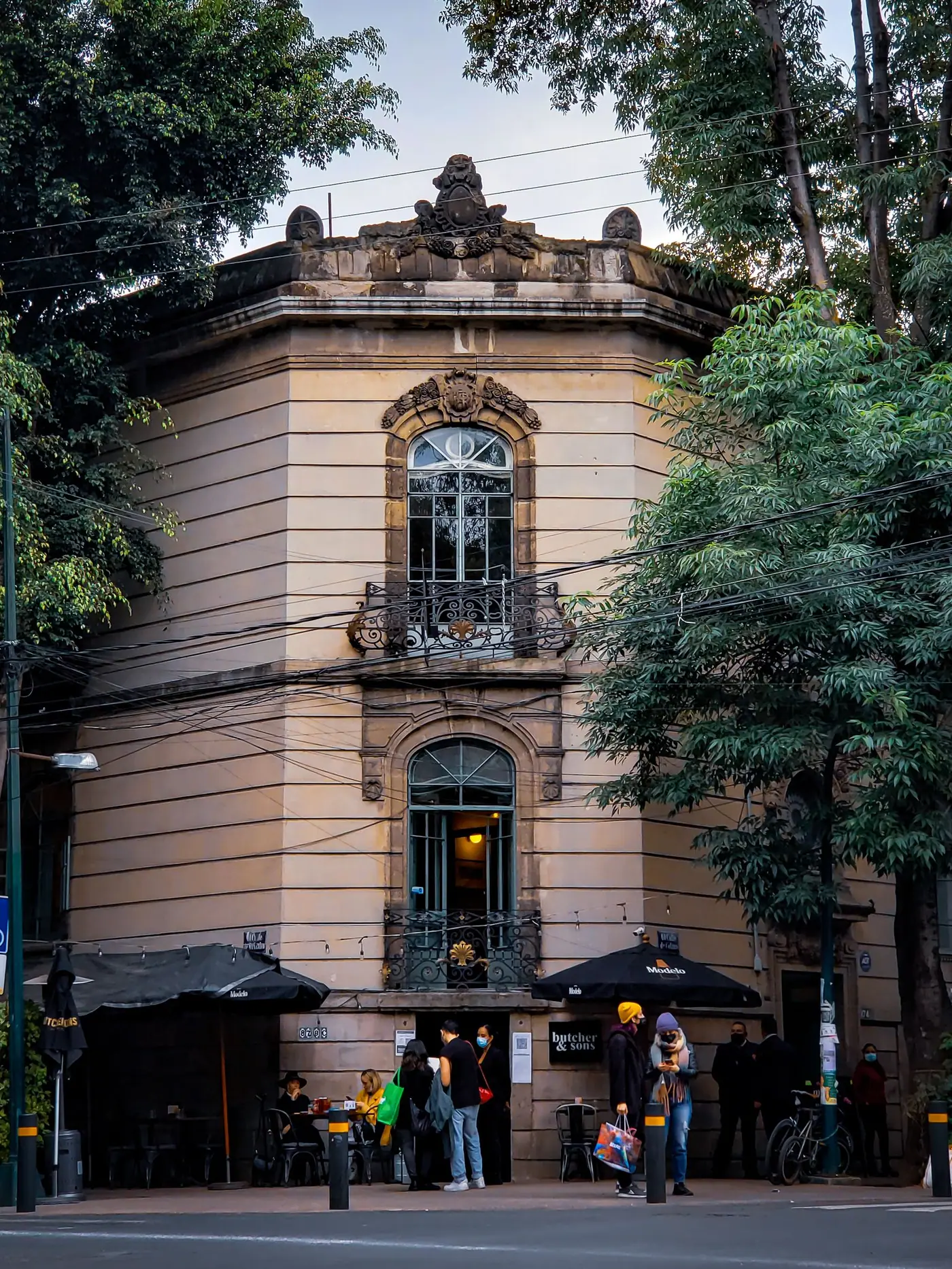
  <figcaption>The corner cafe is where the theory meets the practice, and where a lot of people quietly switch to English. Photo by <a href="https://www.pexels.com/photo/people-in-front-of-a-building-in-city-12252547/" target="_blank" rel="noopener noreferrer">Fer Valladarez on Pexels</a>.</figcaption>
</figure>

## The city built this on purpose

On 26 October 2022 the Mexico City government signed an alliance with UNESCO and Airbnb to position the capital as a center of creative tourism and a global destination for digital nomads. The city's tourism office put a number on it: 77,500 nomads, spending an average of 1,510 dollars a month.[^cdmx-airbnb]

The geography in it is the odd part. The corridors it names are Xochimilco, Iztacalco, Gustavo A. Madero, the Mercado de Jamaica and the Central de Abasto.[^cdmx-airbnb] The stated aim was to spread visitors into places they were not already going.

Four years on, the visitors went to Roma and Condesa anyway. None of it was binding, and nobody picks a borough because a press release named it.

## Six neighborhoods, one axis

Not "which is nicest". How hard it is to get through a Tuesday without speaking Spanish. Nobody has surveyed this. The ratings below are impressionistic, and worth arguing with.

One piece of vocabulary first, because every listing you read will use it: in Mexico the unit is the <mark lang="es-MX">colonia</mark>, the named subdivision of a city that English translations flatten into neighborhood.[^dem-colonia] Roma, Condesa, Narvarte and Escandón are colonias. Coyoacán and Cuauhtémoc are alcaldías, the larger boroughs above them.

| Area | What it is | How hard to avoid Spanish | Best if |
|---|---|---|---|
| Roma, Condesa | Cafes, parks, most foreigners | Easy to avoid | You want a soft landing and will make your own opportunities |
| Polanco | Money, embassies, malls | Easiest to avoid | Comfort and safety outrank language |
| Centro Histórico | Commerce, noise, everything for sale | Nearly impossible | You want transactional fluency in six weeks |
| Coyoacán | Cobblestones, students, families | Hard to avoid | You have three months and want to enjoy them |
| Narvarte, Del Valle | Ordinary residential Mexico City | Hard to avoid | You want daily life with nobody watching |
| Escandón, San Miguel Chapultepec | Quiet, next to Condesa, not Condesa | Hard to avoid | You want Condesa's location without its crowd |

Coyoacán is the one people underrate. The historic center of the borough is pleasant without requiring you to be a tourist, and almost nobody in a shop there assumes you would prefer English. There are students around from the universities nearby, which helps. It is also forty minutes from Roma (longer at six in the evening), and that is the actual cost.

<figure>
  <img src="/images/blog/optimized/pexels-oscar-dominguez-cdmx-park-fountain-1400-eea3ef51.webp" alt="People sitting around a fountain in a tree-lined park in Mexico City." loading="lazy" />
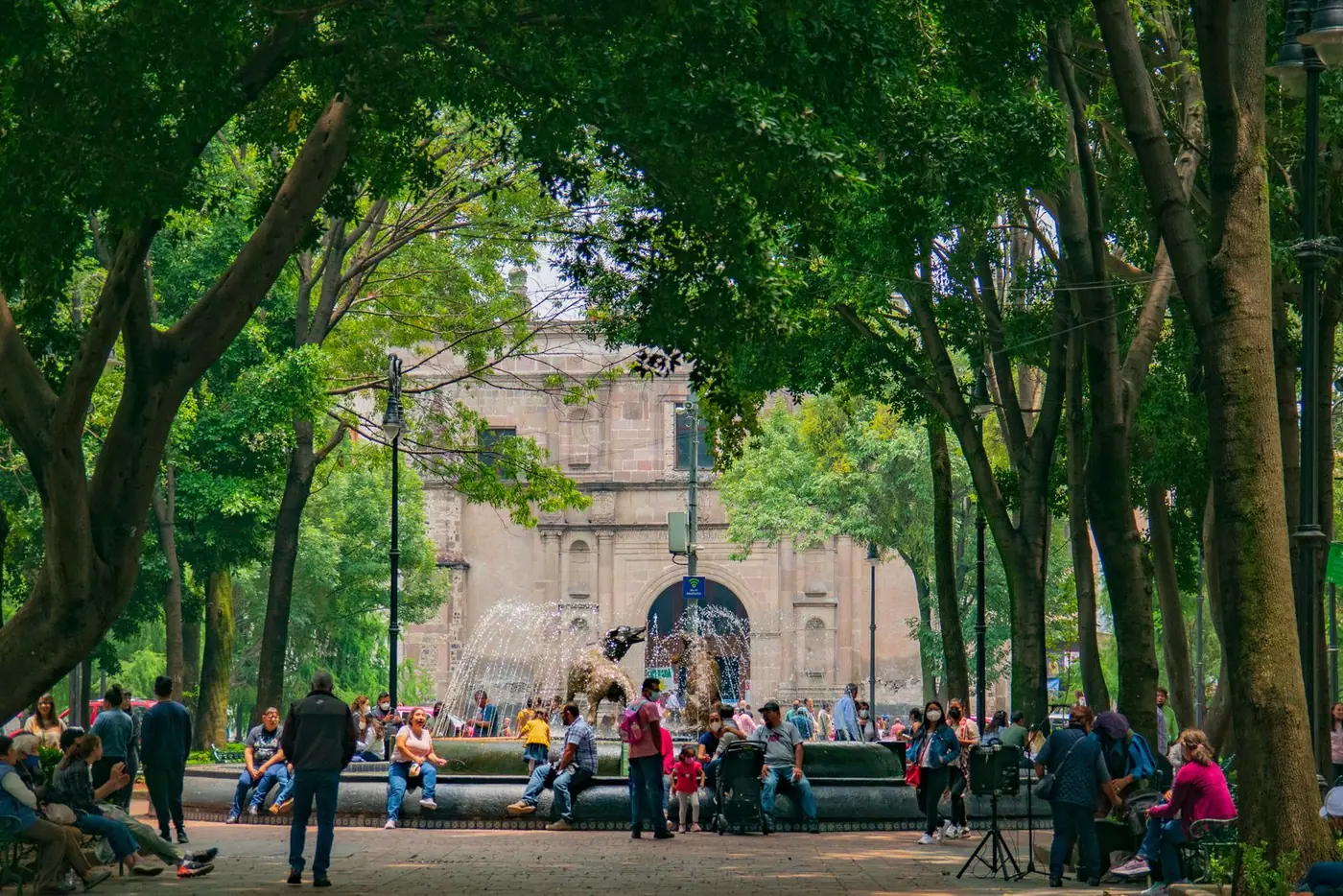
  <figcaption>A neighborhood park on a Sunday is a better classroom than most classrooms. Photo by <a href="https://www.pexels.com/photo/people-enjoying-a-lively-park-with-a-central-fountain-in-mexico-city-surrounded-by-trees-13332004/" target="_blank" rel="noopener noreferrer">Oscar Dominguez on Pexels</a>.</figcaption>
</figure>

<div id="midpost-newsletter-slot"></div>

## Centro is a different kind of decision

The historic center of Mexico City, together with Xochimilco, has been on the UNESCO World Heritage list since 1987.[^unesco-cdmx] It is also about as dense a concentration of people trying to sell you something as the country has, which is why it works.

Nobody in a hardware alley off Calle República de Uruguay is going to switch to English for you. You will buy things, ask prices, get corrected, and be misunderstood eight times before lunch. Six weeks of that will do more for your listening than any month spent ordering coffee in Condesa.

Living there for six months is a separate proposition. It is loud until two and awake again at six.

<div class="note-card is-tip">
  <span class="note-label">Middle path</span>
  <p>Live somewhere residential and spend two mornings a week in Centro doing errands you could have done anywhere. Being slightly out of your depth is the entire reason to go, and you get to leave it behind at four o'clock.</p>
</div>

## Four errands beat the postal code

Neighborhood is a weak variable. What you do inside it is not.

These four do more than the address, because they are short and repeated, and because it is the same person each time:

- The **tortillería**, where you will say about nine words and hear forty
- The **lavandería**, where somebody has to explain a stain to you
- A **gym or a class** that has nothing to do with Spanish
- Whatever **market stall** you go back to enough that they start expecting you

The last one is where it compounds. A vendor who recognizes you talks to you differently in week three than in week one: longer sentences, fewer pauses left open for you, questions that have nothing to do with the price.
<figure>
  <img src="/images/blog/optimized/pexels-dafne-aranda-cdmx-old-town-street-1400-ec4058b1.webp" alt="A busy street with historic buildings in central Mexico City." loading="lazy" />
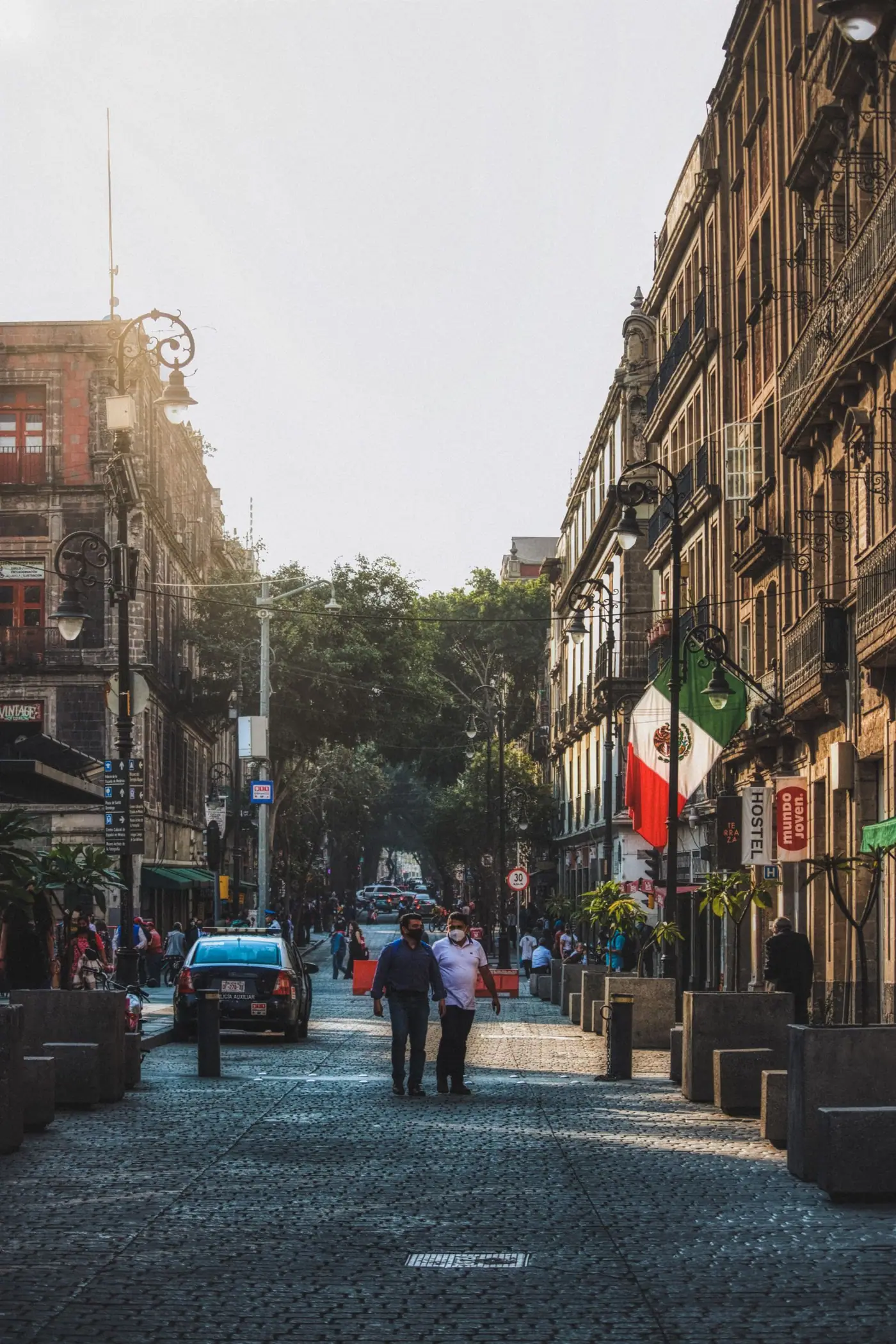
  <figcaption>Centro. Loud, relentless, and the fastest transactional Spanish in the country. Photo by <a href="https://www.pexels.com/photo/people-in-an-old-town-of-mexico-12317589/" target="_blank" rel="noopener noreferrer">Dafne Aranda on Pexels</a>.</figcaption>
</figure>

## When they answer you in English

Somebody hears your accent and answers in English. It happens most in Polanco, Condesa and the tourist strip of Centro, and it is usually meant as a kindness.

Do not make it a thing. Keep going in Spanish, place the order, say thank you. Most of the time the second exchange comes back in Spanish. The person was being helpful rather than making a judgment about you, and once they see you are fine they drop it.

The version that does not work is announcing that you would like to practice. That turns a transaction into a favor, and now they are doing you one.

## Where the schools are

If you are picking a neighborhood partly around a school, [the CDMX listings](/schools/mexico-city) are sorted by area, with honest notes on what each place is and who it does not suit. Most of the Mexico City entries sit in Roma and Condesa, with one in Polanco, which reflects where these schools set up rather than where you have to live. The [whole directory](/schools) covers other cities too.

Classes run a few hours a day and the metro costs five pesos, so living next door to one buys you almost nothing. Live where your afternoons will happen in Spanish and commute to the classroom, not the other way around.

And one bit of arithmetic that usually gets skipped: a neighborhood you dread coming home to shortens the trip. Eight months in an apartment you like beats three in one you do not, for almost everybody.

[^inegi-ext]: [Los extranjeros en México](https://www.inegi.org.mx/contenidos/productos/prod_serv/contenidos/espanol/bvinegi/productos/estudios/sociodemografico/ext_en_mex/extraen_mex.pdf) - Instituto Nacional de Estadística y Geografía.
[^infobae-ext]: [Extranjeros en CDMX: menos del 1% del país, pero concentrados en zonas clave](https://www.infobae.com/mexico/2025/07/20/extranjeros-en-cdmx-menos-del-1-del-pais-pero-concentrados-en-zonas-clave/) - Infobae México, 20 de julio de 2025.
[^cdmx-airbnb]: [Unen esfuerzos Gobierno capitalino, UNESCO y Airbnb para convertir a la Ciudad de México en capital del turismo creativo](https://www.jefaturadegobierno.cdmx.gob.mx/comunicacion/nota/unen-esfuerzos-gobierno-capitalino-unesco-y-airbnb-para-convertir-la-ciudad-de-mexico-en-capital-del-turismo-creativo) - Jefatura de Gobierno de la Ciudad de México, 26 de octubre de 2022.
[^unesco-cdmx]: [Historic Centre of Mexico City and Xochimilco](https://whc.unesco.org/en/list/412/) - UNESCO World Heritage Centre.
[^dem-chilango]: [Diccionario del español de México, chilango](https://dem.colmex.mx/ver/chilango) - El Colegio de México.
[^dem-colonia]: [Diccionario del español de México, colonia](https://dem.colmex.mx/ver/colonia) - El Colegio de México.

FAQ:
Q: Is Roma or Condesa bad for learning Spanish?
A: Less bad than the reputation suggests. The foreign population there is heavily South American, so you get plenty of Spanish, just with Argentine and Colombian features mixed into the chilango baseline.

Q: Which Mexico City neighborhood is best for Spanish immersion?
A: Coyoacán, Narvarte and Del Valle give you daily life in Spanish without the discomfort of Centro. They are residential, well connected, and nobody there is expecting a foreigner.

Q: Should I live in Centro Histórico?
A: It is the fastest route to confident transactional Spanish and the hardest place to sleep. Good for a short intensive stay, tiring as a base for months.

Q: Is Polanco a good base?
A: For comfort and safety, yes. For language, it is the weakest of the popular options, because it is the part of the city most set up to serve people in English.

Q: How many foreigners live in Mexico City?
A: Foreign residents are under 1% of Mexico's population overall. Within the city they cluster heavily, and one industry estimate puts the Cuauhtémoc borough alone at around 56,000.

Q: Do I need to live near my Spanish school?
A: Not really. Classes are a few hours a day and the metro is cheap. Optimize for a neighborhood where your afternoons happen in Spanish.

Q: Will people switch to English when they hear my accent?
A: In Condesa, Polanco and the tourist parts of Centro, often. Outside those, rarely, because there is no reason to assume you want it.

Q: Is it worth living somewhere less pleasant to learn faster?
A: Only up to a point. A neighborhood you dread coming home to shortens your stay, and length of stay beats intensity for most learners.

Sources:
- Unen esfuerzos Gobierno capitalino, UNESCO y Airbnb para convertir a la Ciudad de México en capital del turismo creativo - Jefatura de Gobierno de la CDMX: https://www.jefaturadegobierno.cdmx.gob.mx/comunicacion/nota/unen-esfuerzos-gobierno-capitalino-unesco-y-airbnb-para-convertir-la-ciudad-de-mexico-en-capital-del-turismo-creativo
- Extranjeros en la Ciudad de México: menos del 1% del país, pero concentrados en zonas clave - Infobae: https://www.infobae.com/mexico/2025/07/20/extranjeros-en-cdmx-menos-del-1-del-pais-pero-concentrados-en-zonas-clave/
- Los extranjeros en México - INEGI: https://www.inegi.org.mx/contenidos/productos/prod_serv/contenidos/espanol/bvinegi/productos/estudios/sociodemografico/ext_en_mex/extraen_mex.pdf
- Historic Centre of Mexico City and Xochimilco - UNESCO World Heritage Centre: https://whc.unesco.org/en/list/412/
- Diccionario del español de México, chilango - El Colegio de México: https://dem.colmex.mx/ver/chilango
- Diccionario del español de México, colonia - El Colegio de México: https://dem.colmex.mx/ver/colonia

Related words: fresa, naco, antro, chela