---
title: "7 Phrases to Survive a Mexican World Cup Watch Party"
description: "The exact Mexican Spanish to text, toast, and shout at a World Cup watch party - from se armó at kickoff to the ni modo that closes the night, win or lose."
type: "article"
category: "seasonal"
url: "https://consalsa.app/blog/world-cup-watch-party-spanish"
canonical: "https://consalsa.app/blog/world-cup-watch-party-spanish"
published: "2026-07-16"
updated: "2026-07-16"
author: "Andrey the Nomad"
site: "ConSalsa.App"
license: "https://consalsa.app/about"
---

# 7 Phrases to Survive a Mexican World Cup Watch Party
URL: https://consalsa.app/blog/world-cup-watch-party-spanish
Date: 2026-07-16
Updated: 2026-07-16
Category: seasonal
Keywords: world cup watch party spanish, how to say cheers in mexico, mexican spanish for a toast, ya va a empezar meaning, que nervios meaning, se armo meaning mexico
Summary: The exact Mexican Spanish to text, toast, and shout at a World Cup watch party - from se armó at kickoff to the ni modo that closes the night, win or lose.

Quick answer:
- Salud is how you toast in Mexico - raise the drink, make eye contact, say it, then clink. That is the watch-party opener.
- Ya va a empezar means it's about to start. It's the line that pulls everyone off their phones and onto the couch.
- Qué nervios means I'm so nervous, the phrase that flies around the room and the group chat in a tight game.
- Se armó means it's on, the party came together. You say it when the plan lands and the place fills up.

What you'll learn:
- How to toast and round up the group before kickoff
- The exact words for nerves, hope, and near-misses
- What to text the group chat before, during, and after
- When a celebration phrase is warm and when it's too much

Don't sound gringo:
Do not toast without eye contact. In Mexico you look the person in the eye when you say salud and clink - skipping the eye contact reads as cold or distracted, and some people half-jokingly say it brings bad luck. Look up, say it, then drink.

Body:

It's 11 a.m. on a Sunday. The group chat has fired off forty messages before you finished your coffee. Someone's living room in CDMX is already filling up with folding chairs, chelas, and a TV nobody can sit far enough from.

México is about to play. The whole country is watching the same game, at the same time, in a thousand living rooms just like this one.

My first watch party, I knew exactly zero of the right words. I raised my beer, said the toast, and stared straight at the screen - and got gently scolded. You're supposed to look the person in the eye when you say <mark lang="es-MX">salud</mark>. Not the TV.

That's the part nobody warns you about. At a Mexican watch party, the words matter as much as the score.

There's a line that pulls everyone off their phones (<mark lang="es-MX">ya va a empezar</mark>). A phrase the whole room breathes during penalties (<mark lang="es-MX">qué nervios</mark>). And a calm shrug for the heartbreak at the end (<mark lang="es-MX">ni modo</mark>).

Learn the arc - the build-up, the toast, the goals, the gut-punch, the party that refuses to end - and you stop being the quiet foreigner on the couch. You start reacting on time, with everyone else.

## The phrases that run a watch party

These are the ones that carry the whole thing from the group chat to the final whistle and past it. Some you text, some you toast, some you scream.

| Spanish | What it means | When it comes out |
|---|---|---|
| ¿Se arma o no? | Are we doing this? | Setting up the plan in the chat |
| Se armó | It's on, it came together | The place fills up |
| Salud | Cheers | Drinks up, eyes on each other |
| Ya va a empezar | It's about to start | Kickoff approaching |
| Vamos | Let's go | Rallying the team out loud |
| Qué nervios | So nerve-racking | A tense, tight finish |
| Ni modo | Oh well | After the loss |

The shape almost never changes: it opens with <mark lang="es-MX">se armó</mark> and, win or lose, tends to close on <a href="/words/ni-modo">ni modo</a>. The good part is the chaos in the middle.

## Before kickoff: rounding up the group

**The first phase happens entirely on WhatsApp.** Somebody floats the plan, and the whole thing lives or dies on whether people answer fast.

The opener is almost always a question. <mark lang="es-MX">¿Dónde la vemos?</mark> - where are we watching it? - or the blunter <mark lang="es-MX">¿Se arma o no?</mark>, which is basically "are we actually doing this."

Once enough people say yes, someone declares it: <mark lang="es-MX">se armó</mark>.[^dem-armar]

<ul class="examples">
  <li class="example">
    <div class="es" lang="es-MX">¿Se arma en mi casa para el partido?</div>
    <div class="en" lang="en">Want to do it at my place for the game?</div>
  </li>
  <li class="example">
    <div class="es" lang="es-MX">¡Se armó! Lleguen como a las dos.</div>
    <div class="en" lang="en">It's on! Get here around two.</div>
  </li>
</ul>

That word <mark lang="es-MX">se armó</mark> does a lot of work in Mexico. It means a plan came together, the party formed, the thing is happening. You'll also hear it the second a fight or a wild moment breaks out on the field - <mark lang="es-MX">se armó</mark> - but at a watch party it's the happy version: the crew is coming.

Then comes the supply run. Someone's on chelas, someone's on snacks, and someone's been "almost there" for the last forty minutes. (There's always one.)

The classic message right before kickoff is the nervous check-in: is everyone here yet, because <mark lang="es-MX">ya va a empezar</mark>.

<figure>
  <img src="/images/blog/world-cup-watch-party-spanish-1.jpg" alt="Friends crowding around a phone organizing a get-together with drinks on the table." loading="lazy" />
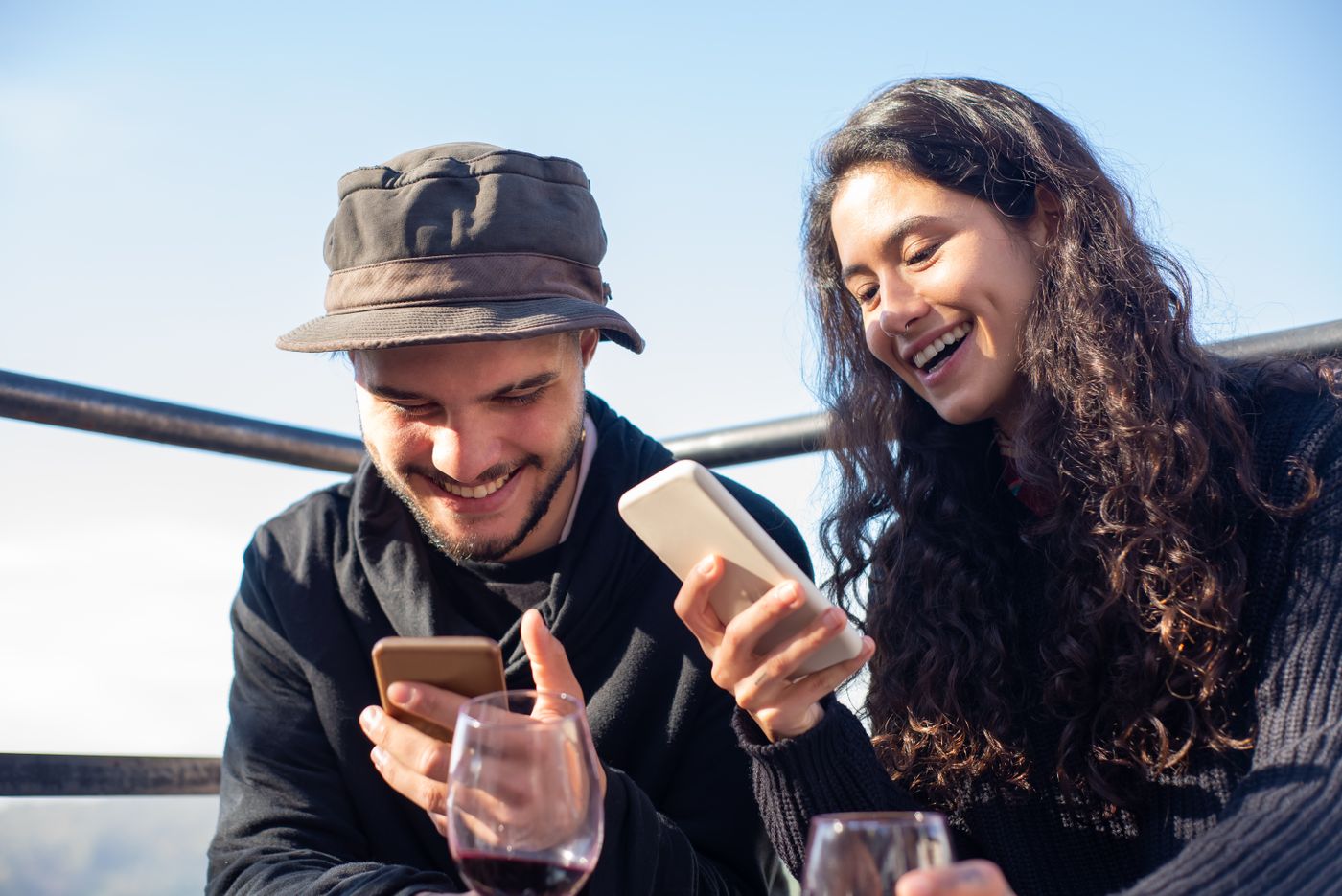
  <figcaption>The watch party starts in the group chat - se armó means the crew is actually coming. Photo by kampus on <a href="https://www.pexels.com/photo/6760899/" target="_blank" rel="noopener noreferrer">Pexels</a>.</figcaption>
</figure>

<div id="midpost-newsletter-slot"></div>

## The toast: look them in the eye

When the drinks are poured and the game is close, somebody raises a <a href="/words/chela">chela</a> and the room goes <mark lang="es-MX">salud</mark>.[^rae-salud] It's the universal Mexican toast. Simple enough, except for the one part that trips up every foreigner: the eye contact.

**You look the person in the eye, say <mark lang="es-MX">salud</mark>, clink, and only then drink.**[^rae-brindar]

Toasting while staring at your phone or off into the room reads as cold. Plenty of people half-jokingly warn that skipping the eye contact brings years of bad luck. Believe it or not, just look up when you clink.

<ul class="examples">
  <li class="example">
    <div class="es" lang="es-MX">¡Salud! Que gane el mejor.</div>
    <div class="en" lang="en">Cheers! May the best team win.</div>
  </li>
  <li class="example">
    <div class="es" lang="es-MX">Salud por todos, ya va a empezar.</div>
    <div class="en" lang="en">Cheers to everyone, it's about to start.</div>
  </li>
</ul>

For a fuller toast you add a quick line - <mark lang="es-MX">salud por todos</mark> (cheers to everyone) or <mark lang="es-MX">por la banda</mark> (to the crew). Nobody expects a speech. Short, warm, eyes up, then drink.

Right before the whistle, the line that cuts through everything is <mark lang="es-MX">ya va a empezar</mark>. It's part announcement, part order - put your drink down, sit, stop scrolling, it's starting. Say that and a scattered room snaps together in about three seconds.

## During the game: nerves, hope, and near misses

Once the ball is rolling, the vocabulary gets loud and short. **To push the team you yell <mark lang="es-MX">vamos</mark> or <mark lang="es-MX">vámonos</mark>**, usually with the country: <mark lang="es-MX">vamos, México</mark>. It's the standard rallying cry.

When it's tight - last ten minutes, a one-goal lead, the dreaded penalty shootout - the whole room starts saying <mark lang="es-MX">qué nervios</mark>.[^rae-nervio] It means how nerve-racking, I can't take this. You'll hear it out loud and see it ten times in the group chat.

<ul class="examples">
  <li class="example">
    <div class="es" lang="es-MX">¡Vamos, México, ya casi!</div>
    <div class="en" lang="en">Let's go, Mexico, almost there!</div>
  </li>
  <li class="example">
    <div class="es" lang="es-MX">Qué nervios, no puedo ver los penales.</div>
    <div class="en" lang="en">So nerve-racking, I can't watch the penalties.</div>
  </li>
</ul>

For the play that almost happened, the collective groan is <mark lang="es-MX">ya merito</mark> - so close, we nearly had it. And for the genuinely unbelievable, the goal or the save that makes the room jump, the honest reaction is <a href="/words/neta">neta</a> - as in <mark lang="es-MX">¿es neta?</mark>, are you serious, did that really just happen.

## The group chat, all night long

| Spanish | What it means | When you text it |
|---|---|---|
| ¿Dónde la vemos? | Where are we watching? | Setting up before the game |
| ¿Se arma o no? | Are we doing this? | Locking in the plan |
| Ya va a empezar | About to start | Five minutes to kickoff |
| Qué nervios | So nerve-racking | The tense final stretch |
| ¡Se armó la peda! | The party's on | When the night turns into a real one |
| Ni modo, será la próxima | Oh well, next time | After a loss |

The group chat is the real second half. People relive the game, roast whoever bailed early, and argue about one ref call for actual days.

When the win turns into a proper night out, the line is <mark lang="es-MX">se armó la peda</mark> - the <a href="/words/peda">peda</a> is the drinking session, and "se armó la peda" means it's officially become one. That's the message you get at midnight that decides how your Monday goes.

And after a loss, the closer is the most Mexican phrase there is: **<a href="/words/ni-modo">ni modo</a>**.[^dem-modo] It's not giving up. It's the calm shrug that says the loss hurts but life goes on, the beer's still cold, and there's always the next game.

<figure>
  <img src="/images/blog/world-cup-watch-party-spanish-2.jpg" alt="A living room full of friends reacting to a tense moment on the TV during a soccer match." loading="lazy" />
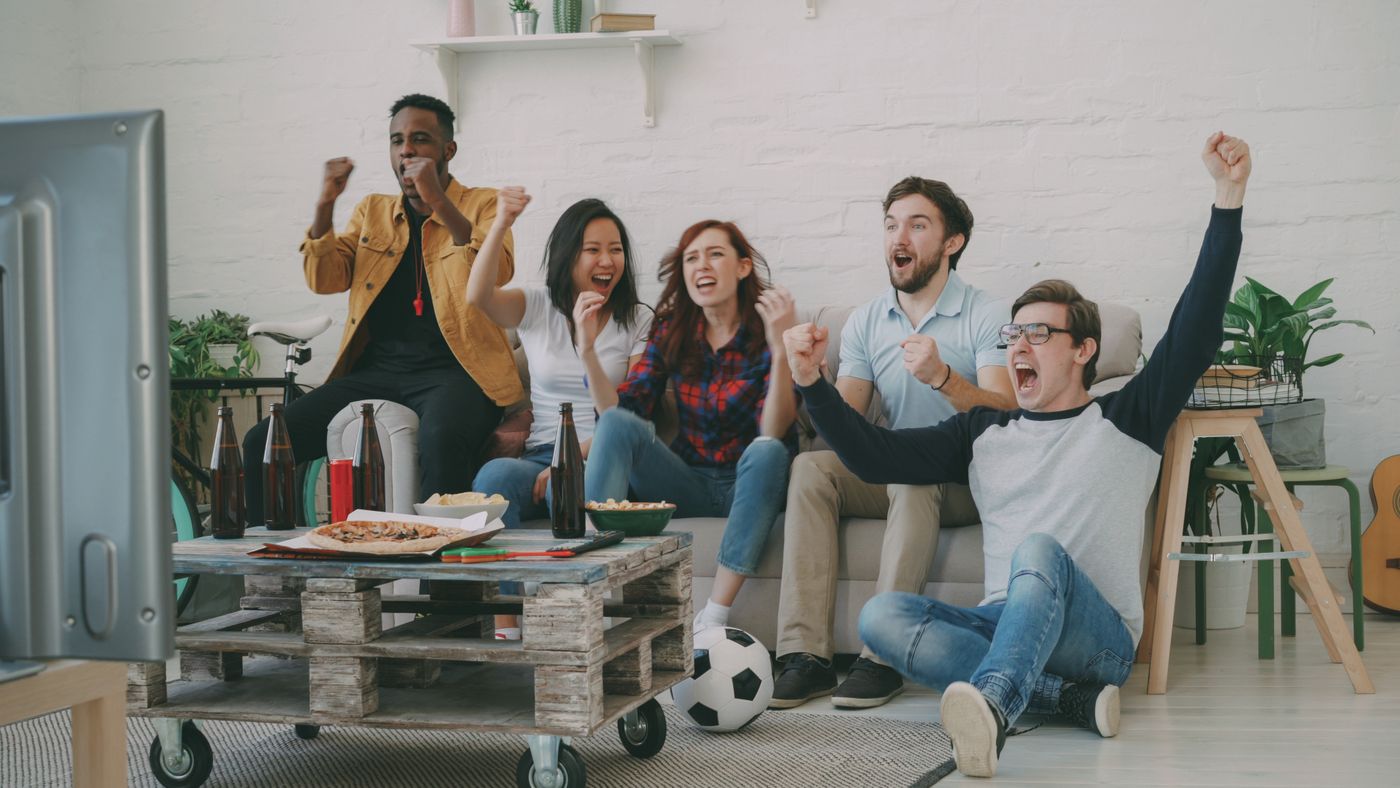
  <figcaption>Qué nervios is the sound a room makes in the final minutes of a close game. Photo by silverkblack on <a href="https://www.pexels.com/photo/36766082/" target="_blank" rel="noopener noreferrer">Pexels</a>.</figcaption>
</figure>

## Tone and safety: read the room first

Most of this language is warm and loud, but a couple of moments are worth handling with care.

| Phrase | Reads as | Watch out |
|---|---|---|
| Salud | Friendly, always safe | Just remember the eye contact |
| Qué nervios / vamos | Pure fan energy | None - say it freely |
| Te gané | Light banter after a win | Fine with friends, easy to overdo |
| Gloating after a loss | Sore winner | Read the mood before piling on |

A little gloating is part of the game. After your team beats your friend's team, a quick <mark lang="es-MX">te gané</mark> is normal banter and everyone expects it. The line is rubbing it in after a painful loss - that turns fun into a real edge fast.[^bbc-futbol]

The safer move when someone's team just got knocked out is to hand them a chela and say <mark lang="es-MX">ni modo</mark> with them. Sharing the shrug lands far better than celebrating in their face.

<figure>
  <img src="/images/blog/world-cup-watch-party-spanish-3.jpg" alt="Friends toasting with beers and smiling together after a match, drinks raised." loading="lazy" />
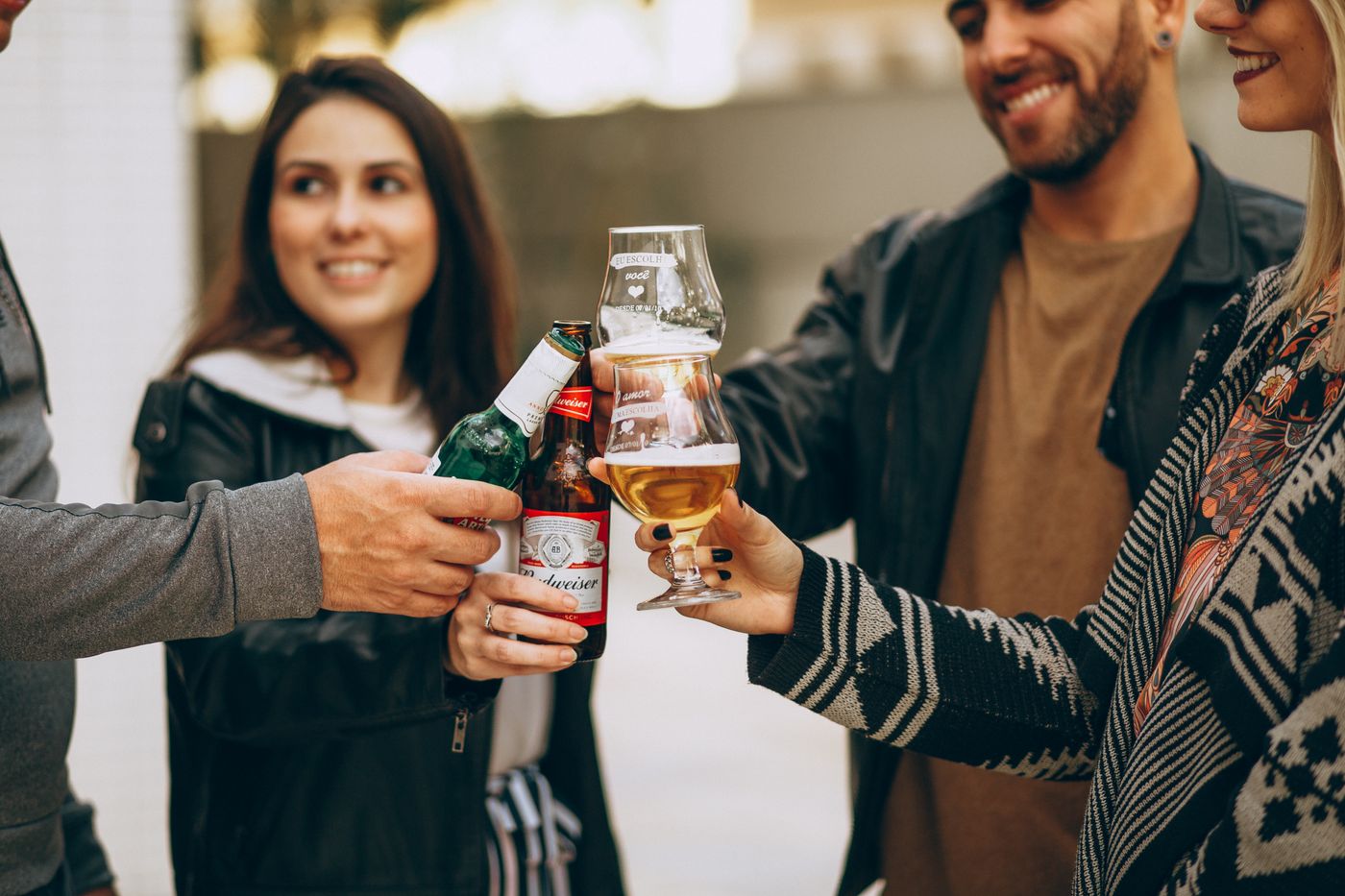
  <figcaption>Win or lose, the toast and the company outlast the score. Photo by Helena Lopes on <a href="https://www.pexels.com/photo/3922818/" target="_blank" rel="noopener noreferrer">Pexels</a>.</figcaption>
</figure>

## Put it together

A whole watch party in a handful of phrases looks like this. The plan, the toast, the nerves, and the shrug at the end.

<ul class="examples">
  <li class="example">
    <div class="es" lang="es-MX">¿Se arma en tu casa? - ¡Se armó!</div>
    <div class="en" lang="en">Doing it at your place? - It's on!</div>
  </li>
  <li class="example">
    <div class="es" lang="es-MX">¡Salud! Ya va a empezar.</div>
    <div class="en" lang="en">Cheers! It's about to start.</div>
  </li>
  <li class="example">
    <div class="es" lang="es-MX">¡Vamos, México! ...qué nervios.</div>
    <div class="en" lang="en">Let's go, Mexico! ...so nerve-racking.</div>
  </li>
  <li class="example">
    <div class="es" lang="es-MX">Ni modo, será la próxima. Ahí la seguimos.</div>
    <div class="en" lang="en">Oh well, next time. We keep it going.</div>
  </li>
</ul>

**Nobody's grading your grammar at a Mexican watch party.** Round up the crew, toast with your eyes up, suffer the nerves out loud, and take the loss with a calm <mark lang="es-MX">ni modo</mark>. Learn these once and you're set for every game after this one, World Cup or not.
[^rae-salud]: [Diccionario de la lengua española, salud](https://dle.rae.es/salud) - The RAE lists salud as the standard interjection used when toasting, the base of the Mexican watch-party cheer.
[^rae-brindar]: [Diccionario de la lengua española, brindar](https://dle.rae.es/brindar) - The RAE defines brindar as raising a glass and wishing well, the act behind salud and the eye-contact custom.
[^rae-nervio]: [Diccionario de la lengua española, nervio](https://dle.rae.es/nervio) - The RAE entry covers nervio and the plural nervios, the root of qué nervios as a state of tension and anxiety.
[^dem-armar]: [Diccionario del español de México, armar](https://dem.colmex.mx/ver/armar) - The Colmex dictionary documents armar and the reflexive se armó for a plan or event coming together.
[^dem-modo]: [Diccionario del español de México, modo](https://dem.colmex.mx/ver/modo) - The Colmex dictionary covers ni modo as the resigned "nothing can be done" phrase central to Mexican speech.
[^bbc-futbol]: [BBC Mundo, por qué el futbol une a México](https://www.bbc.com/mundo/noticias-america-latina-44472067) - BBC Mundo describes how soccer pulls Mexican families and friends together around the same screen, the social fabric behind the watch party.

FAQ:
Q: How do you say cheers in Mexican Spanish?
A: You say salud. Raise your glass, make eye contact, say salud, clink, and then drink. For a longer toast people add salud por todos or a quick line about the game.

Q: What does ya va a empezar mean?
A: Ya va a empezar means it's about to start. At a watch party it's the call that gets everyone to grab a drink, sit down, and stop scrolling before kickoff.

Q: What does qué nervios mean?
A: Qué nervios means how nerve-racking or I'm so nervous. Mexicans say it during a tense game, a penalty shootout, or the final minutes, both out loud and in the group chat.

Q: What does se armó mean in Mexico?
A: Se armó means it came together or it's on. You use it when a plan actually happens - se armó la reunión means the get-together is happening - or when things kick off.

Q: How do Mexicans say let's go to cheer their team?
A: They yell vamos or vámonos, often with the team name: vamos, México. It's the standard rallying shout during a game, short and loud.

Q: What do you text the group chat before a big game?
A: Common openers are ¿dónde la vemos? (where are we watching it?), ya va a empezar (about to start), and ¿se arma o no? (are we doing this or not?). They set up the plan fast.

Q: What do Mexicans say after their team loses?
A: The classic line is ni modo - oh well, nothing to do about it. It's the calm shrug that lets everyone accept the loss, finish their drink, and move on to the next game.

Q: Is it rude to bring up the score if my team won?
A: Light gloating among friends is normal and expected, but reading the room matters. A quick te gané (I beat you) is banter; rubbing it in after a painful loss can sour the mood fast.

Sources:
- Diccionario de la lengua española, salud: https://dle.rae.es/salud
- Diccionario de la lengua española, brindar: https://dle.rae.es/brindar
- Diccionario de la lengua española, nervio: https://dle.rae.es/nervio
- Diccionario del español de México, armar: https://dem.colmex.mx/ver/armar
- Diccionario del español de México, modo: https://dem.colmex.mx/ver/modo
- BBC Mundo, por qué el futbol une a México: https://www.bbc.com/mundo/noticias-america-latina-44472067

Related words: chela, peda, ni-modo, neta