---
title: "Gay CDMX Spanish for Zona Rosa: Bars, Apps, and Friend Groups"
description: "The Spanish that actually gets used on a night out in Zona Rosa: antro, pre, chelas, jalo, caile, and how a group plan really gets made in CDMX."
type: "article"
category: "grindr_gay"
url: "https://consalsa.app/blog/zona-rosa-gay-cdmx-spanish"
canonical: "https://consalsa.app/blog/zona-rosa-gay-cdmx-spanish"
published: "2026-07-10"
updated: "2026-08-19"
author: "Andrey the Nomad"
site: "ConSalsa.App"
license: "https://consalsa.app/about"
---

# Gay CDMX Spanish for Zona Rosa: Bars, Apps, and Friend Groups
URL: https://consalsa.app/blog/zona-rosa-gay-cdmx-spanish
Date: 2026-07-10
Updated: 2026-08-19
Category: grindr_gay
Keywords: gay cdmx spanish, zona rosa spanish, mexican gay slang cdmx, grindr mexico city spanish, gay nightlife spanish mexico, zona rosa nightlife
Summary: The Spanish that actually gets used on a night out in Zona Rosa: antro, pre, chelas, jalo, caile, and how a group plan really gets made in CDMX.

Quick answer:
- Zona Rosa is Mexico City's most visible gay nightlife district, centred on Calle Amberes in Colonia Juárez.
- The core night-out words are antro (club), pre (pre-drinks), chelas (beers), jalo (I'm in) and caile (come along).
- Plans are made in a group chat and stay fluid until late — ya casi llego rarely means almost there.
- Nights run late by US standards: pre around 10, the antro after midnight, and nobody is early.

What you'll learn:
- The dozen words that carry an entire CDMX night out.
- How a group plan actually forms, and why the times in it are approximate.
- How to move a chat from the app to a real place without it stalling.
- How to leave early, decline a drink, or get home without killing the mood.

Don't sound gringo:
Don't take the time in the group chat literally. If the plan says 10, arriving at 10 means you and the bartender. The night's real start is whenever the second person says ya voy saliendo.

Body:

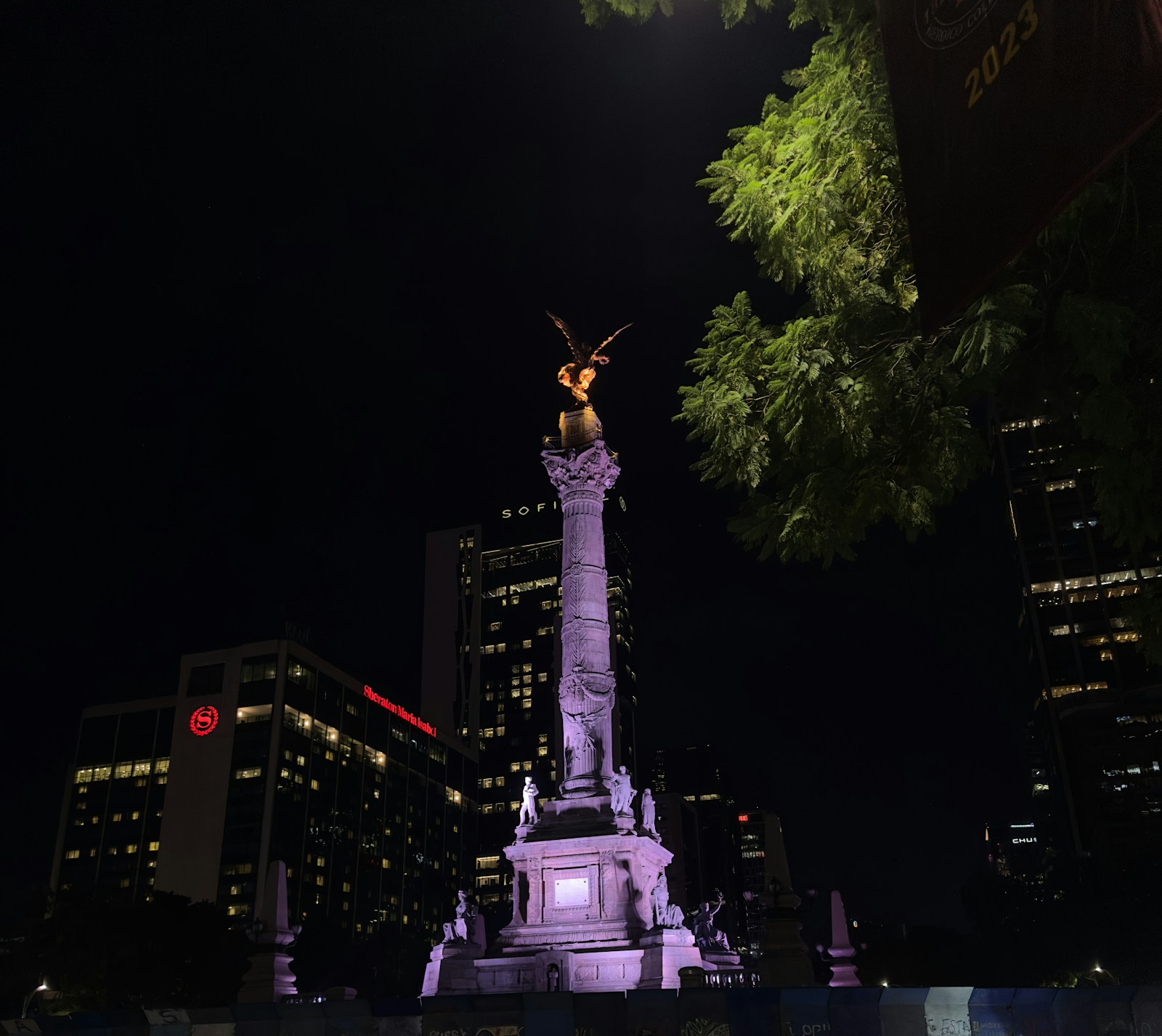
Zona Rosa is a small grid of streets inside Colonia Juárez, a few minutes' walk from the Ángel de la Independencia, and for about fifty years it has been the most visible gay neighborhood in Mexico City. Calle Amberes is the spine of it.

The Spanish you need there is not the Spanish in your app. It is maybe a dozen words, and most of them are about logistics.

<figure>
  <img src="/images/blog/zona-rosa-gay-cdmx-spanish-3.jpg" alt="The Ángel de la Independencia monument lit up at night above Paseo de la Reforma." loading="lazy" />
  <figcaption>The Ángel is the landmark everyone navigates by. Zona Rosa starts a couple of blocks off Reforma from here. Photo by <a href="https://unsplash.com/photos/a-statue-in-the-middle-of-a-city-at-night-hqda6Ktxnbw" target="_blank" rel="noopener noreferrer">Joseph Cortez on Unsplash</a>.</figcaption>
</figure>

## The dozen words that carry a night

| Spanish | What it does |
|---|---|
| antro | club, or a loud late bar |
| pre | pre-drinks at someone's place |
| chelas | beers |
| depa | apartment |
| jalo | I'm in |
| cáile | come along |
| le caemos a… | let's go to… |
| ya voy saliendo | I'm leaving now (approximately) |
| el ambiente | the scene |
| after | the place after the club closes |
| me voy retirando | I'm heading off |
| chambear | to work |

Two of those are worth a note. <mark lang="es-MX">Antro</mark> has a much darker history in the dictionary than in real life — the entries still list a cave, then an unpleasant enclosed space, then a semi-clandestine den — before arriving at the sense everyone actually uses: a generally loud, dark establishment where alcohol is drunk.[^dem-antro] Nobody in CDMX hears any of the earlier senses. And <mark lang="es-MX">chela</mark> is simply beer, marked as popular usage.[^dem-chela] <mark lang="es-MX">Jalo</mark> comes from <mark lang="es-MX">jalar</mark>, to pull or haul — the same verb behind <mark lang="es-MX">jálale</mark> on a door.[^dem-jalar]

As for the neighborhood's own name, <mark lang="es-MX">rosa</mark> is just pink,[^rae-rosa] and where it came from is genuinely unsettled. The Cuauhtémoc borough's own history page lists several competing accounts: that buildings in the area were painted pink, that the painter José Luis Cuevas coined it, that Cuevas meant it as a tribute to the Cuban actress Rosa Carmina, and that it was a softer rebrand of <mark lang="es-MX">zona roja</mark>, red-light district.[^cuauhtemoc-zonarosa] The borough itself says the attributions should be treated with caution. What is not in doubt is that the name predates the neighborhood's queer reputation by decades.

## How the plan actually gets made

This is the part that catches people out, and it has nothing to do with vocabulary.

**The night is assembled in a group chat, and it stays liquid until quite late.** Nobody is being flaky. The plan is genuinely not decided yet, and treating an early message as a commitment is how foreigners end up standing alone outside a bar at ten.

<div class="chat-thread">
  <div class="chat-head"><span class="chat-avatar"></span><span>el grupo</span><span class="chat-meta">a Friday, roughly</span></div>
  <ul class="chat-msgs">
    <li class="in"><span class="es" lang="es-MX">¿hoy qué? ¿pre en mi depa y luego le caemos a Amberes?</span><span class="en">what's happening today? pre at my place then we hit Amberes?</span></li>
    <li class="out"><span class="es" lang="es-MX">jalo</span><span class="en">I'm in</span></li>
    <li class="in"><span class="es" lang="es-MX">yo llego como a las 10:30, salgo tarde de chambear</span><span class="en">I'll get there around 10:30, I finish work late</span></li>
    <li class="in"><span class="es" lang="es-MX">cáile Dani, no seas</span><span class="en">come on Dani, come with us</span></li>
    <li class="in"><span class="es" lang="es-MX">va va, ya voy saliendo</span><span class="en">okay okay, heading out now</span></li>
  </ul>
  <p class="chat-read"><strong>The real start time is whenever the second person says <span lang="es-MX">ya voy saliendo</span></strong> — and even that is a statement of intention rather than location.</p>
</div>

<div class="note-card">
  <span class="note-label">Rough clock</span>
  <p><b>10 p.m.</b> — the pre starts filling up. <b>Midnight</b> — bars on Amberes get busy. <b>1–3 a.m.</b> — the antro. <b>After 3</b> — someone proposes an <b lang="es-MX">after</b>, and that is its own decision.</p>
  <p>Turning up to a club at 11 gets you an empty room and a confused bartender.</p>
</div>

<figure>
  <img src="/images/blog/zona-rosa-gay-cdmx-spanish-1.jpg" alt="Two men talking over drinks at a bar lit with pink neon." loading="lazy" />
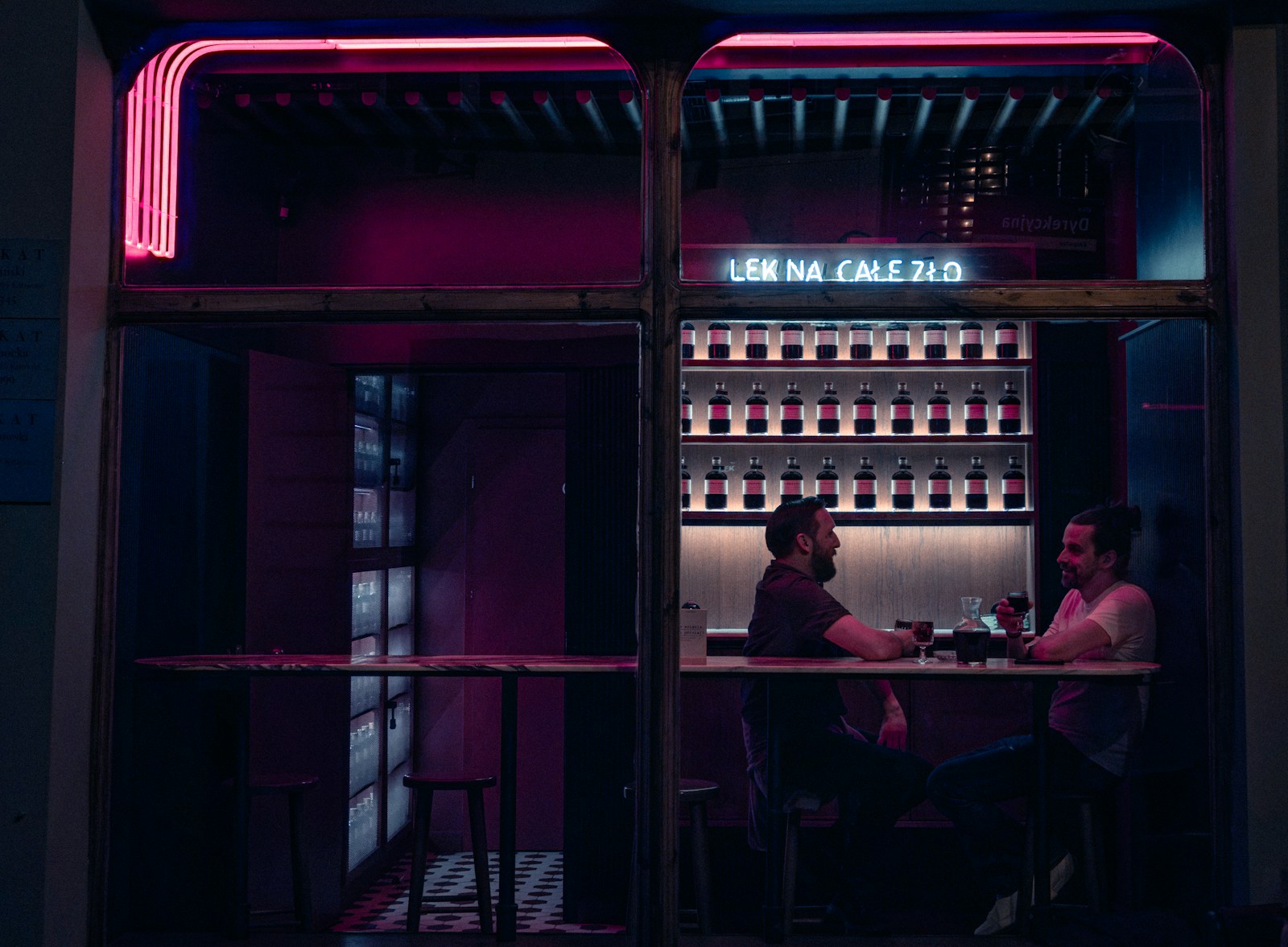
  <figcaption>Most of the night happens at a volume where you'll be repeating yourself anyway, which is excellent news for your accent. Photo by <a href="https://unsplash.com/photos/two-men-enjoying-drinks-at-a-neon-lit-bar-QqatsmcQGJg" target="_blank" rel="noopener noreferrer">Bohdan Hyrovych on Unsplash</a>.</figcaption>
</figure>

<div id="midpost-newsletter-slot"></div>

## From the app to an actual place

The most common failure on a Mexican dating app is not rejection. It is a pleasant conversation that never becomes a location, drifting for four days until both people quietly stop.

The fix is to propose something specific and easy to say no to.

<ol class="ladder">
  <li>
    <div class="rung-card">
      <span class="rung-label">open it</span>
      <span class="rung-es" lang="es-MX">¿Andas por la Zona el finde?</span>
      <span class="rung-en" lang="en">Are you around Zona Rosa this weekend?</span>
      <span class="rung-note">Low-stakes. It's a question about their weekend, not an invitation yet, so it costs nothing to answer.</span>
    </div>
  </li>
  <li>
    <div class="rung-card">
      <span class="rung-label">name a place</span>
      <span class="rung-es" lang="es-MX">Le caemos a algo en Amberes, ¿te late?</span>
      <span class="rung-en" lang="en">Let's hit somewhere on Amberes, you into it?</span>
      <span class="rung-note">A street is easier to agree to than a specific venue, and neither of you has to have an opinion yet.</span>
    </div>
  </li>
  <li>
    <div class="rung-card">
      <span class="rung-label">pin it down</span>
      <span class="rung-es" lang="es-MX">¿Nos vemos a las 11 en el metro Insurgentes?</span>
      <span class="rung-en" lang="en">Meet at 11 at Insurgentes metro?</span>
      <span class="rung-note">A landmark plus a time. The glorieta at Insurgentes is the standard meeting point and everybody knows it.</span>
    </div>
  </li>
  <li>
    <div class="rung-card">
      <span class="rung-label">confirm late</span>
      <span class="rung-es" lang="es-MX">¿Sigue en pie lo de hoy?</span>
      <span class="rung-en" lang="en">Are we still on for tonight?</span>
      <span class="rung-note">Send this the same evening. Plans made three days out get re-confirmed here as a matter of course, not as a hint.</span>
    </div>
  </li>
</ol>

<figure>
  <img src="/images/blog/zona-rosa-gay-cdmx-spanish-2.jpg" alt="A neon sign reading Mexico Mi Amor glowing red against a wall." loading="lazy" />
  <figcaption>Somewhere between the fourth message and the third beer, the Spanish stops being homework. Photo by <a href="https://unsplash.com/photos/a-neon-sign-that-reads-mexico-mi-amor-YHTPAP5Mpw0" target="_blank" rel="noopener noreferrer">Hannah Bennett on Unsplash</a>.</figcaption>
</figure>

## Declining, leaving, getting home

You will want all three of these, probably on the same night.

<ul class="examples">
  <li class="example">
    <div class="es" lang="es-MX">Ahorita no, gracias. Así estoy bien.</div>
    <div class="en" lang="en">Not right now, thanks. I'm good like this.</div>
  </li>
  <li class="example">
    <div class="es" lang="es-MX">Yo ya me voy retirando, mañana chambeo.</div>
    <div class="en" lang="en">I'm heading off, I've got work tomorrow.</div>
  </li>
  <li class="example">
    <div class="es" lang="es-MX">Voy a pedir un Uber, ¿alguien va para el mismo rumbo?</div>
    <div class="en" lang="en">I'm getting an Uber, anyone going the same way?</div>
  </li>
</ul>

<mark lang="es-MX">Mañana chambeo</mark> is the universal exit visa. Nobody argues with work tomorrow, and it lets you leave at one without a negotiation.

<div class="do-dont">
  <div class="dd-col dd-do">
    <p class="dd-title">Ordinary night-out sense</p>
    <ul>
      <li>Order the ride <b>from inside</b>, leave when it's close</li>
      <li>Tell someone in the group <b>where you're going</b></li>
      <li>Keep your phone <b>off the table</b> on the terrace</li>
      <li><b lang="es-MX">Así estoy bien</b> — a complete answer to a drink</li>
    </ul>
  </div>
  <div class="dd-col dd-dont">
    <p class="dd-title">Where it goes wrong</p>
    <ul>
      <li>Flagging a <b>street taxi</b> at 3 a.m.</li>
      <li>Leaving a drink <b>unattended</b> and coming back to it</li>
      <li>Quiet side streets alone <b>after the bars close</b></li>
      <li>Assuming the whole city reads <b>like Amberes</b></li>
    </ul>
  </div>
</div>

That last point is the one worth carrying home with you. Zona Rosa is genuinely one of the most openly queer places in Latin America, and it is not the whole country — INEGI's national survey on sexual diversity and gender exists partly because discrimination is measurable and widespread outside the bubble.[^inegi-endiseg] Two blocks of Amberes are not a reliable guide to a small town in another state, and most Mexicans on the scene will tell you that themselves.

## The one word that stays with you

<mark lang="es-MX">El ambiente</mark> — literally the atmosphere, used to mean the scene. <mark lang="es-MX">Salir al ambiente</mark> is to go out on the scene, and <mark lang="es-MX">gente de ambiente</mark> means people who are part of it.

It is an old, gentle, slightly coded phrase, from a time when saying it more directly was not an option. It has outlived the need for the code and stayed anyway, because it is warmer than the alternatives. If you learn one piece of vocabulary from this page, make it that one.

For the wider Spanish vocabulary around queer identity — and for getting the terms right rather than nearly right — GLAAD's Spanish-language guide is a good reference.[^glaad-guia]

[^dem-antro]: [Diccionario del español de México, antro](https://dem.colmex.mx/ver/antro) — El Colegio de México.
[^dem-chela]: [Diccionario del español de México, chela](https://dem.colmex.mx/ver/chela) — El Colegio de México.
[^dem-jalar]: [Diccionario del español de México, jalar](https://dem.colmex.mx/ver/jalar) — El Colegio de México.
[^rae-rosa]: [Diccionario de la lengua española, rosa](https://dle.rae.es/rosa) — Real Academia Española.
[^cuauhtemoc-zonarosa]: [Zona Rosa](https://historico.alcaldiacuauhtemoc.mx/nope/zona-rosa/) — Alcaldía Cuauhtémoc, Ciudad de México.
[^inegi-endiseg]: [Encuesta Nacional sobre Diversidad Sexual y de Género (ENDISEG) 2021](https://www.inegi.org.mx/programas/endiseg/2021/) — Instituto Nacional de Estadística y Geografía.
[^glaad-guia]: [GLAAD, guía de términos y definiciones para los medios](https://glaad.org/publications/guia-de-glaad/) — GLAAD.

FAQ:
Q: What is Zona Rosa in Mexico City?
A: A neighborhood inside Colonia Juárez, just off Paseo de la Reforma, known since the 1970s as the center of Mexico City's gay nightlife. Calle Amberes is the main strip.

Q: What does antro mean in Mexico?
A: A nightclub or a loud late bar. The dictionary still records older, dingier senses, but in everyday Mexican Spanish an antro is simply where you go to dance and drink.

Q: What is a pre in Mexican Spanish?
A: Pre-drinks at somebody's apartment before going out. Short for previa or pre-copeo. In CDMX a pre often runs from around 10 p.m. until well past midnight.

Q: What does jalo mean?
A: I'm in, count me in. From jalar, to pull. It is the standard one-word yes to a plan in a Mexican group chat.

Q: What does cáile mean?
A: Come along, come with us. From caer — literally to drop by. You'll also hear le caemos a for going somewhere, as in ¿a qué antro le caemos?

Q: What time does a night out start in Zona Rosa?
A: Late. Pre-drinks around 10 p.m., the bars fill after midnight, and the clubs run until three or later on weekends. Arriving at a club at 11 means an empty room.

Q: How do I say I'm heading home without being rude?
A: Yo ya me voy retirando, mañana chambeo. Naming work tomorrow is the standard, universally accepted exit.

Q: How do I turn down a drink in Mexico?
A: Ahorita no, gracias, or así estoy bien. Neither needs a reason and neither is treated as odd.

Q: Is Zona Rosa safe at night?
A: It is busy, policed and well lit on the main strips, and the ordinary big-city rules apply: use an app for taxis rather than hailing one, keep your phone away from the kerb, and watch your drink. Quiet side streets after 2 a.m. are where people get careless.

Q: Do I need to speak Spanish to go out in Zona Rosa?
A: No, plenty of people there speak English. But the group-chat Spanish is where the actual plan happens, and that part rarely gets translated for you.

Sources:
- Diccionario del español de México, antro: https://dem.colmex.mx/ver/antro
- Diccionario del español de México, chela: https://dem.colmex.mx/ver/chela
- Diccionario del español de México, jalar: https://dem.colmex.mx/ver/jalar
- Diccionario de la lengua española, rosa: https://dle.rae.es/rosa
- Alcaldía Cuauhtémoc, Zona Rosa: https://historico.alcaldiacuauhtemoc.mx/nope/zona-rosa/
- INEGI, Encuesta Nacional sobre Diversidad Sexual y de Género (ENDISEG) 2021: https://www.inegi.org.mx/programas/endiseg/2021/
- GLAAD, guía de términos y definiciones para los medios: https://glaad.org/publications/guia-de-glaad/

Related words: antro, chela, guey, sale