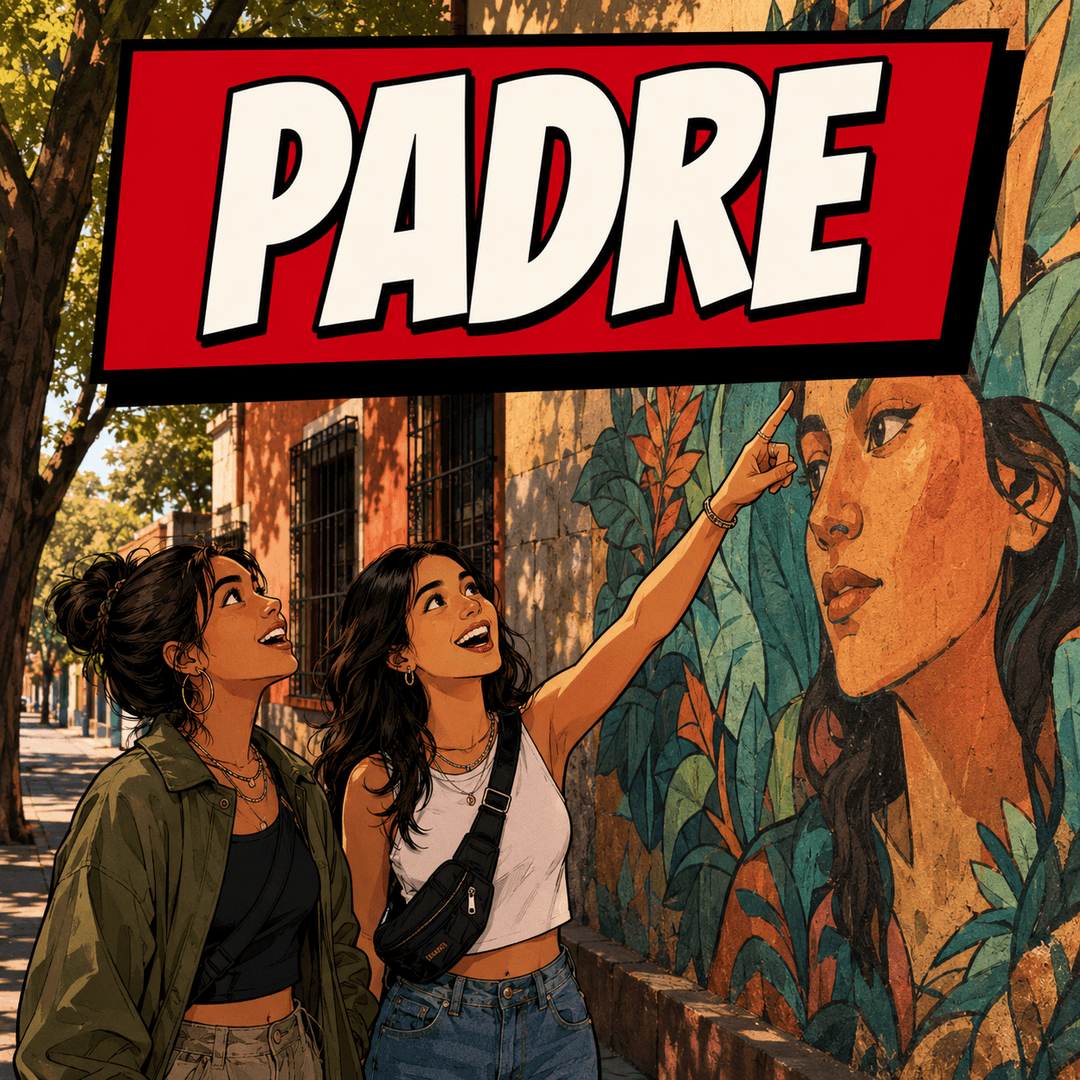
The first time you want to say “that’s cool” in Mexico, your brain may reach for es frío if it is tired, or es genial if it is feeling textbook.
Please do not say es frío unless the taco is literally cold.
In Mexican Spanish, cool is usually chido, padre, perrón, buena onda, está cool, or if the room is right, está poca madre. They overlap, but they do not feel the same.
The trick is not finding one perfect translation. The trick is matching the compliment to the moment.
The quick cool map
If you are visiting from the US, think of these as different flavors of cool.
| Word or phrase | English feel | Best for | Safety level |
|---|---|---|---|
| Chido | Cool / nice / awesome | Plans, places, music, food, people | Safe casual |
| Padre | Nice / cool / great | Places, objects, ideas, experiences | Very safe |
| Está cool | That’s cool | Modern casual Spanish with English flavor | Safe casual |
| Buena onda | Cool person / good vibe | People, groups, places | Very safe |
| Perrón | Very cool / badass | Impressive things, cars, outfits, skills | Informal |
| Poca madre | Awesome / incredible | Big reactions among friends | Strong; use carefully |
| De lujo | Great / excellent | Service, plans, results | Safe |
| Increíble | Amazing | Anything | Safe, neutral |
If you only learn two, learn chido and padre. They cover a huge amount of everyday Mexico.
Chido: the everyday cool
Chido is the workhorse. You can use it for a plan, a neighborhood, a song, a class, a restaurant, a party, or a person who did something nice.
-
Está chido el lugar.This place is cool.
-
Qué chida la vista.What a cool view.
-
Tu plan suena chido.Your plan sounds cool.
It changes with gender and number when it describes a noun: chido, chida, chidos, chidas.
That said, Mexican Spanish also loves using está chido as a whole chunk. You do not need to overthink it at first.
Padre: nice, cool, and a little softer
Padre literally means father, but in Mexican slang it also means cool, nice, great.
-
Está padre tu departamento.Your apartment is really nice.
-
Qué padre que viniste.It's so nice that you came.
Padre is slightly less edgy than chido. You can use it with families, coworkers, older people, hosts, and strangers without much risk.
If chido is “cool,” padre is often closer to “that’s nice” with warmth.
Chido vs padre
| You want to say… | Use this | Example |
|---|---|---|
| This bar is cool | Chido | Está chido el bar. |
| Your mom’s house is lovely | Padre | Está muy padre la casa de tu mamá. |
| That plan sounds good | Chido / padre | Suena chido / suena padre. |
| The museum was nice | Padre | Estuvo padre el museo. |
| The DJ was cool | Chido | Estuvo chido el DJ. |
| I am politely complimenting a host | Padre | Todo está muy padre, gracias. |
| I am texting a friend | Chido | Va, suena chido. |
For learners, padre is the safer compliment around people you do not know well. Chido is still safe, just more casual.

Perrón: when cool has teeth
Perrón comes from perro, dog, but in slang it can mean very cool, impressive, intense, or badass.
Use it when something has a little force:
-
Está perrón tu coche.Your car is badass.
-
Ese mural está perrón.That mural is really cool.
It is more expressive than chido. I would not use it as my first compliment to a boss, an Airbnb host, or someone who is currently holding my passport.
With friends, it lands well. With strangers, listen first.
Poca madre: understand first, use later
In Mexico, está poca madre can mean something is amazing. But madre is culturally loaded and can become vulgar or aggressive in other phrases.
So yes, you may hear:
-
La comida está poca madre.The food is freaking amazing.
But if you are learning, let this one marinate. It is not the first cool word I would hand to someone arriving from the US.
The clean version is easy:
-
La comida está buenísima.The food is really good.
-
El lugar está increíble.The place is amazing.
Compliments that sound natural in Mexico
Here are simple lines you can actually use without turning into a walking slang playlist.
-
Qué chido, gracias por invitarme.That's cool, thanks for inviting me.
-
Está muy padre esta zona.This area is really nice.
-
La clase estuvo chida.The class was cool.
-
Qué buena onda tu amiga.Your friend is so nice / has such good vibes.
-
Ese lugar está de lujo.That place is excellent.
What to avoid
Try not to translate “cool” the same way every time. Spanish gives you choices.
- Do not say frío unless something is cold.
- Do not use poca madre in formal situations.
- Do not call every person chido after one sentence.
- Do not force perrón into quiet moments.
- Do not assume one Mexican friend represents every region.
The best learner strategy
Start with this:
- Está padre when you want to sound warm and safe
- Está chido when the setting is casual
- Qué buena onda for a person or gesture
- Está increíble when you want to avoid slang
- Perrón only after you have heard the vibe
That gives you natural Mexican Spanish without sounding like you opened a listicle and decided to use every word before dessert.