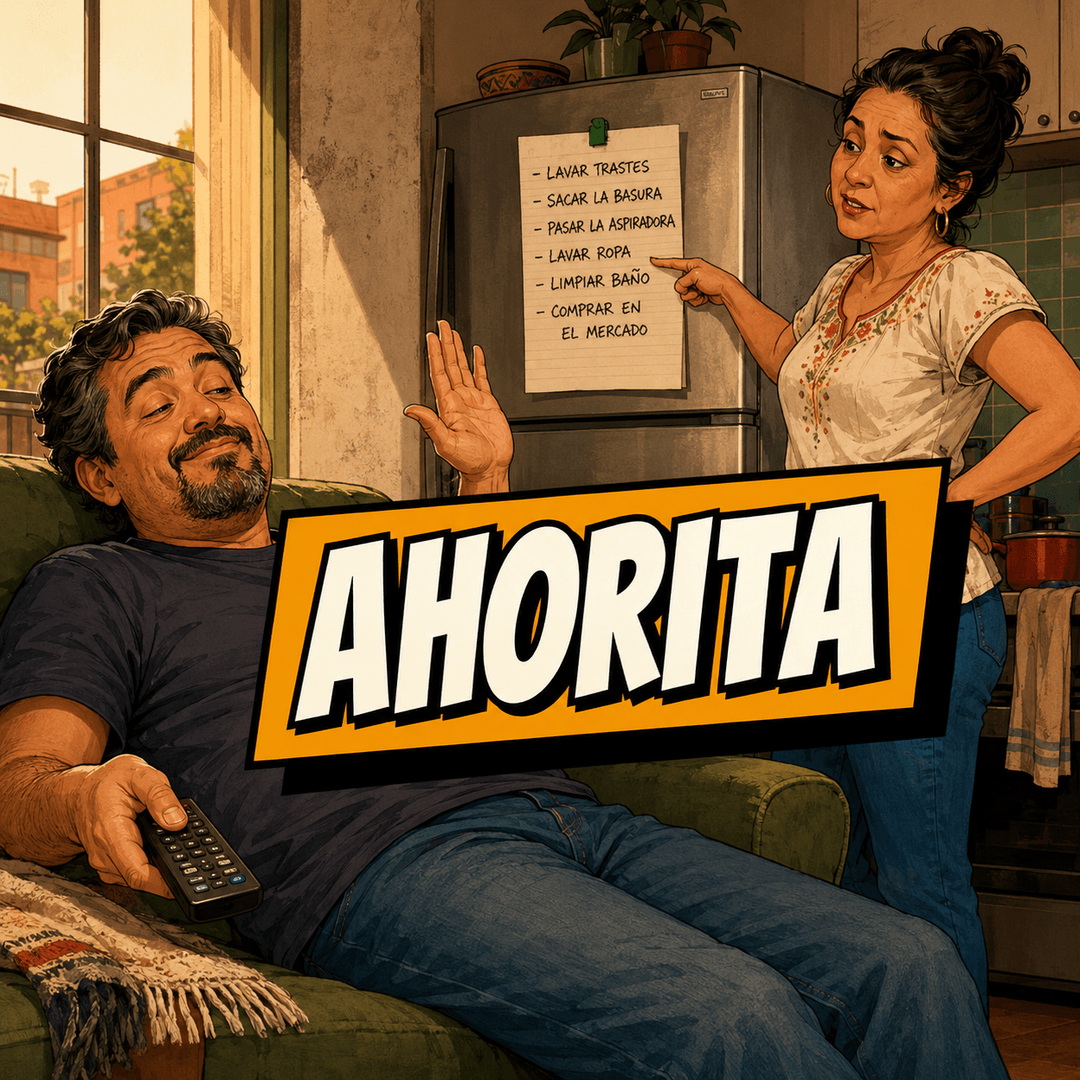
If you learned Spanish from a textbook, you probably learned de acuerdo for “okay.” That is correct. It is also what your brain grabs when a waiter in Mexico asks if you want your tacos with everything and suddenly you sound like you are signing a municipal contract.
In real Mexican Spanish, okay is usually smaller, warmer, and faster: órale, sale, va, está bien, ok, va que va, sale pues. They are not just translations. They are tiny social signals.
If a friend from the US landed in CDMX tomorrow and asked for the most useful “not textbook” Spanish to learn before lunch, I would put these near the top. You use them in restaurants, Ubers, WhatsApp chats, Airbnb messages, tours, coworking spaces, beach plans, and the eternal negotiation over who is bringing the chelas.

The quick difference
The short version: sale accepts, va confirms, órale reacts or pushes the moment forward.
That is not a grammar rule. It is a social map. People mix these words constantly, especially in Mexico City, but each one has a center of gravity.
| Word | Closest English feel | Best use | Example |
|---|---|---|---|
| Sale | Cool / deal / sounds good | Accepting a plan | ¿A las ocho? Sale. |
| Va | Okay / works / got it | Quick confirmation | Va, te aviso. |
| Órale | Alright / whoa / let’s go | Agreement, surprise, encouragement, hurry up | Órale, vámonos. |
| Sale, va | Cool, works | Strong casual confirmation | Sale, va, ahí nos vemos. |
| De acuerdo | Agreed | Formal or careful agreement | De acuerdo, quedo pendiente. |
| Está bien | That’s fine / okay | Neutral, safe, less slangy | Está bien, gracias. |
If you want the safest learner move, start with sale and va. They sound natural without making you seem like you memorized a slang list on the flight.
Órale is amazing, but it has more personality. Use it once you have heard how people around you say it.
Why “de acuerdo” sounds a little dressed up
De acuerdo is not wrong. Use it in emails, appointments, customer service, or anything official. But in casual Mexico, it can feel too polished for tiny everyday moments.
Imagine your friend texts:
-
Nos vemos afuera del museo a las 6.See you outside the museum at 6.
If you answer:
-
De acuerdo.Agreed.
You are correct, but it has a little spreadsheet energy.
More natural:
-
Sale, ahí nos vemos.Cool, see you there.
That one sounds like a person with weekend plans, not a compliance department.
Sale: the easiest Mexican “okay” for travelers
Sale is probably the best first word in this group. It means cool, deal, sounds good, okay. It is casual, friendly, and useful in exactly the situations travelers hit all day.
Use sale when a plan works for you:
-
¿Nos vemos a las 8?See each other at 8?
-
Sale.Cool.
Use it when someone gives you information:
-
Le marco cuando llegue el repartidor.I will call you when the delivery person arrives.
-
Sale, gracias.Sounds good, thanks.
Use it to close a casual chat:
-
Sale, estamos en contacto.Cool, we will stay in touch.
For US travelers, sale keeps you from overusing okay, gracias, and sí in every interaction. It is friendly without sounding like you are cosplaying local.
Va: tiny, fast, and very Mexican
Va comes from ir, “to go.” Literally, it means “it goes.” In Mexican Spanish, it often means okay, works, got it, let’s do it.
It is especially good in texts because it is fast and clean.
| Situation | Natural Mexican reply | What it means |
|---|---|---|
| Your friend sends a meeting spot | Va, ahí llego. | Okay, I will get there. |
| A guide confirms pickup | Va, gracias. | Got it, thanks. |
| Someone asks if 7 works | Va, perfecto. | Works, perfect. |
| A waiter repeats your order | Va. | Okay / yes, that’s right. |
| You agree to a small favor | Va, yo lo hago. | Okay, I will do it. |
| A group plan changes | Va, no pasa nada. | Okay, no worries. |
Va is safe in casual contexts. It is not rude. It is just informal.
In formal writing, use de acuerdo, entendido, or está bien. But for travel life, va is gold.

Órale: okay with a whole personality
Órale is the one with a little spark. The Real Academia Española defines it as a colloquial interjection used in Mexico and parts of Central America to exhort, show surprise, or show acceptance. The Diccionario del Español de México gives the same real-world range: it can encourage action, accept something, show surprise, or tell someone to stop what they are doing.
That is a lot for one word. Órale is not just okay. It is okay with eyebrows.
It can accept a plan:
-
¿Vamos por tacos?Want to go get tacos?
-
¡Órale!Alright!
It can show surprise:
-
Me dieron el trabajo.I got the job.
-
¡Órale, felicidades!Whoa, congratulations!
It can push someone to move:
-
Órale, ya vámonos.Come on, let's go already.
That last one is why tone matters. Bright órale can sound excited. Flat órale can sound like “move it.”
Which one should I use in Mexico?
Here is the practical travel map. This is the table you want when you are standing in Condesa with 4% battery, one friend saying “ya casi,” and another changing the plan in the group chat.
| You want to say… | Best Mexican option | Example | Why |
|---|---|---|---|
| Okay, the plan works | Sale | Sale, nos vemos ahí. | Friendly and natural |
| Got it | Va | Va, gracias. | Short and clear |
| Cool, deal | Sale, va | Sale, va, a las 7. | Strong casual confirmation |
| Alright, let’s go | Órale | Órale, vámonos. | Adds energy |
| Wow, okay | Órale | Órale, qué padre. | Reacts with surprise |
| Formal agreed | De acuerdo | De acuerdo, quedo pendiente. | Best for email or official stuff |
| That’s fine | Está bien | Está bien, no hay problema. | Neutral and safe |
| Okay, but not now | Va, al rato | Va, al rato lo vemos. | Keeps it casual |
If you are brand-new in Mexico, use sale more than órale. Sale is easier to land.
Then add va in texts. Once your ear adjusts, órale becomes a joy.
Texting in 2026: what feels natural now
In 2026, Mexican texting is fast, warm, and full of tiny agreement words. People still write ok, claro, perfecto, and sí, but sale and va make you sound less translated.
Textbook-ish:
-
Estoy de acuerdo. Nos veremos en ese lugar.I agree. We will see each other at that place.
Normal WhatsApp:
-
Sale, nos vemos ahí.Cool, see you there.
For travelers, these are the messages to steal:
- Sale, gracias.
- Va, perfecto.
- Sale, ahí nos vemos.
- Va, te aviso.
- Órale, qué chido.
- Sale, entonces mañana.
- Va, sin problema.
The magic is that none of these are trying too hard. They are short, friendly, and usable with almost anyone who is already texting you casually.
The US comparison: okay has vibes too
English speakers sometimes act like okay is neutral. It is not. Think about the difference between:
- Okay.
- Okaaay.
- Cool.
- Sounds good.
- Bet.
- Got it.
- Fine.
Same basic idea, wildly different social weather.
Mexican Spanish works the same way:
| US English feel | Mexican Spanish feel | Use it when |
|---|---|---|
| Sounds good | Sale | A plan works |
| Works for me | Va | You confirm quickly |
| Cool, deal | Sale, va | You want friendly certainty |
| Whoa, nice | Órale | You are impressed |
| Come on, let’s go | Órale | You want motion |
| Agreed | De acuerdo | You need formality |
| Fine | Está bien | You want neutral acceptance |
So do not translate only the word “okay.” Translate the mood.
If your friend says “nos vemos a las 8,” sale is usually better than a literal “ok.” If your tour guide says pickup is at 7:30, va, gracias is perfect. If someone tells you they got free tickets to Lucha Libre, órale earns its keep.
Common mistakes US learners make
The first mistake is using de acuerdo for everything. Again, it is correct. It is also a little stiff when the moment is casual.
The second mistake is using órale like it only means okay. It can mean okay, but it can also mean whoa, hurry up, come on, or “hey, stop that.” Do not flatten it.
The third mistake is saying sale in formal situations. In a government office, legal email, or serious work thread, use de acuerdo or entendido. Save sale for normal human traffic.
The fourth mistake is forgetting tone. A bright “¡órale!” and a flat “órale…” are not the same message.
Better learner strategy:
- Use sale for casual plans.
- Use va for quick confirmations.
- Use órale after you have heard the local tone.
- Use de acuerdo when the situation gets formal.
- Add gracias often. It softens everything.

Real-life mini scripts
Use these when you want to sound natural without getting fancy.
For a restaurant:
-
¿Con todo?With everything?
-
Va, con todo, gracias.Yes, with everything, thanks.
For a tour pickup:
-
Pasamos por ustedes a las 7:15.We will pick you up at 7:15.
-
Sale, gracias. Ahí estamos.Sounds good, thanks. We will be there.
For an Airbnb host:
-
Le dejo las llaves con el portero.I will leave the keys with the doorman.
-
Va, muchas gracias.Got it, thank you very much.
For friends:
-
¿Antro o tacos?Club or tacos?
-
Órale, tacos primero.Alright, tacos first.
For changing plans:
-
Se me hizo tarde. ¿Mejor a las 8?I got delayed. Better at 8?
-
Va, no pasa nada.Okay, no worries.
The best learner answer
If you only remember one pattern, remember this:
-
Sale, va. Gracias.Cool, works. Thanks.
It is not fancy. It is not over-slangy. It confirms the plan, sounds warm, and works in a shocking number of everyday situations.
Then, when something surprises you, add órale:
-
¡Órale, qué buena onda!Whoa, that's awesome!
That is the real goal. Not sounding “native.” Not collecting slang like souvenirs. Just hearing the room, choosing the right little word, and making your Spanish feel like it belongs in the conversation.