Six chat messages decide if you'd survive Tinder CDMX — or get ghosted in week one.
Six chat messages from a Mexican match.
Most learners think they could flirt fluent. Most learners are wrong.
They open with this on a Sunday afternoon.
qué onda, qué plan traes? 😏
Two messages in, they send this.
te invito un café 😉
You send a selfie. They reply.
me encantas, neta 🙈
Three weeks in. They get philosophical at 11pm.
qué crees que pase entre nosotros?
You're trying not to seem too keen. Best reply?
what's the smoothest answer?
You suggest dinner Friday. They reply.
ándale, va
Crack total
— / 6 ·
You're a crack del chat. Your reads are dead-on, the slang lands natural, and you'd hold Tinder CDMX without subtitles.
Every qué onda, te invito, no manches sits right where it should. Vibes match register.
Now go book the taco date. 🌮
Casi pro
— / 6 ·
Almost there. One more taco date and you're in.
You catch most of the vibes and miss a few cultural cues — usually the subjuntivo moments or the difference between me caes bien and me encantas.
You'd hold your own on Tinder CDMX without embarrassing yourself too hard.
Necesita práctica
— / 6 ·
You'd survive Tinder MX. Barely.
Some of the slang reads went sideways — words like neta, no manches, ándale tripped you up. One more week of CDMX chat practice and you'd be solid.
Read up on the words below and try again.
Auxilio gringo
— / 6 ·
Step away from the dating apps. Study first.
This is the textbook-Spanish-meets-real-CDMX gap most learners fall into — direct translation gets you nowhere when the message says qué onda, te invito un café, or ándale, va.
Good news: every word in this quiz has a full page on consalsa.app waiting for you.
Study these next

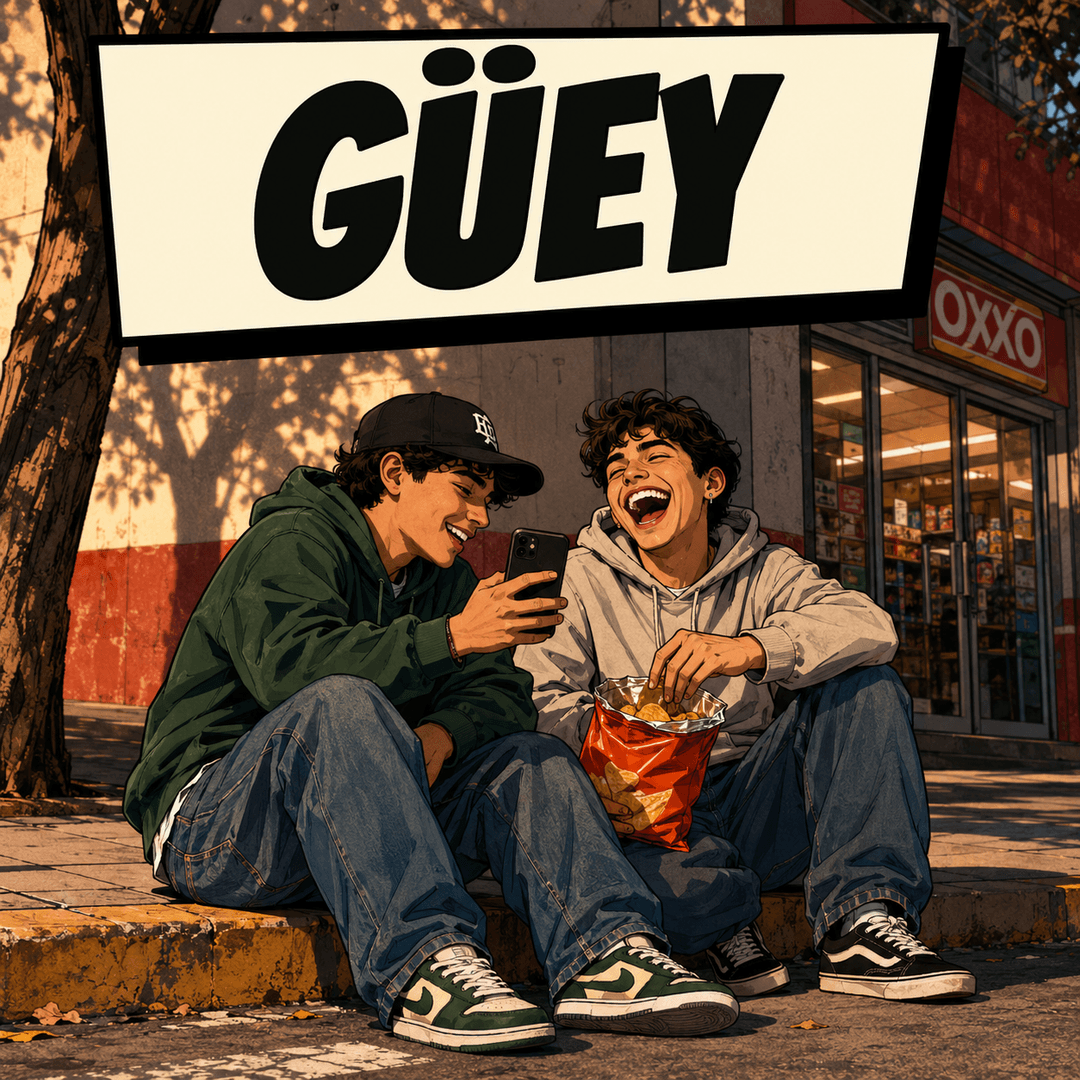
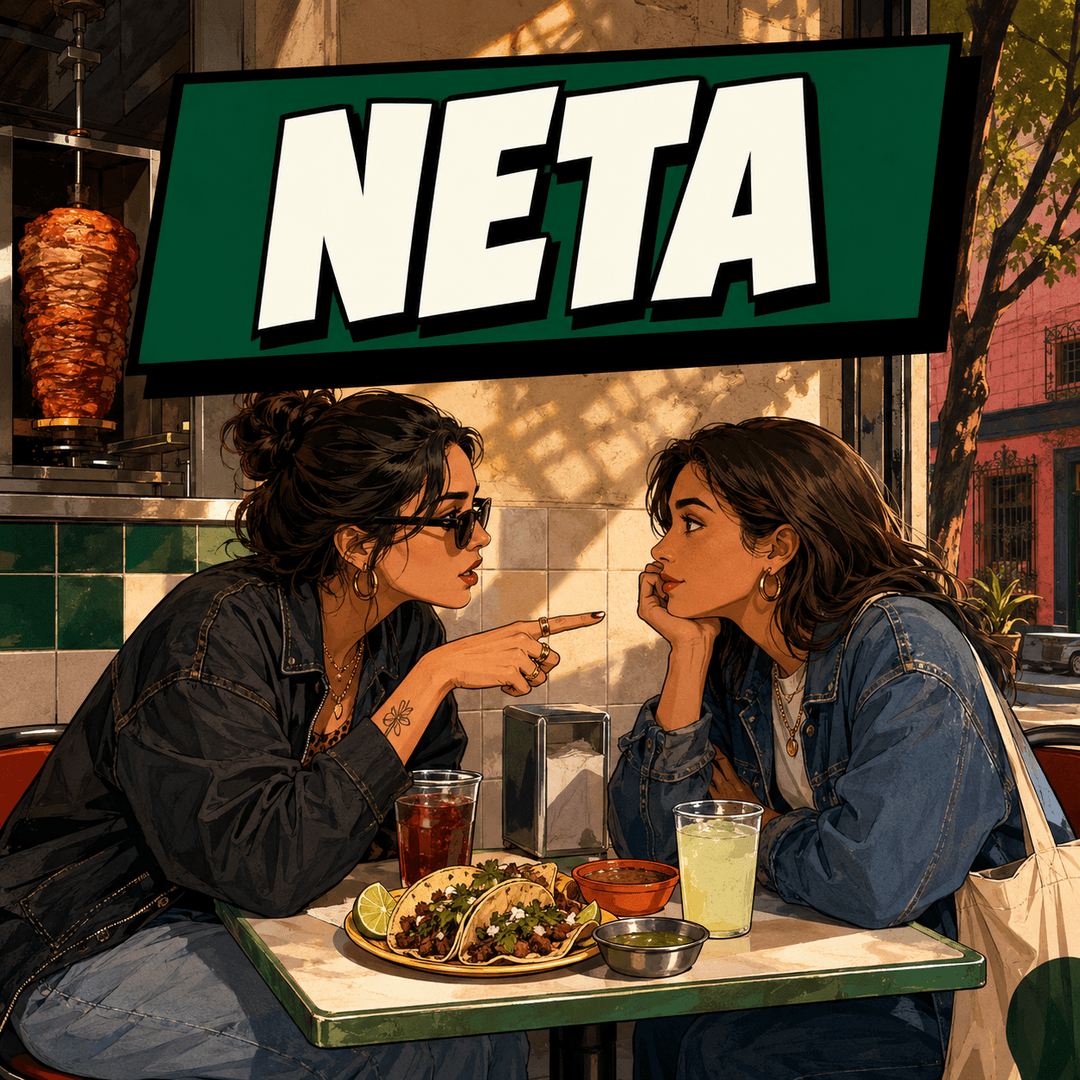
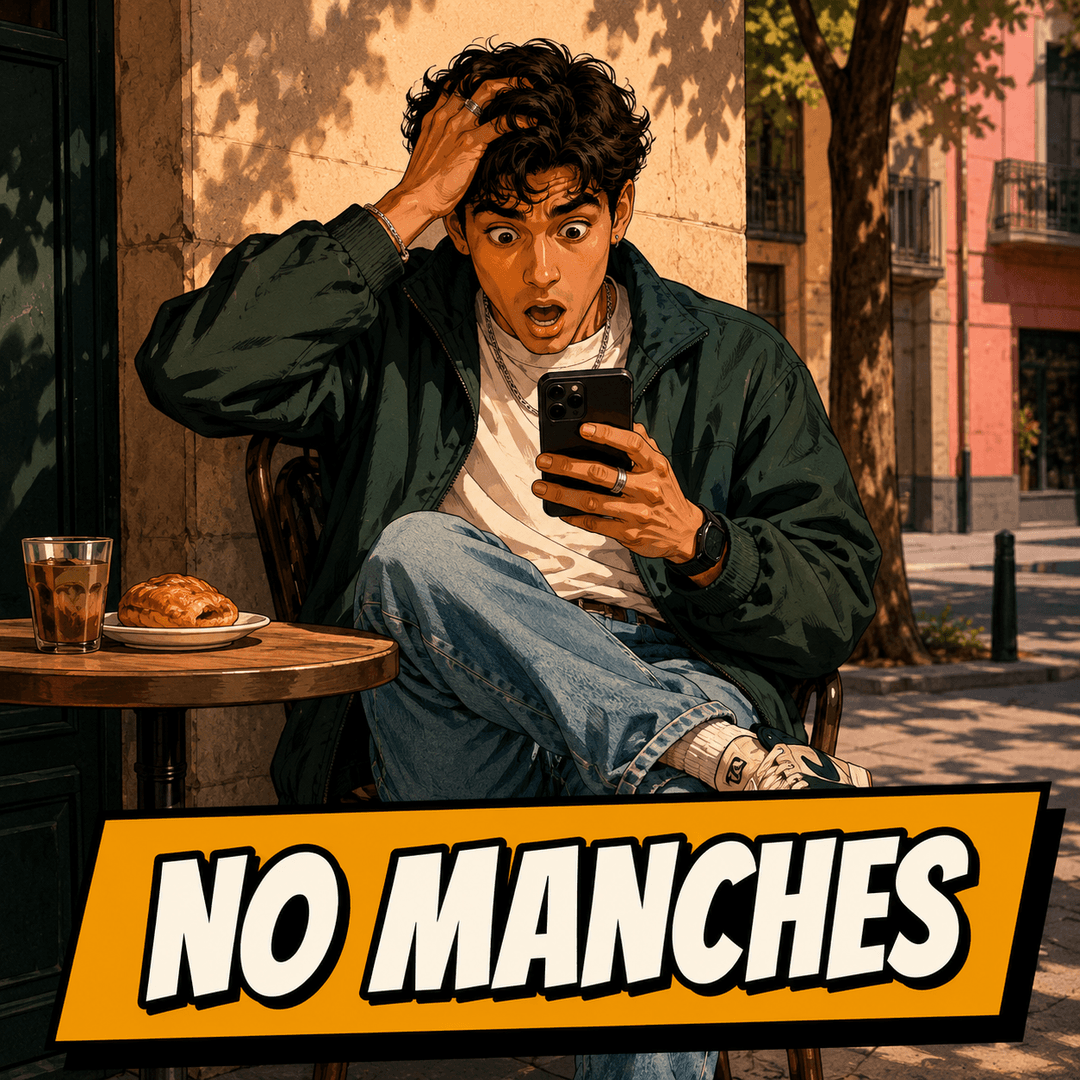
Phrases covered in this quiz
The Spanish lines you'll meet on the way to your tier — tap any with a page on consalsa.app.
- qué onda, qué plan traes? — What's up, what are you doing today?
- te invito un café — Wanna grab a coffee — my treat.
- me encantas, neta — I'm into you, honestly.
- qué crees que pase entre nosotros? — Where do you think this is going?
- no manches, qué tierno — Come on, that's sweet — flirty deflect.
- ándale, va — Alright, on — double yes.
FAQ
What does qué onda mean in Mexican Spanish?
It's the universal Mexican 'what's up.' Works as an opener with friends, matches on Tinder, the taquero you see twice a week, basically anyone you're on casual terms with. Spaniards say qué tal; Argentines say qué hacés; Mexicans default to qué onda. Add a flirty emoji and it becomes the most CDMX way to open a chat.
Does te invito un café mean 'you owe me a coffee'?
Other way around — they're offering to pay. In Mexico te invito X almost always means 'my treat.' It's the classic low-stakes ask-out, especially on dating apps. Saying 'va' or 'ándale' back means yes. Trying to split the bill after they say te invito reads as missing the gesture.
What's the difference between me caes bien, me encantas, and te amo?
Register stack: me caes bien = 'I like you as a person' (friend zone). me encantas = 'I'm into you' (verb-form, no gender marking — works flirty in any direction). te quiero = deep care, family or long relationship. te amo = deep love. Mismatch the rung on Tinder and the chat dies.
Is no manches rude or safe to use?
Safe. Everyday casual. No manches literally is a softening of no mames (which IS vulgar), so it's the family-friendly version of 'come on / no way / for real?' You can say it in front of abuela. No mames in front of abuela: different story.
About this quiz
Tinder CDMX is its own dialect. You can have a year of Duolingo behind you and still freeze at the first qué onda, qué plan traes? The vocab is everywhere — the register is what trips learners up. Too formal and you sound like LinkedIn. Too eager and you sound like an exchange student in 2009.
We picked the six messages that decide which side you land on: the universal opener (qué onda), the low-stakes ask-out (te invito un café), the verb-form 'I'm into you' (me encantas), the soft DTR (qué crees que pase entre nosotros), the flirty deflect (no manches), and the double-yes (ándale, va).
Six taps, sixty seconds, one verdict. You either come out a crack del chat or you screenshot it and study the wrong answers like the rest of us did. No textbook conjugations, no role-play — just the messages CDMX would actually send. 🔥