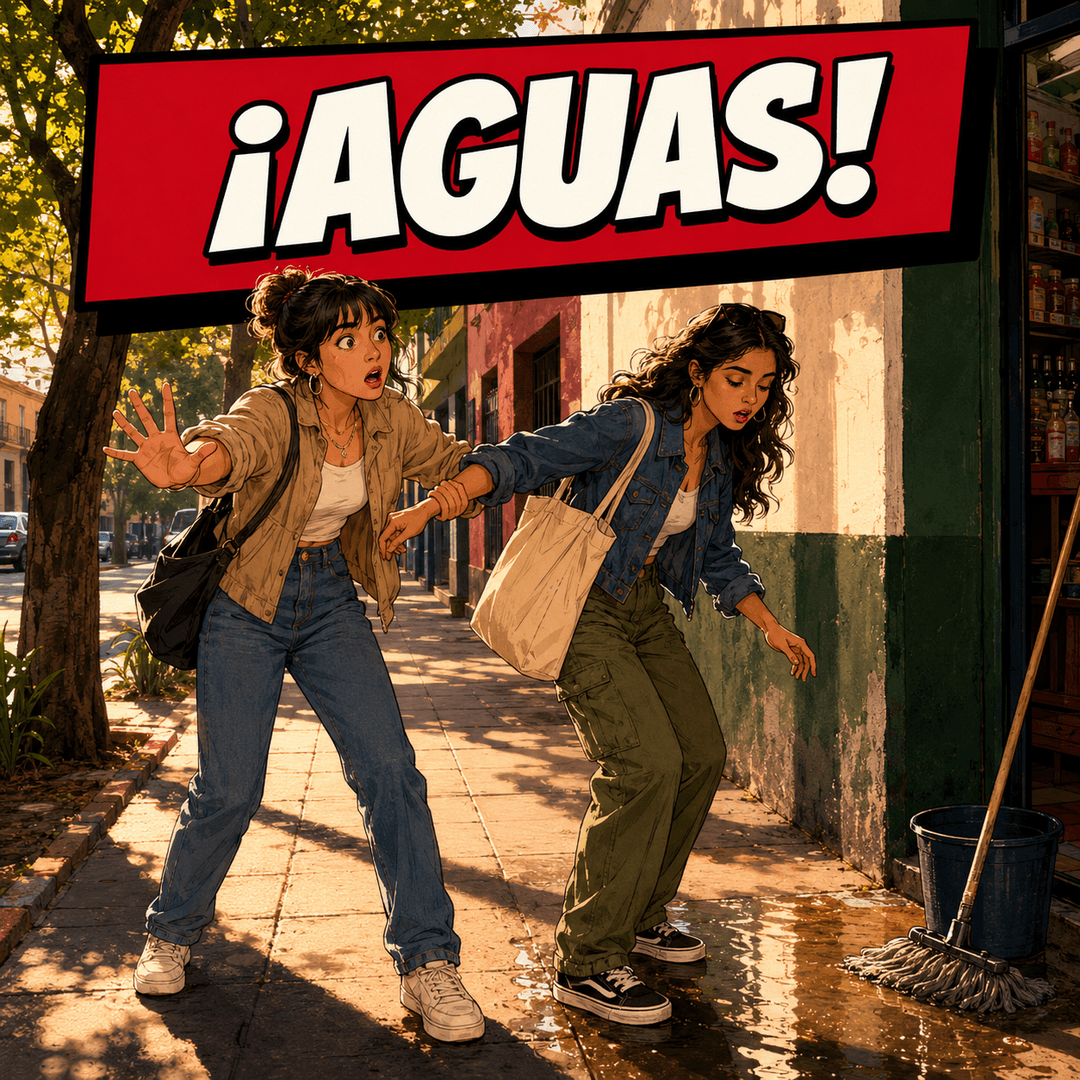
The CDMX Metro does not reward fancy Spanish. It rewards useful Spanish: con permiso, voy a bajar, ¿se baja?, ¿dónde transbordo?.
This is the language of doors opening, people moving, and your brain trying to remember whether you needed the blue line or the brown line.
The Metro phrase map
Start with these. They are not glamorous. They work.
| Moment | Say this | Why |
|---|---|---|
| You need to pass | Con permiso | Polite crowd language |
| Your stop is next | Voy a bajar | Explains why you are moving |
| Someone blocks the door | ¿Se baja? | Asks if they are getting off |
| You need a transfer | ¿Dónde transbordo? | Gets you to the right connection |
| You need the direction | ¿Va para Indios Verdes? | Checks the terminal direction |
| You are lost | ¿Para Bellas Artes es por aquí? | One specific question |
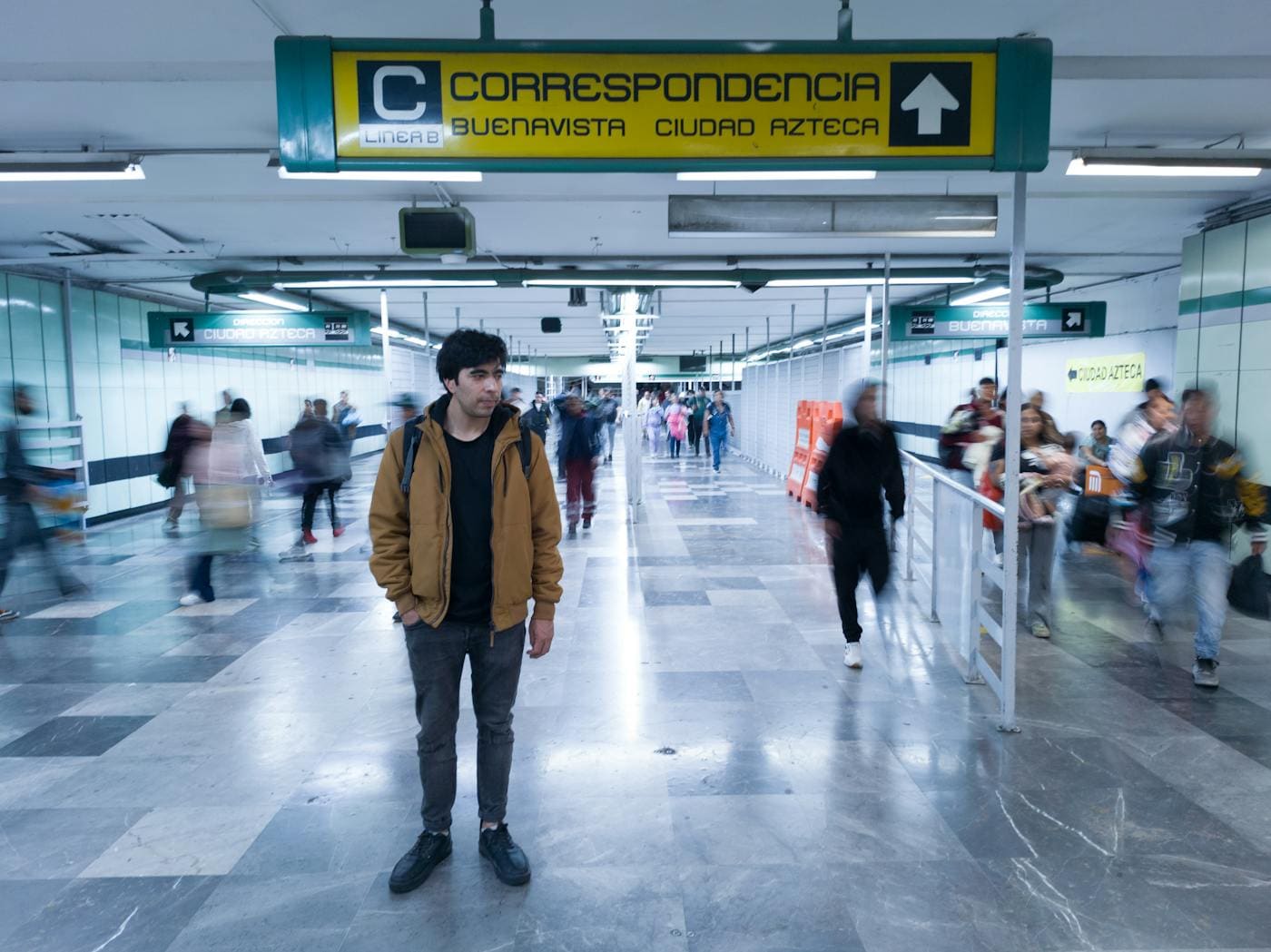
The word metro itself is simple enough,1 but the real challenge is the speed. The official Metro map shows the network as clean colored lines.2 Your body experiences it as stairs, signs, people, and one person eating chips with astonishing confidence.
Ask one question, not the whole route
When you are lost, your instinct may be to explain the entire situation:
Estoy tratando de llegar a Coyoacán pero creo que me equivoqué porque mi amigo me dijo que cambiara en Centro Médico…
This is understandable. It is also too much.
Ask the next step:
-
¿Para Centro Médico es por aquí?For Centro Médico, is it this way?
-
¿Dónde transbordo a la línea tres?Where do I transfer to line three?
-
¿Esta dirección va a Universidad?Does this direction go to Universidad?
The trick is to ask for the next move. A stranger can answer that in three seconds.
Transbordo is the word you want
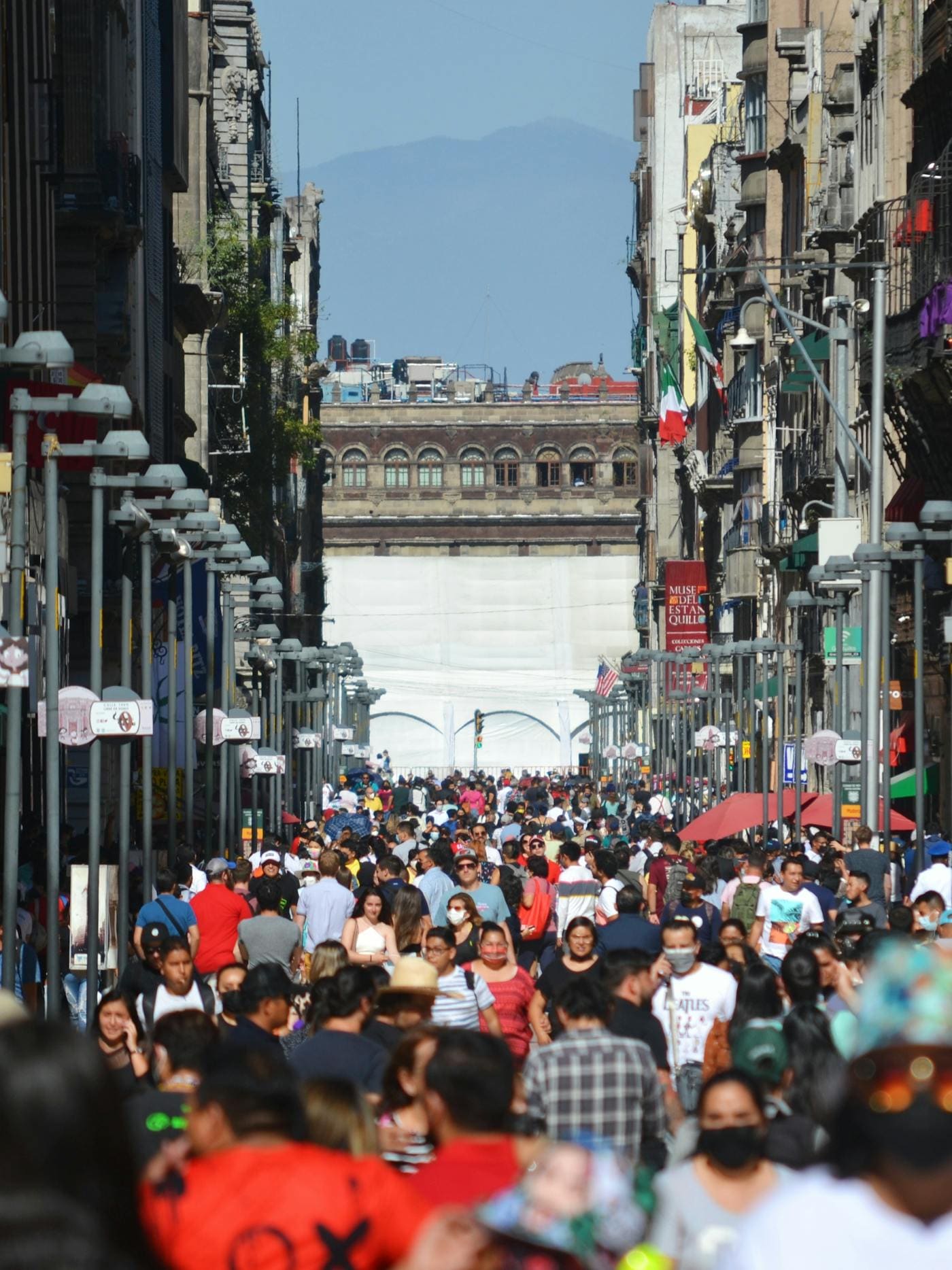
Transbordo means a transfer or change between routes.3 In CDMX, you will see and hear it around Metro lines, Metrobús routes, and big stations where everyone seems to know where they are going except you.
Use it like this:
| You need | Phrase |
|---|---|
| A transfer | Necesito hacer transbordo |
| The transfer location | ¿Dónde transbordo? |
| A different line | ¿Dónde transbordo a la línea dos? |
| Confirmation | ¿Aquí es el transbordo? |
The official Metrobús pages use line maps too,4 and that matters because CDMX public transit often asks you to think in line plus direction, not just destination.
Door Spanish is its own language
The door is where learners become philosophers.
You are squeezed between a backpack, a pole, and your fear of being rude. Then the train stops. You have two seconds.
Use:
-
Con permiso.Excuse me.
-
Voy a bajar.I am getting off.
-
¿Se baja?Are you getting off?
Permiso is the useful noun behind the phrase con permiso.5 In the Metro, it is less “pardon me, esteemed citizen” and more “please create two inches of human possibility.”
Direction beats station names
The word dirección matters because signs often point toward terminal stations.6 If you only know your stop, you still need the direction.
| If you see | Ask |
|---|---|
| Two platforms | ¿Cuál dirección es para…? |
| A line number | ¿Esta línea va a…? |
| A big station | ¿Aquí transbordo? |
| A crowd moving fast | ¿Para dónde va esta fila? |
This is where textbook Spanish quietly leaves the building. You are not writing an essay. You are choosing a platform.
Safety and tone
Use neutral, practical Spanish. Do not practice edgy slang with strangers in a packed car. Save that for friends.
Also: keep your phone close, step aside before stopping to check maps, and do not block the stairs while having a tiny crisis. CDMX has room for your learning. It does not have room for you becoming a traffic cone.
If you remember only five phrases, make them:
- Con permiso
- Voy a bajar
- ¿Se baja?
- ¿Dónde transbordo?
- ¿Para X es por aquí?
That is enough to move through the city with a little more confidence.
Sources
-
Diccionario de la lengua española, metro — Real Academia Española ↩
-
Sistema de Transporte Colectivo Metro, Mapa de la Red — Gobierno de la Ciudad de México ↩
-
Diccionario de la lengua española, transbordo — Real Academia Española ↩
-
Metrobús CDMX, Mapa Línea 1 — Gobierno de la Ciudad de México ↩
-
Diccionario de la lengua española, permiso — Real Academia Española ↩
-
Diccionario de la lengua española, dirección — Real Academia Española ↩
Test yourself
tap an answer.
You are near the door and your stop is next. What do you say?
You need to change lines. Which word should you listen for?
Someone is blocking the door. What is a normal question?