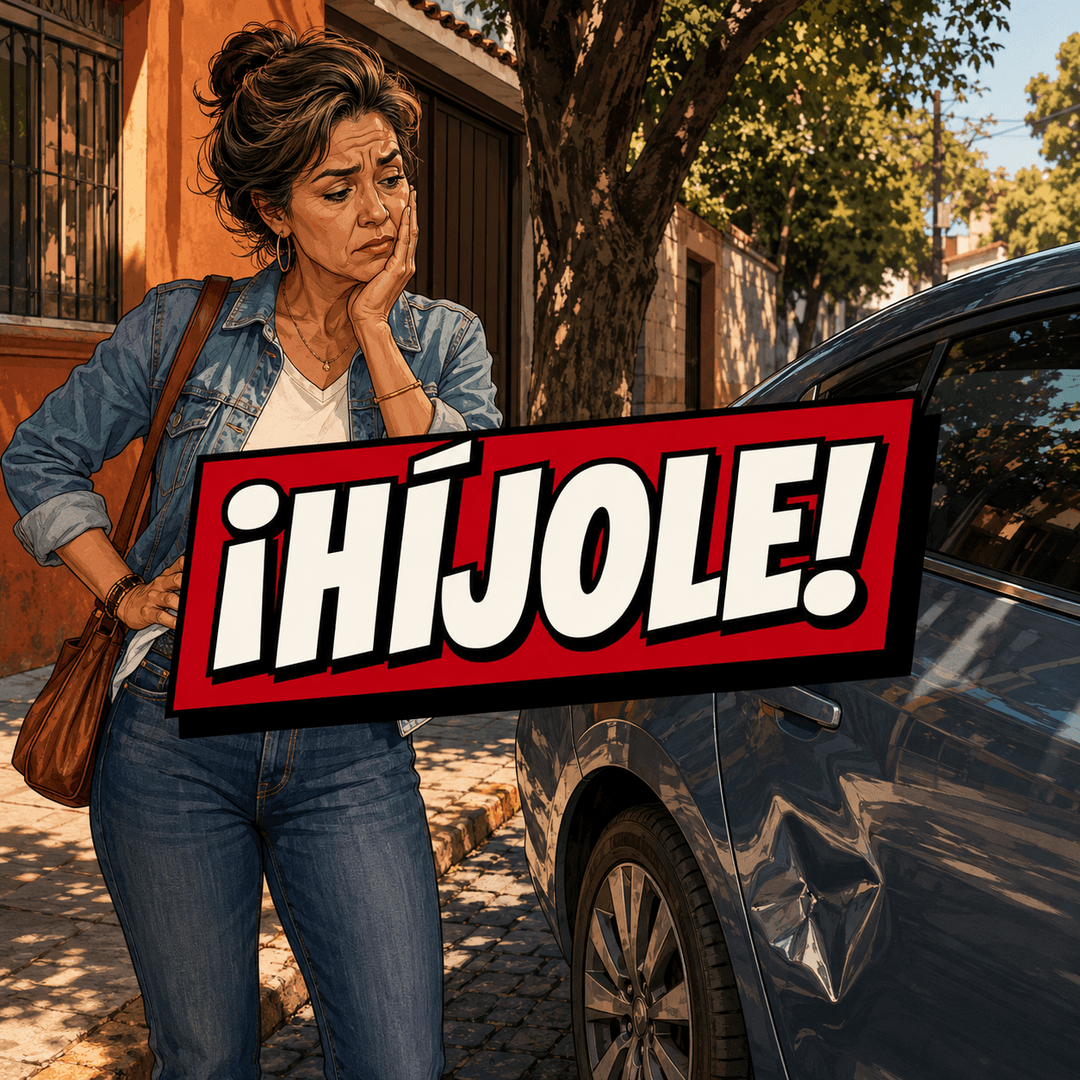
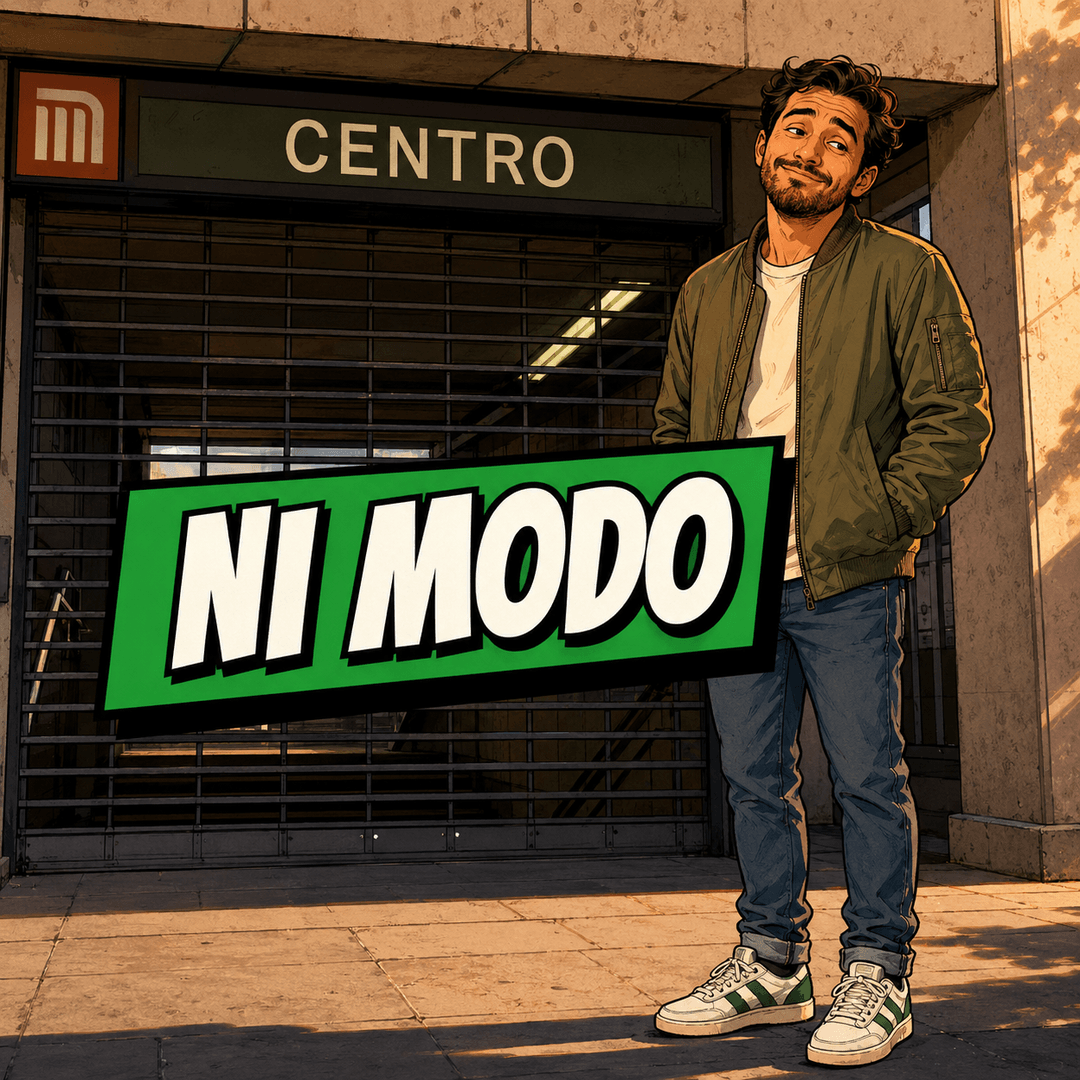
Some Spanish words translate badly because they are not really words. They are tiny philosophies wearing a phrase costume.
Ni modo is one of those. So are ya qué and pues.
They live in the moment after the plan changed, the restaurant closed, the rain started, the Uber canceled, the friend said “ahorita” forty minutes ago, and everyone silently understands that being dramatic will not fix the evening.
Ni modo is not giving up. It is emotional triage.

The acceptance map
| Phrase | Closest English | Feeling | Use it when |
|---|---|---|---|
| Ni modo | Oh well / that’s life | Acceptance, resignation | Nothing can be changed |
| Ya qué | What can you do now? | Casual surrender | It already happened |
| Pues | Well / so / I guess | Softener, bridge | You need a verbal cushion |
| Pues ya | Well, that’s that | Closing the issue | The decision is done |
| Ya fue | It’s over / let it go | Moving on | No point continuing |
| Qué se le va a hacer | What can be done? | More formal resignation | Bigger disappointments |
These phrases are useful because life in Mexico, like life anywhere, contains logistics. And logistics contain betrayal.
Ni modo: the clean little shrug
Ni modo says the situation is not ideal, but you are accepting it.
-
Ya cerraron. Ni modo.They already closed. Oh well.
-
Perdimos el metro. Ni modo, pedimos Uber.We missed the metro. Oh well, we'll order an Uber.
It can be comforting:
-
Ni modo, mañana lo intentas otra vez.It's okay, you'll try again tomorrow.
It can also be dismissive if someone needed empathy. Tone does the work.
Ya qué: after the damage
Ya qué is more casual, more “welp.” It often appears after the mistake has already happened.
| Situation | Phrase | Meaning |
|---|---|---|
| You ordered too much food | Ya qué, nos lo acabamos | Well, we’ll finish it now |
| You sent the message | Ya qué, ya lo mandé | What can I do, I sent it |
| The plan got expensive | Ya qué, ya estamos aquí | Oh well, we’re already here |
| You missed the exit | Ya qué, damos vuelta | Fine, we’ll turn around |
Ya qué is not elegant. That is why it is beautiful.

Pues: the little bridge
Pues is everywhere because it does emotional formatting.
It can soften:
-
Pues sí, tienes razón.Well yeah, you're right.
It can hesitate:
-
Pues... no sé.Well... I don't know.
It can move the conversation along:
-
Pues vamos.Well, let's go then.
If English has “well,” “so,” “I mean,” and “I guess,” Mexican Spanish has pues doing overtime.
Acceptance is not indifference
| If someone says… | It may mean | It does not always mean |
|---|---|---|
| Ni modo | We accept reality | I do not care |
| Ya qué | It already happened | I wanted this |
| Pues sí | Yeah, basically | I am excited |
| Pues ni modo | Well, oh well | No feelings exist |
This is where cultural context matters. To a US learner, ni modo can sometimes sound passive. But often it is just a practical way to stop fighting the unfixable part and move to the next step.